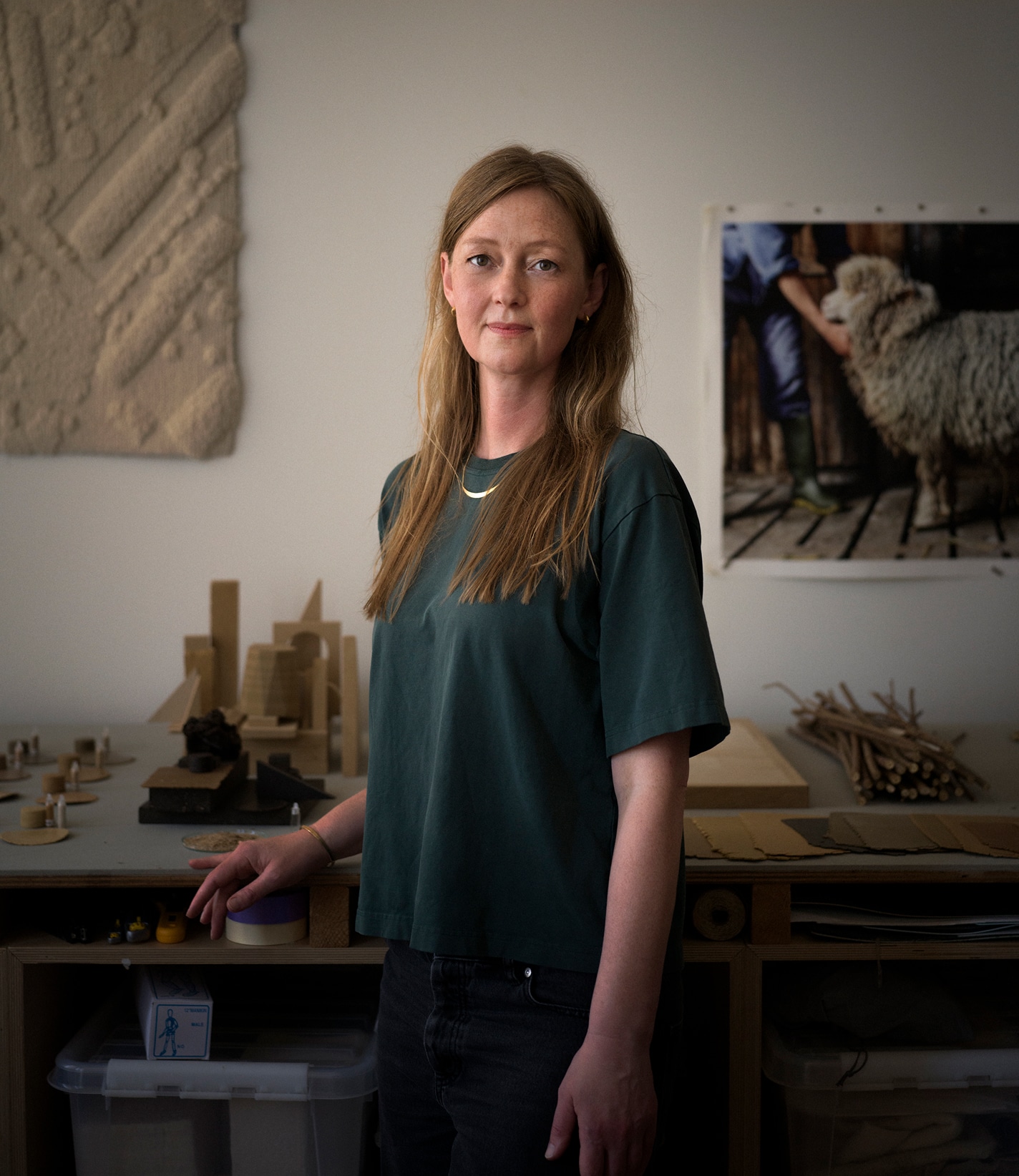
Christien Meindertsma
Christien Meindertsma explores the origins and composition of everyday products. She maps the origins of materials, and how they are produced and used – exposing processes that are often hidden due to industrialisation and globalisation.
The production chain behind everyday objects is largely invisible. Consumers can barely ascertain where materials come from, or the conditions in which products are made. This creates a perceived distance between consumers and everyday objects. Current production processes are unsustainable: they deplete the Earth’s resources and leave little room for alternatives. At the same time, we are losing the historical knowledge about natural raw materials and traditional manufacturing techniques that could contribute to a sustainable, fair and local production system.
Christien Meindertsma’s investigative approach to design unravels the hidden origins of materials, exposing opaque production chains. In collaboration with companies, she develops new materials and sustainable products, such as Flaxwood linoleum tiles and 3D-printed wool. In addition, Meindertsma also shares her knowledge with the general public through books and exhibitions, advocating for more transparent, local production.
Translation: Jane Szita
Photography: Blickfänger
Were you already so curious and inquisitive as a child?
I think I was more of a dreamer. I was an only child growing up in a loving family in a Christian village. Both my parents are non-believers and both worked, so after school I stayed with a host family who had three children. I was very happy there, but I also felt like an outsider, just as I did at school. Despite having a free, adventurous childhood, until I was ten I thought I was going to hell because I hadn’t been baptised. My progressive parents met while doing volunteer work in Côte d’Ivoire. They have always been adventurous and placed great value on personal development and autonomy. Choose your own path, was their motto.
And that own path was becoming a designer?
It was an intuitive decision initially. I visited the Design Academy Eindhoven on an open day. With all those cabinets of materials, groups of students conferring everywhere and large tables with swatches of fabric – I thought, this is where I need to be. I recognised myself in all those people – enthusiastic, positive, creative and opinionated. It wasn’t until my final year at the academy that I started thinking about what role I could have as a designer.
What set that particular thought process in motion?
I was surprised by how little we know about the origins of everyday objects. Where is a T-shirt made, and what is it made of? How and by whom? It’s almost impossible to find out. Is that why we don’t become attached to mass-produced items? For this reason I designed a collection of jumpers made of the wool of a single sheep for my graduation project. Included with the jumper was a passport containing information about the sheep, such as its breed and age, and even a passport photo. You could see the difference in the wool in all the different sweaters. But my teachers were critical.
My second graduation project was the book Checked Baggage. For this project, I organised a week’s worth – over 3,000 – confiscated objects from Schiphol customs by shape, type and colour. After 9/11, everyday items such as nail files and darts were suddenly viewed as potential weapons. However, researching and creating a book was considering ‘not enough of a designed object.’ In retrospect, though, I would say that these two projects were formative in shaping the kind of designer I became.
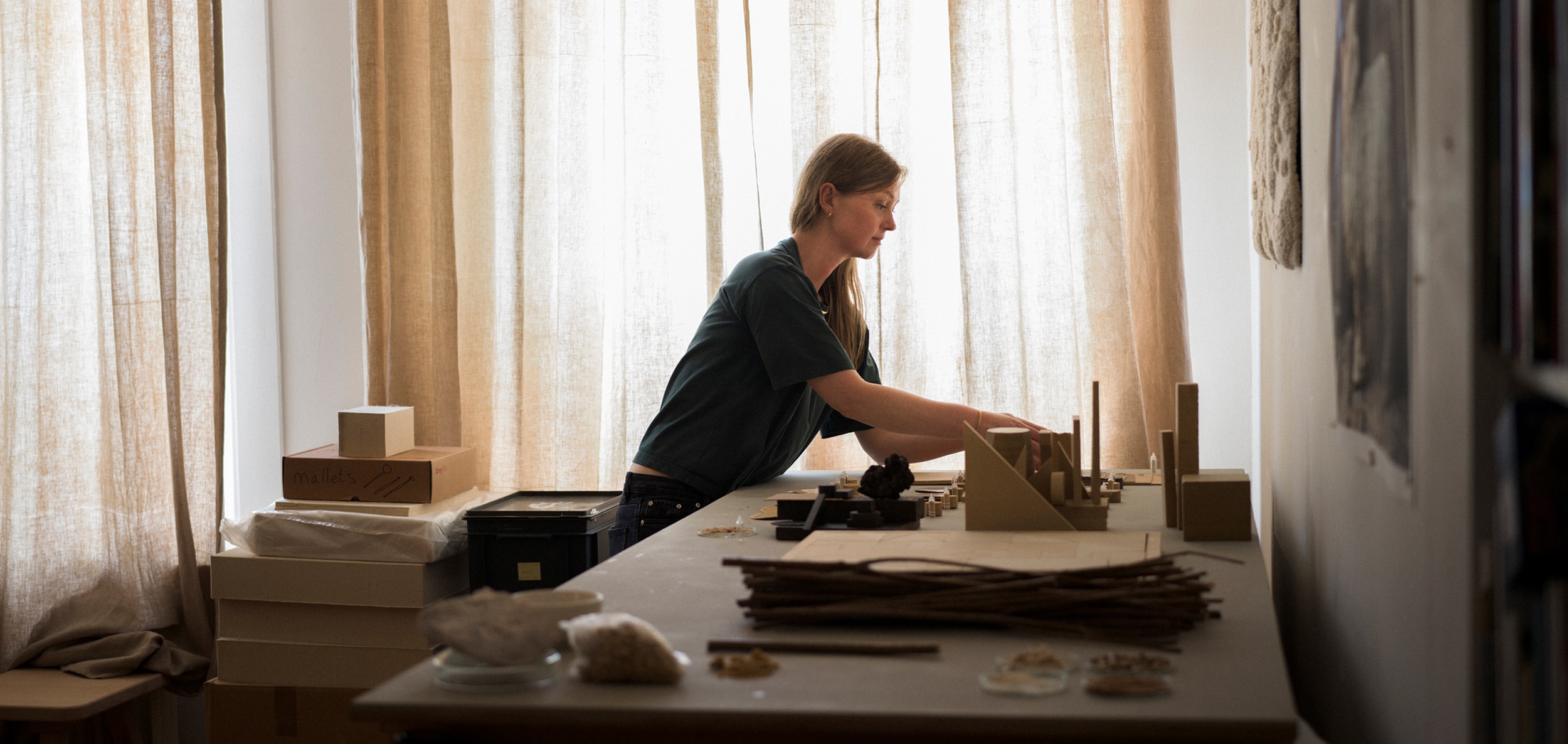
I’m a lone wolf who likes to collaborate
How did you subsequently get started as a designer?
I was fascinated by the origin of raw materials. In order to map the hidden material flows of everyday products, I ended up focusing on a pig. Many people look down on pigs, and we hide them away in barns with no daylight. But their bodies are used to make countless products: fat is used in paint, hair is used to make paintbrushes, glue is made from bones and gelatine ends up in bullets.
Eventually, I identified 187 products and depicted them very neutrally in the book PIG 05049, with a product on every page. The book is intended as a factual list, making it interesting for pig farmers, politicians and vegans alike. It shows how pigs are exploited as industrial raw materials. However, it also shows that pigs make an enormous economic contribution. Both these things are true.
What did you want to achieve with this book?
I thought, if I can show how important pigs are to industry, then hopefully there will be improvements in the way we treat them, because who wants the current situation? In hindsight, that idea was quite naive. Factory farming still exists, which is sad. I felt like a designer who had single-handedly created a weird book about the origins of products. Once again, I was the outsider. But then I was awarded the Dutch Design Award for PIG 05049. That’s when something clicked: I was doing something right after all!
How did you take the next step in your development as a designer?
Occasionally, I was asked to design products, including a series of rope products. In the past, rope was made from flax, just like linen. In the 17th century, the Netherlands was the world’s largest producer of flax. Nowadays, however, the Netherlands is a small producer, with 90 per cent of flax production being exported directly to China. This brought together many interesting perspectives: agriculture, industry, history, nature, heritage and craft. The only question was: how could I source Dutch flax?
Fortunately, right then I won the Index Award, an international design prize with a substantial cash component. I used the prize money to buy up the entire harvest of a Dutch flax farmer, and I set out to find the last industrial and artisanal producers of linen and other products in the Netherlands. I decorated a collection of tablecloths and rugs with images depicting my quest to uncover the history of the vanished flax industry. I made lamps and rugs from rope with one of the last rope makers. These designs essentially present my research into the origin and use of flax. Unfortunately, local production proved too expensive for large sales volumes. Nevertheless, I am very happy with my flax research. I made all kinds of interesting discoveries that I wasn’t expecting, but which have turned out to be valuable.
Finding something you weren’t looking for. There’s a word for that: serendipity.
Yes, and I strongly believe in it. Often, I don't know in advance what the outcome of an investigation will be. I do have a vague idea of where I want to end up, but I let what I learn along the way influence that outcome. By now, I dare to trust that my intuition recognises what is valuable. This may not be the most efficient way to develop a product, but it is the only way for me.
Tell us how serendipity can play a decisive role in research.
In my research on flax, linseed oil was one of those tangents. The oil is pressed from flax seeds and mixed with wood chips and lime to make linoleum. All of these raw materials are imported. I then asked linoleum manufacturer Forbo if I could investigate whether their product could be made using locally sourced materials.
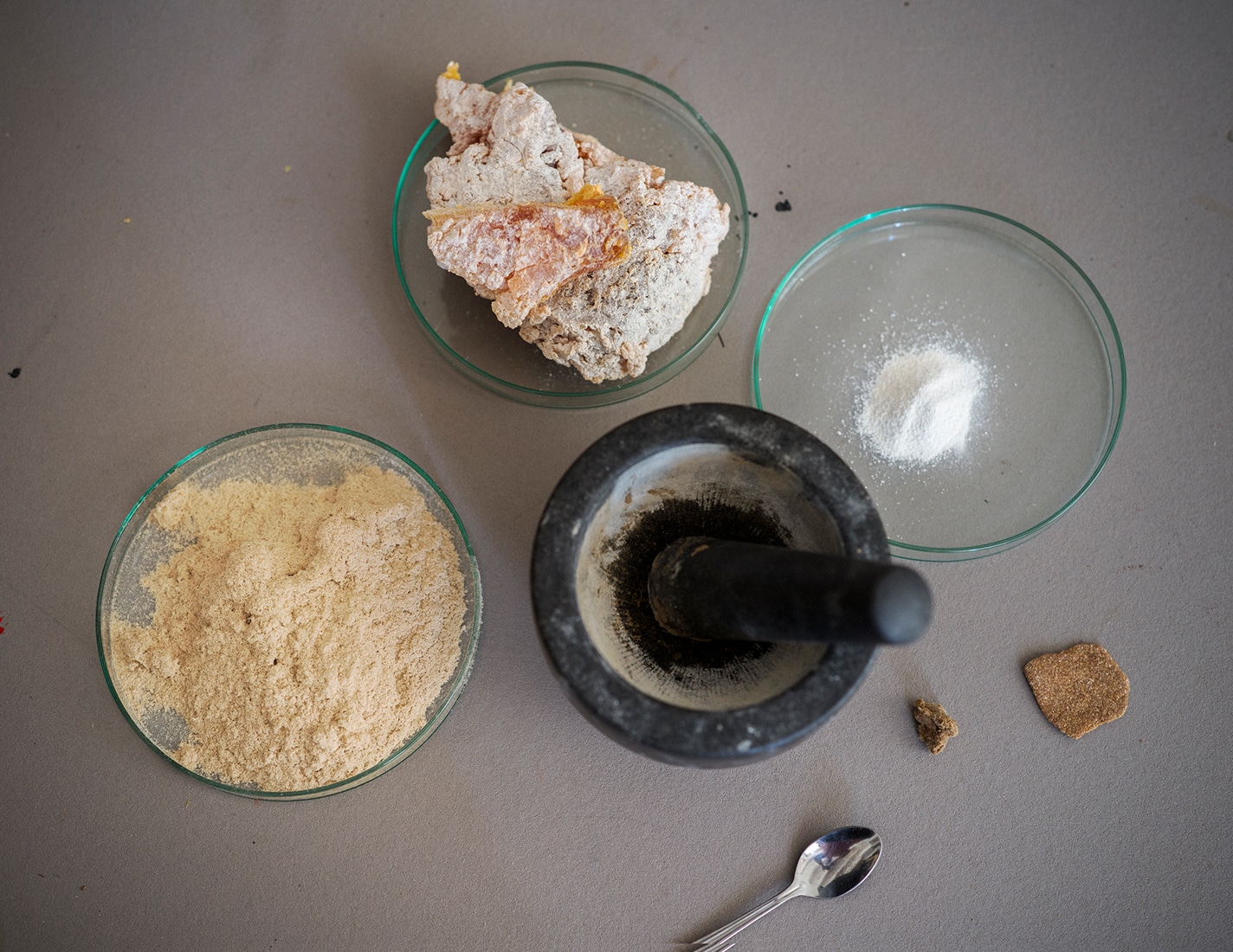
In a corner of the pilot plant, I was allowed to experiment with linoleum. I introduced various ingredients myself, such as local wood chips and lime, which was mined as a by-product in the Limburg mines. I had produced the linseed oil from my own flax harvest. The result was beautiful linoleum with deep colours and a natural texture. However, Forbo did not want to invest in it. Due to a lack of time and money, I had to put the research on hold.
I map the hidden material flows of everyday products
How did you subsequently pick up this dormant research project again?
Vitra, one of the world’s largest furniture manufacturers, asked me to investigate making products from linoleum. Now I could resume my unfinished research into Local Linoleum, as I called it. I pressed the linoleum into blocks and had it cut into various shapes, which went very well. Unfortunately, however, linoleum turned out to be too fragile for these products. I subsequently developed Flaxwood with the British company Dzek: a linoleum that can be kneaded and re-kneaded like clay into blocks, tiles and other three-dimensional building elements. Unfortunately, that’s also on hold at the moment because we can’t find a producer. If a research project stalls, I often put it to one side for a while. Then sometimes something happens that gets it moving again. That’s why I’m presenting Flaxwood at Dutch Design Week, in the hope that it will gain some momentum.
What can happen to give research renewed momentum?
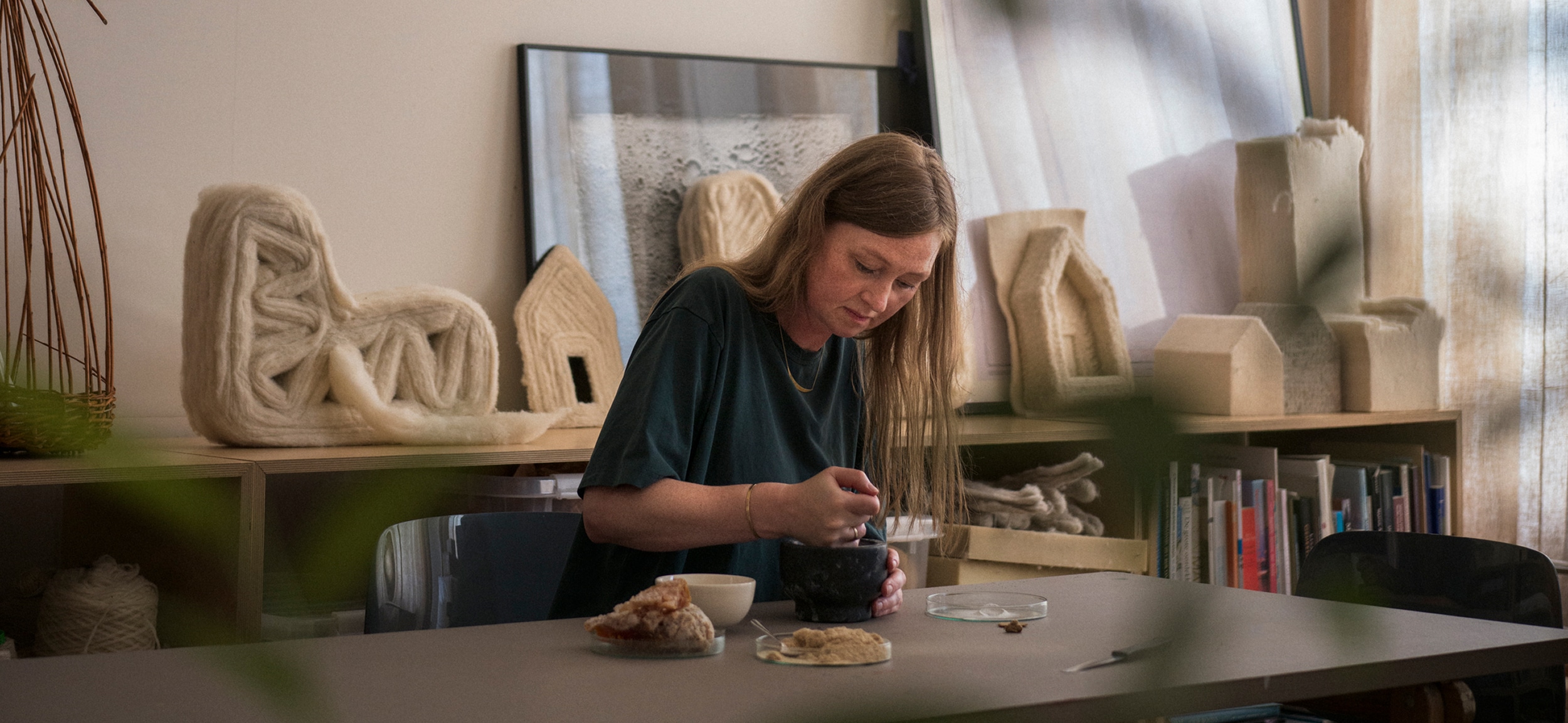
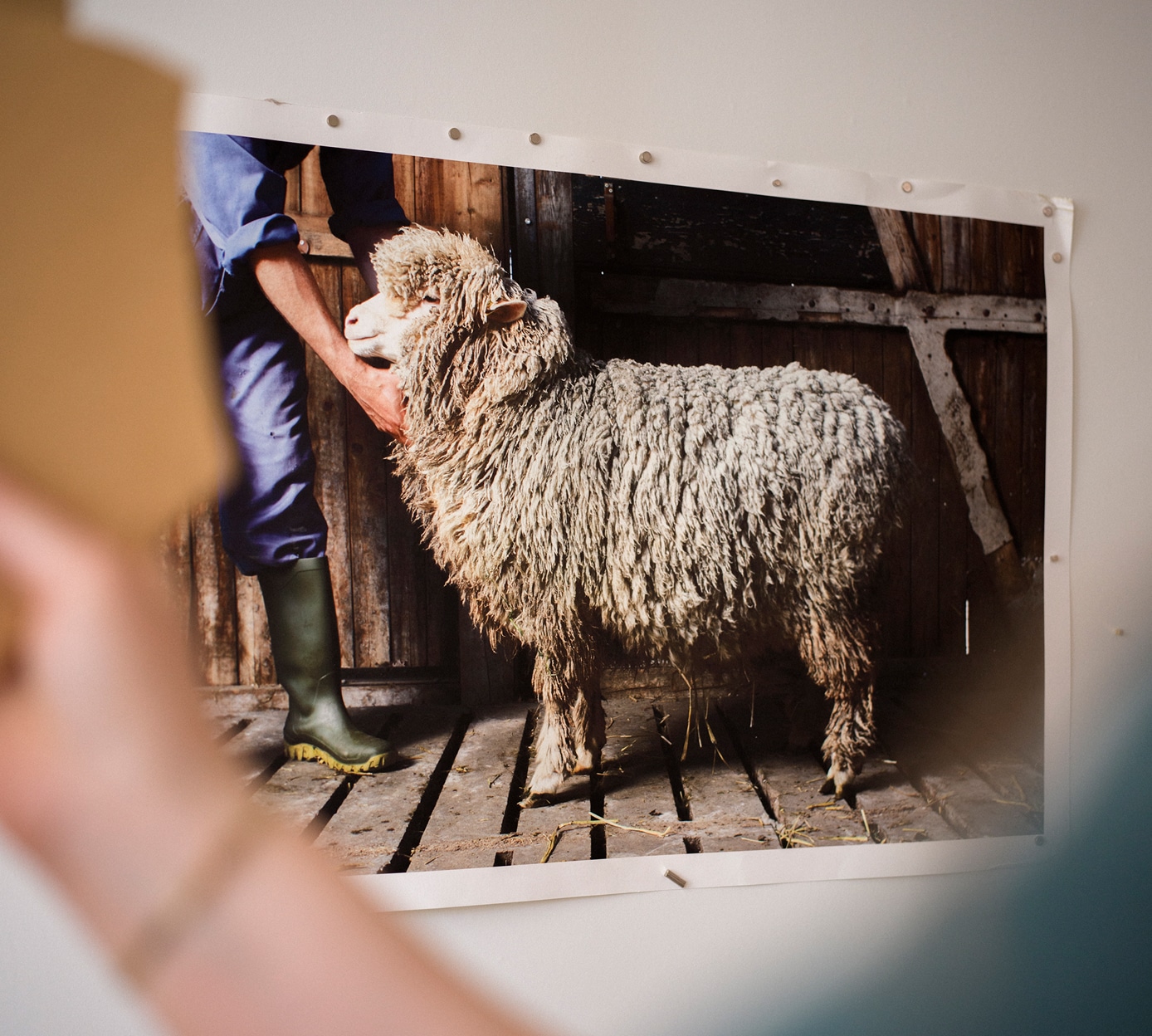
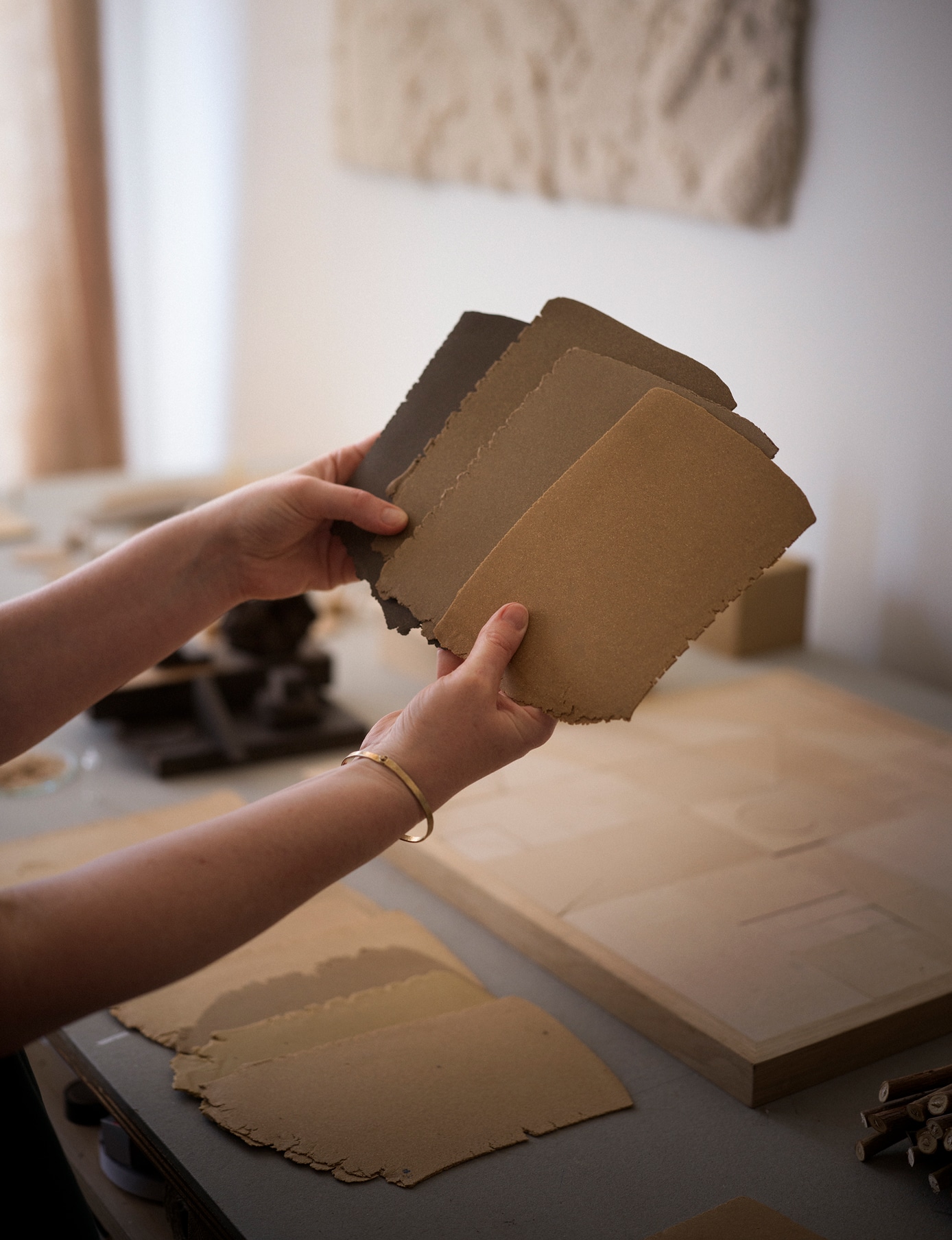
Usually, the trigger is a commission from a museum, company or institution. For example, the City of Rotterdam asked me to consider an application for the wool from the city’s sheep, which graze the dykes and lawns. This wool was previously discarded due to its supposedly poor quality. I thought, 6,000 kilos of wool – that’s something I’d like to work with. I also found it exciting, the idea of such a beautiful natural material coming from an industrial city like Rotterdam.
As it turned out, the wool was beautiful! The same applies to a lot of Dutch wool, by the way. That’s why I presented various products made from Rotterdam city wool at Dutch Design Week, including furniture upholstery, knitted socks and a tweed jacket. But those were products that were already being made from wool. I also wanted to develop a new application.
How did you approach that?
One of the loose ends of the research was a handmade block of wool with the qualities of sturdy plastic foam. I had an idea: what if I could use robots to manufacture sustainable furniture foam from that traditional wool? It’s a combination of innovation and craft. Together with the company TFT (Tools for Technology), I developed the Wobot: a machine that can 3D-print a complete chair from wool without adding other materials. Thanks to a commission from the Mudac museum in Lausanne, Switzerland, I now have the time and budget to refine the Wobot, meaning I no longer have to sit next to it myself.
Your projects, such as those involving flax and wool, span several years. How do you know when they’re complete?
When I feel like I’m repeating myself – usually after a working prototype has been realised. For me, a project is complete when I’ve shown where exactly the material comes from and what products can be made from it. I work everything out down to the last detail, because there must be absolutely no doubt that it’s right. The flax really must come from the Netherlands – even better, you should know which plot it comes from. However, fine-tuning the prototype and bringing it to market is not where my talent lies.
If that means the project remains small-scale, so be it. For a long time, I wanted to be a product designer because I’d like as many people as possible to use my designs. But now I know that others can handle the last steps better than I can.
You’ve become a kind of materials detective. What role do fundamental design qualities such as aesthetics and functionality play in your designs?
The aesthetics stem from the research. I want people to understand my products. I want them to be able to see where they come from and how they’re made. The functionality lies not so much in ease of use, but in providing sustainable alternatives. Such as a linoleum tile you can throw into the shredder, and then mould something new out of it.
You manage to conduct multiple major research projects simultaneously while working alone, with no assistant or intern to help. Why?
Because I want to be able to experiment without having to explain what I’m doing all the time. If I’m interested in something, I want to be able to pursue it spontaneously. I love snooping around companies, especially in factory halls or research labs. I sit there like a cuckoo chick in a nest. But I enjoy learning about different types of flax from an artisan rope maker, or about wool from a shepherd, just as much. I work best alone. I’m a lone wolf who likes to collaborate. For the past year or two, I’ve been working with a wonderful person who manages my larger projects. She’s worth her weight in gold!
It sounds like you’ll be busy with wool and flax for quite a while – but have you found a new obsession already?
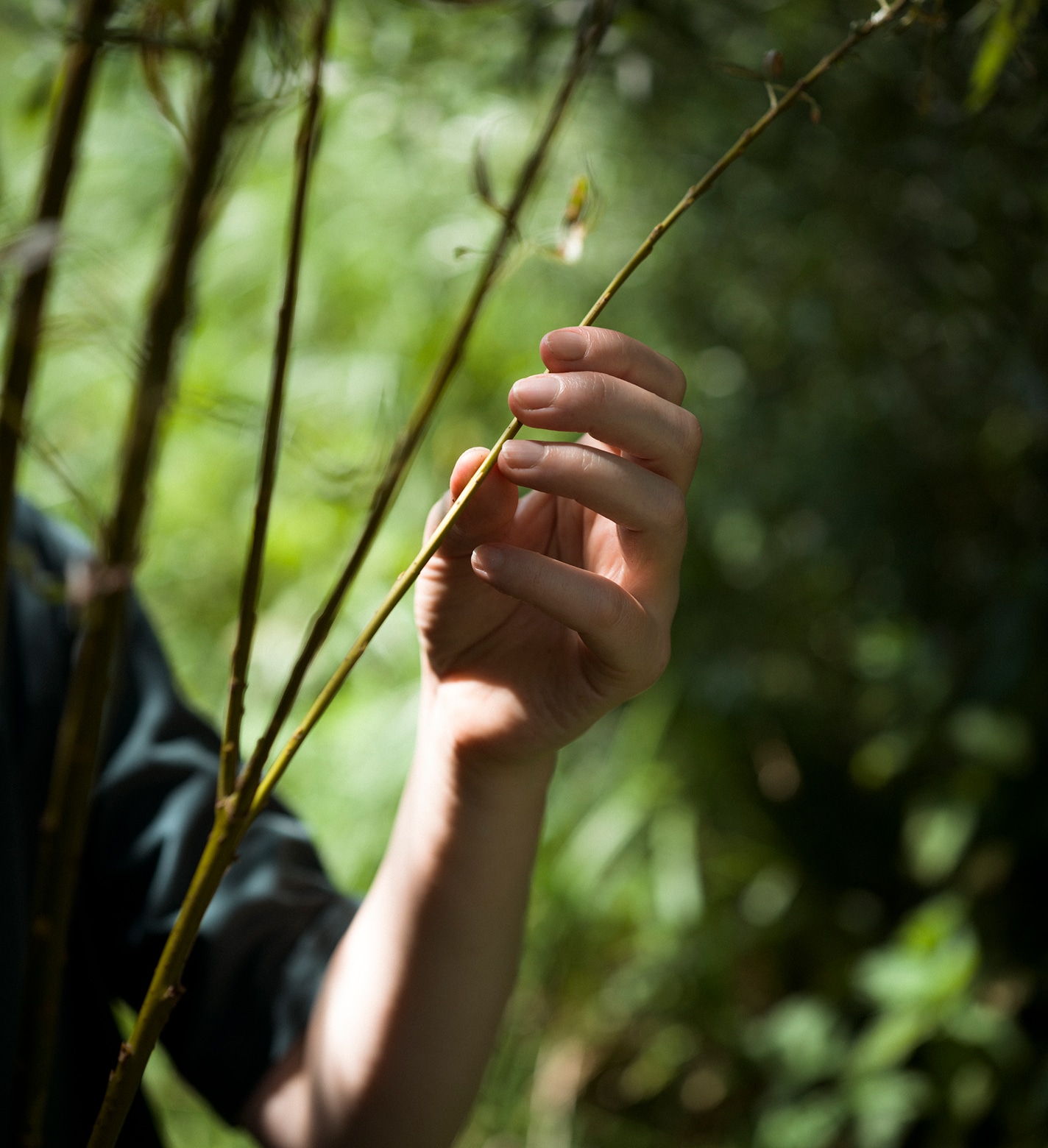
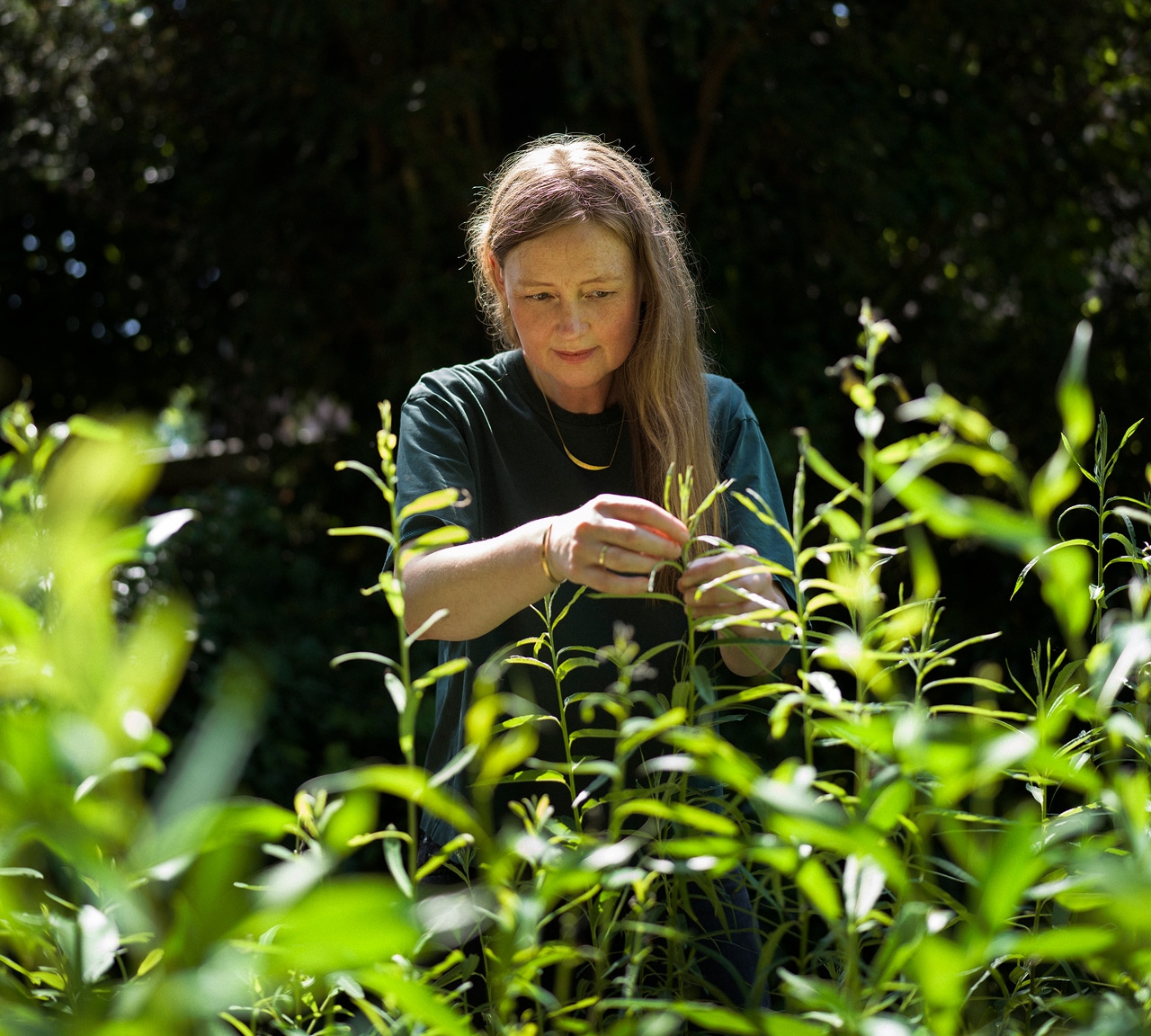
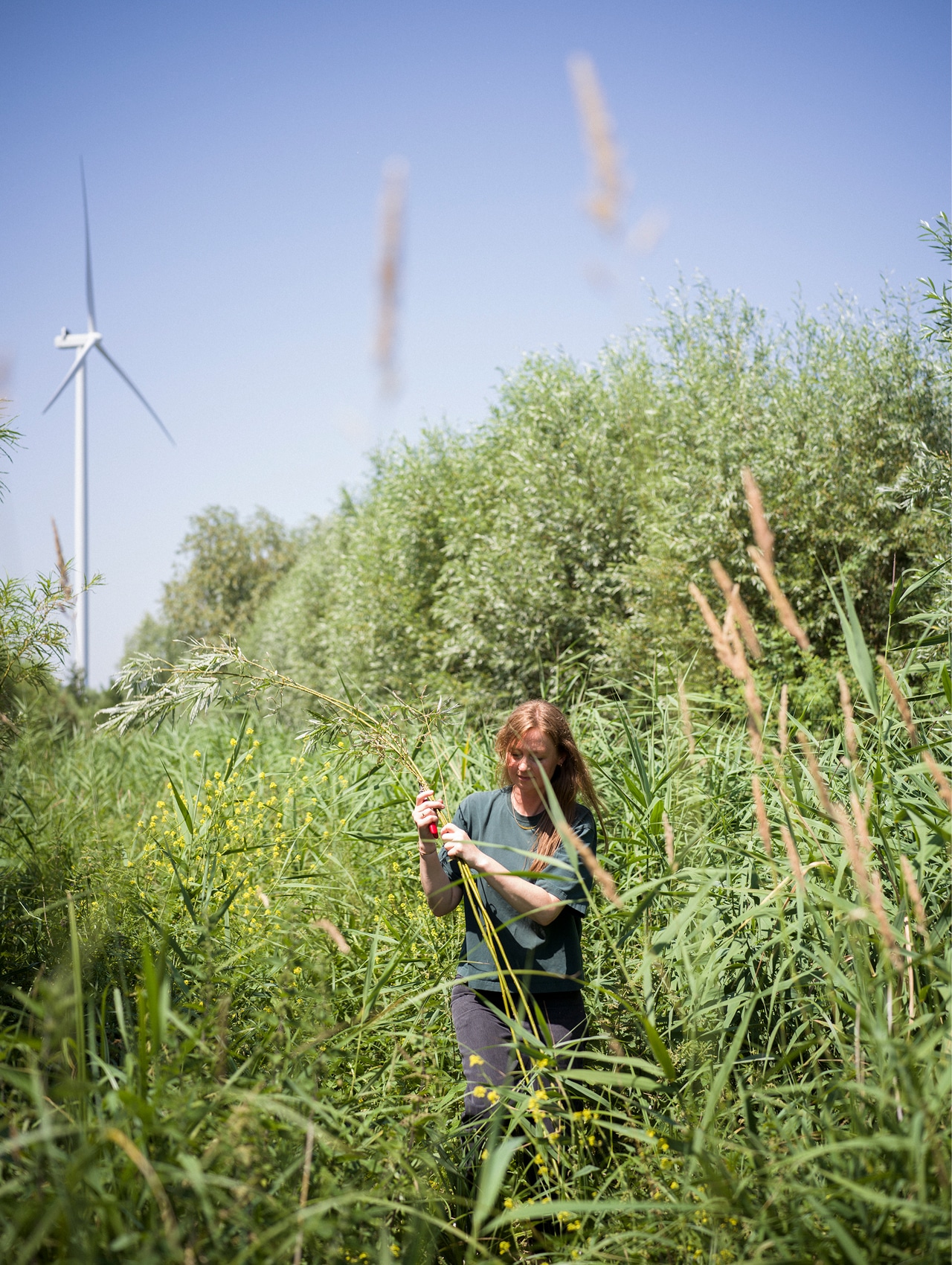
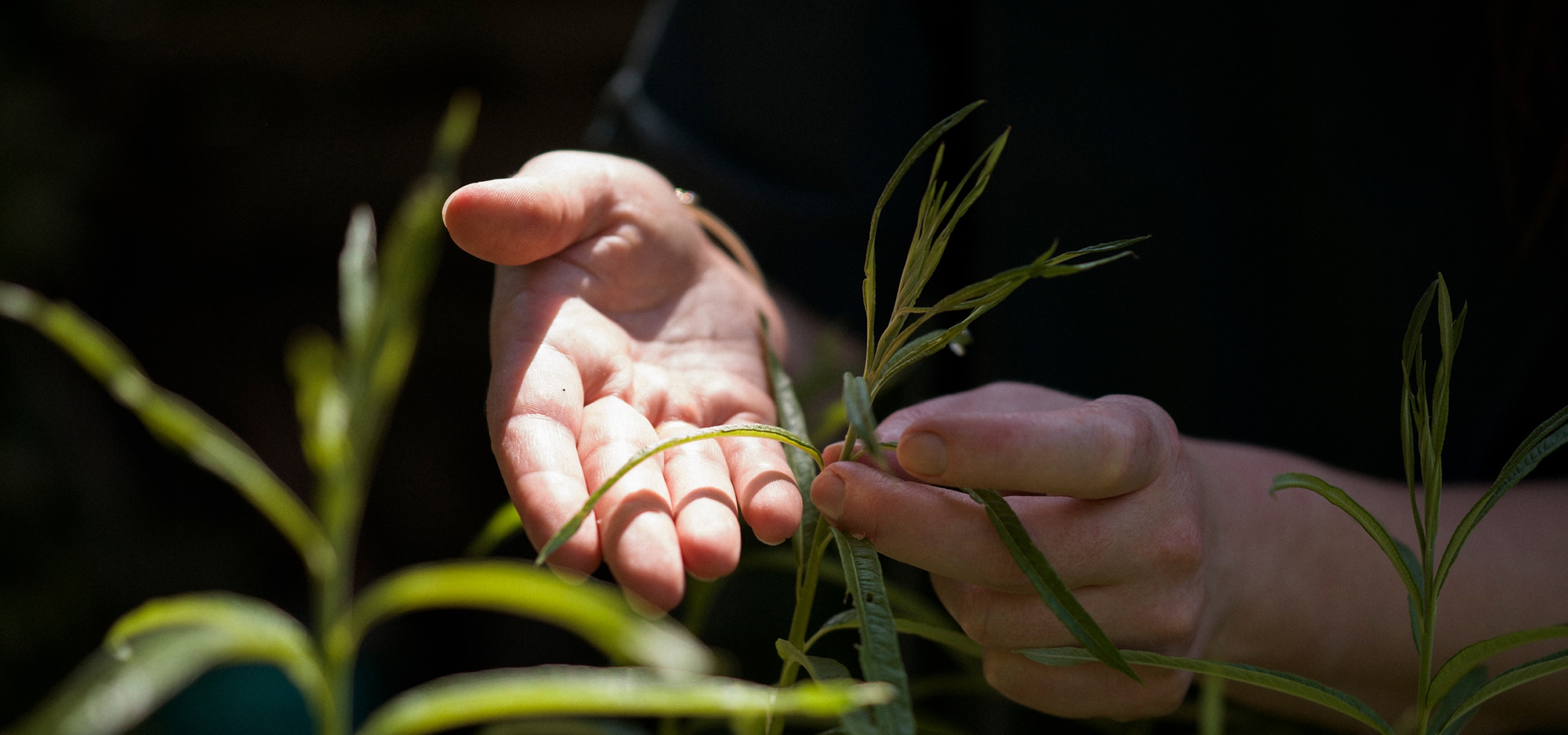
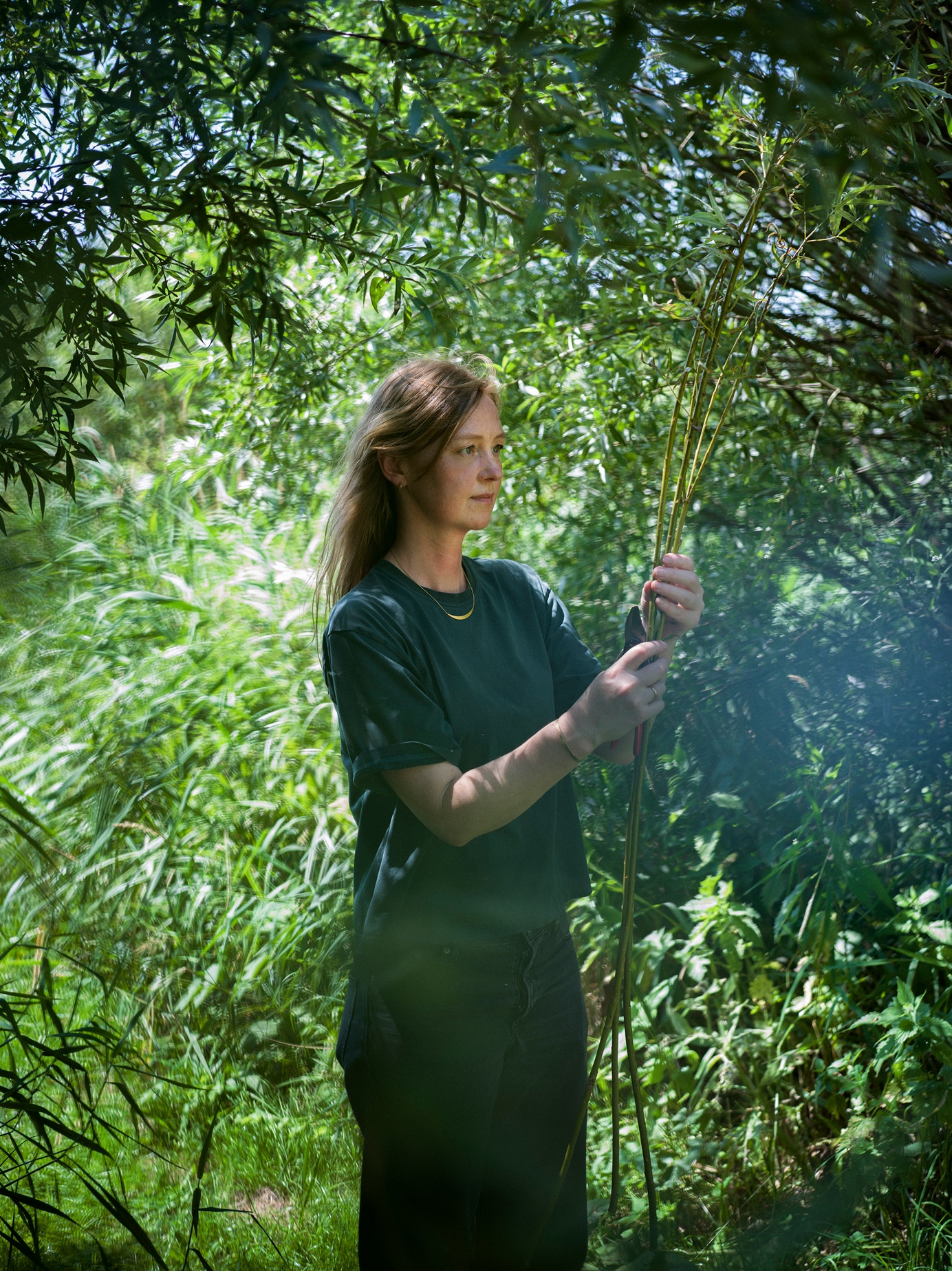
Willows! Products were already being made from willow withies 6,000 years ago. This was before the alphabet, before Christianity and before everything we now consider to be civilisation. Our relationship with this material runs so deep. Nowadays, however, pollarded willow withies are largely ground up and used as biomass for energy production. I live in the Betuwe, where you can see willows everywhere.
I’ve already talked to farmers, withy cutters and wicker weavers. They possess a remarkable amount of knowledge, which is often not recorded. After all, the only way to learn about willows is to work with them hands-on. That’s why I’m taking weaving lessons and have adopted a willow plantation, which is a piece of land with willow trees on it. What will come of that? I’m fully engaged with that right now. The first results will be on display at my solo exhibition at the Mudac Museum in Lausanne next year.
You’ve become a kind of materials detective. What role do fundamental design qualities such as aesthetics and functionality play in your designs?
The aesthetics stem from the research. I want people to understand my products. I want them to be able to see where they come from and how they’re made. The functionality lies not so much in ease of use, but in providing sustainable alternatives. Such as a linoleum tile you can throw into the shredder, and then mould something new out of it.
If you could pass on a message to the next generation of designers, what would it be?
Follow your intuition. As a designer, you often have to navigate a world that’s already fixed: products are made this way, from that material. Which is exactly why we need people who challenge that. People who are open to new insights, and who also dare to hold on to their own ideas and ideals.