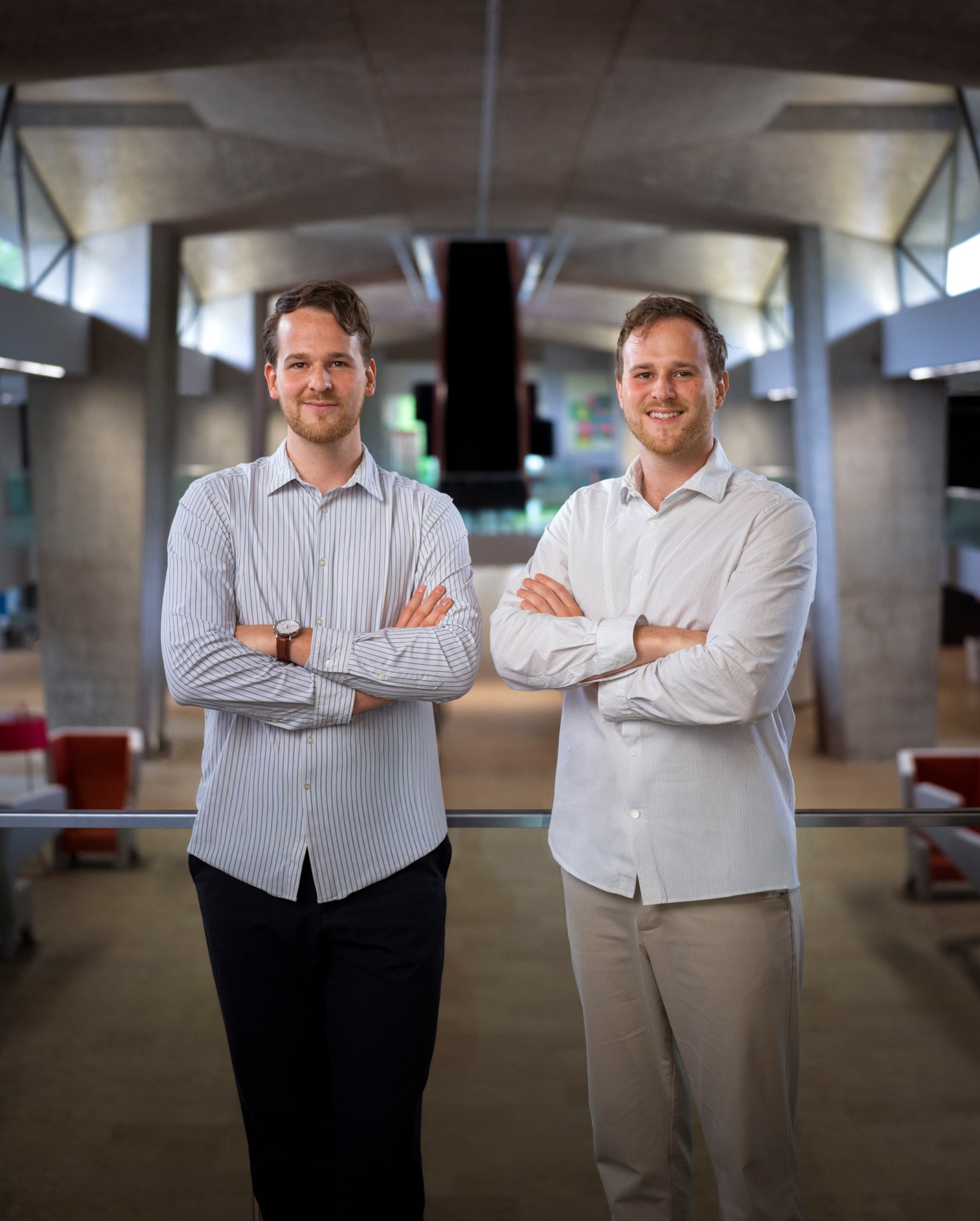
Aumens
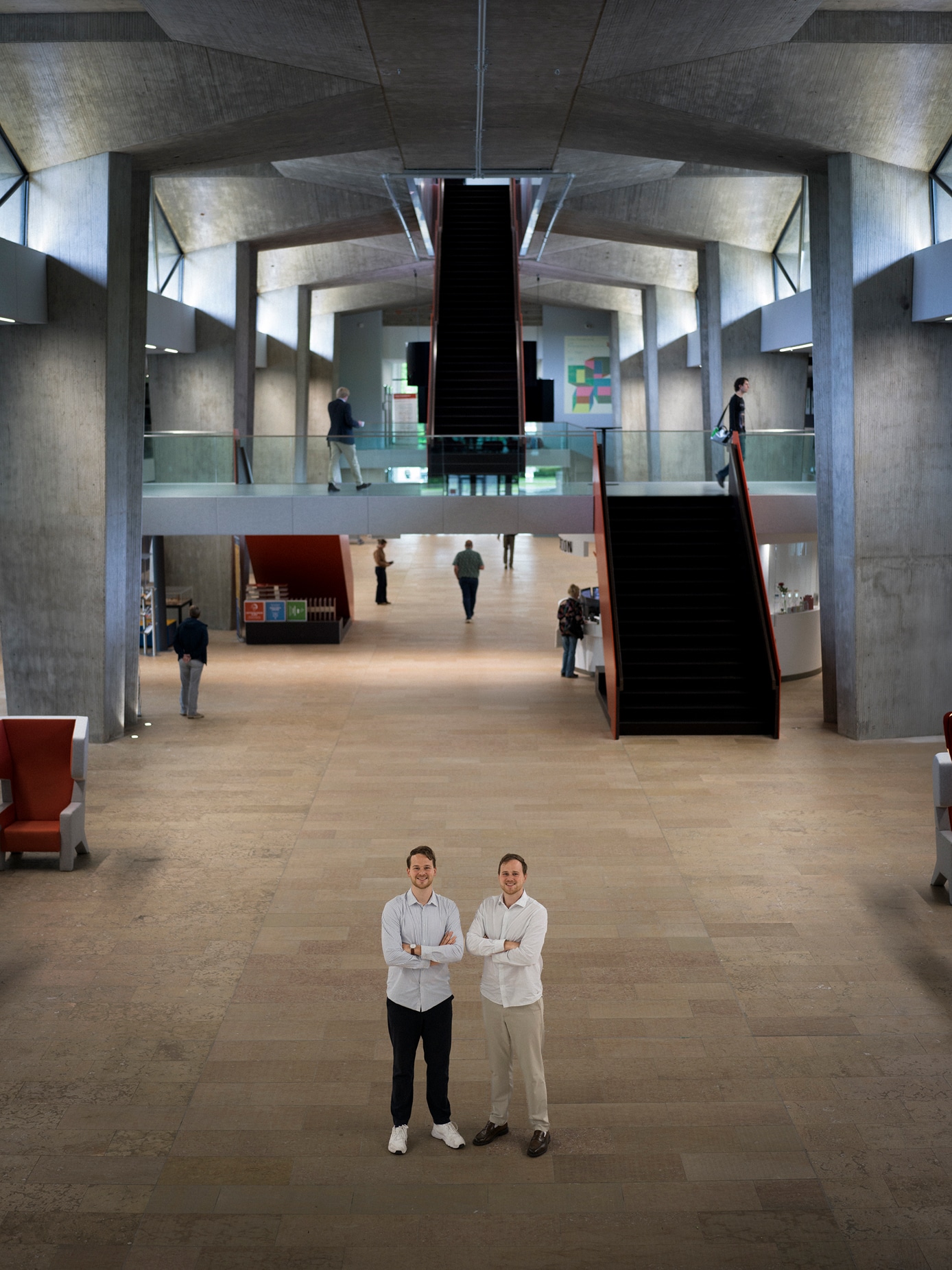
Rick and Vincent Eurlings
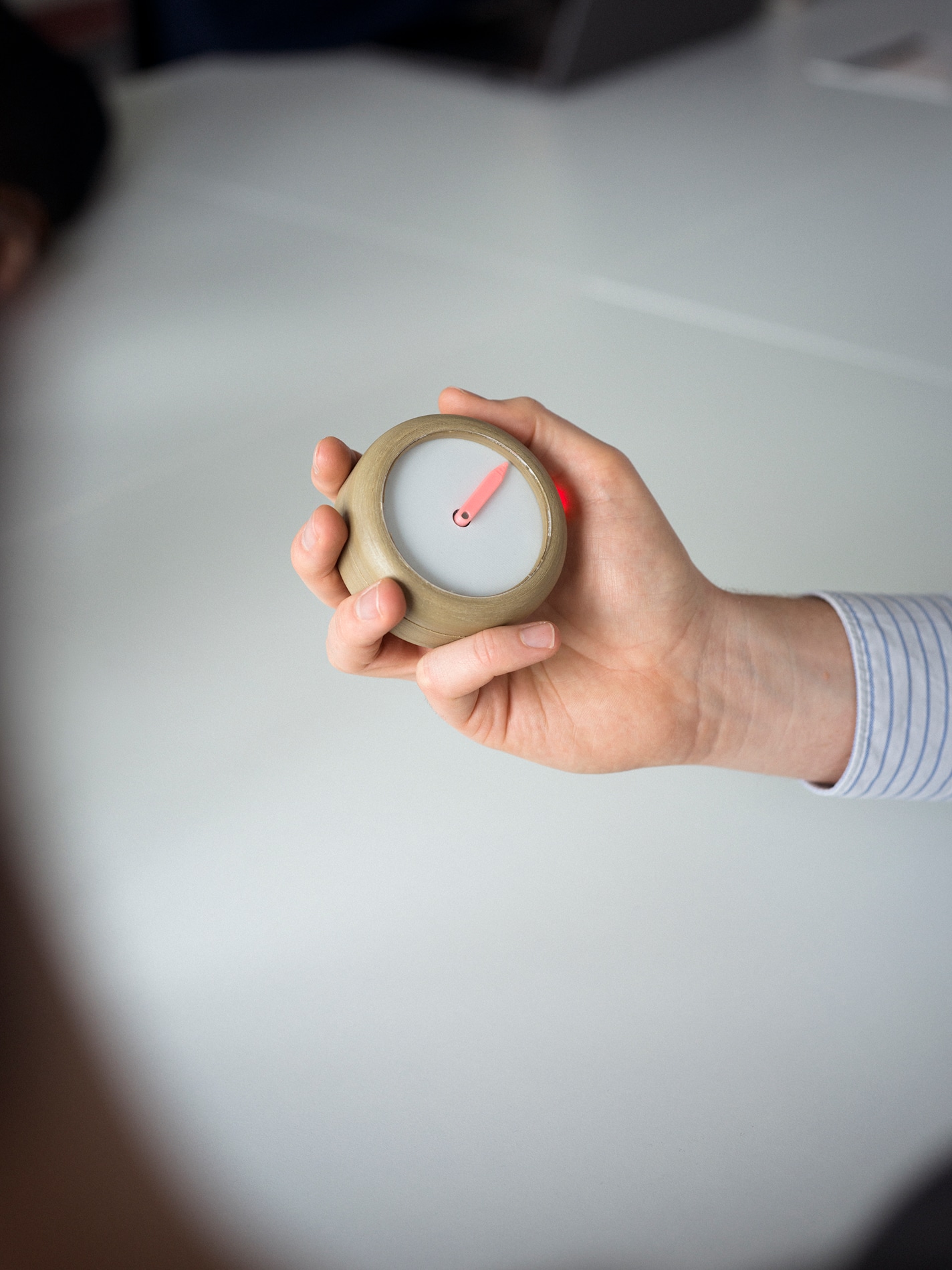
Aumens is the start-up behind the Compass (Het Kompas), a handy device with a built-in compass whose needle always points to a pre-set location. Thanks to the integral GPS chip, it helps people with dementia find their way home independently.
An estimated one in five people will develop dementia at some point in their lives. A common symptom is disorientation, caused by the loss of a sense of direction and a reduced ability to recognise the environment. The result is a decrease in freedom of movement. Even though regular walking contributes to physical and mental well-being, 40 per cent of people with dementia do not go outside even once a week. This puts additional pressure on relatives and informal carers. It also has costs for society, for example through police involvement in missing persons cases and premature admission to nursing homes due to declining independence.
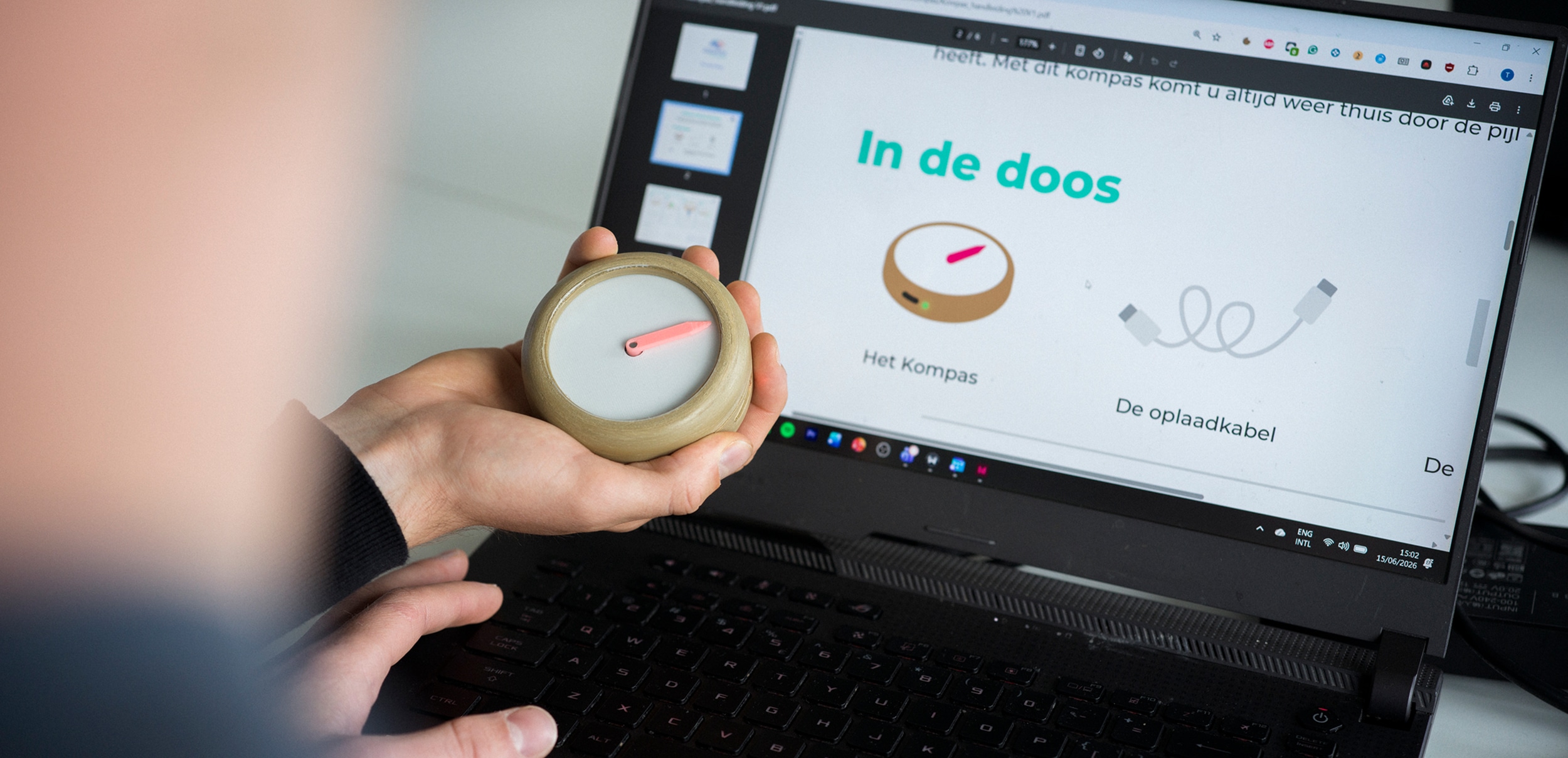
The Compass is a user-friendly device that helps people with dementia find their way around public spaces independently. Thanks to its built-in GPS chip, the compass needle always points homeward. Furthermore, an app allows loved ones and carers to see where the user is. The result is increased freedom of movement and an improved quality of life for people with dementia. Due to its attractive design, the Compass does not look like a medical device and operates in a non-stigmatising manner. Rather than creating additional care tasks, the Compass actually increases the autonomy of both the user and the carer.
Could you tell us about your childhood? How and where did you grow up?
Rick: “In a very ordinary, loving family in South Limburg. Our father worked in logistics at Chemelot. He started as a forklift driver and worked his way up to an office role. Our mother is a facilities manager in education. We were the first engineers in our family.”
Were you already inseparable back then?
Vincent: “We’ve actually done everything together our whole lives: primary school, secondary school, our bachelor’s and master’s degrees, and even our hobbies. I play the guitar and Rick plays the piano. We’re identical twins, so we look very alike. At secondary school, they tried to separate us, but we always found each other again during breaks. Even when we made friends separately, our groups of friends would eventually merge.”
Rick (laughing): “We never managed to get rid of him!”
Did you share an interest in technology from an early age?
Vincent: “We were already working with computers in primary school, and had written our own software by the time we started secondary school. For example, we built a website for our father’s birthday. We also saved up for the latest iPhone. As we learnt easily, we knew from an early age that we wanted to go to a technical university. We encouraged each other in that. Our parents hardly interfered with our school or studies, meaning we became independent at a young age.”
Rick: “Initially, we had both enrolled on the Computer Science degree programme at TU Eindhoven. During an open day, we also attended a trial class in industrial design. We enjoyed it so much that we switched just in time.”
Our aim is to increase the autonomy of people with dementia.
What was it that drew you to design?
Vincent: “I always wanted to be an inventor. For example, I created a colour-coded scheme for my grandparents’ microwave. Defrosting bread involved pressing the blue button three times, the green button once, and then waiting 30 seconds. I also came up with a new type of toothbrush – a mouthpiece with bristles that moved back and forth automatically so that you didn’t have to brush manually anymore."
Rick: “When we signed up for university, I hesitated about whether to study computer science after all. But with industrial design, you have much more freedom. You aren’t just dealing with engineering logic; you also get room to experiment.”
How do you complement each other today?
Vincent: “Rick wants to understand exactly how something works and how it can be improved. He can really get his teeth into the technology and get to the bottom of a problem, down to the finest detail.”
Rick: “Vincent, on the other hand, looks at the context more. Who is the product intended for? What kind of societal impact will it have? During the Industrial Design course, you learn how to design fantastic products. However, we increasingly asked ourselves: how can you ensure that such an idea actually reaches the people who can benefit from it? Relatively little attention is given to this step during a design programme. Consequently, many promising designs eventually end up gathering dust. This is why we opted for a Master's in Innovation Management after our Bachelor’s degree.”
How did healthcare come into the picture?
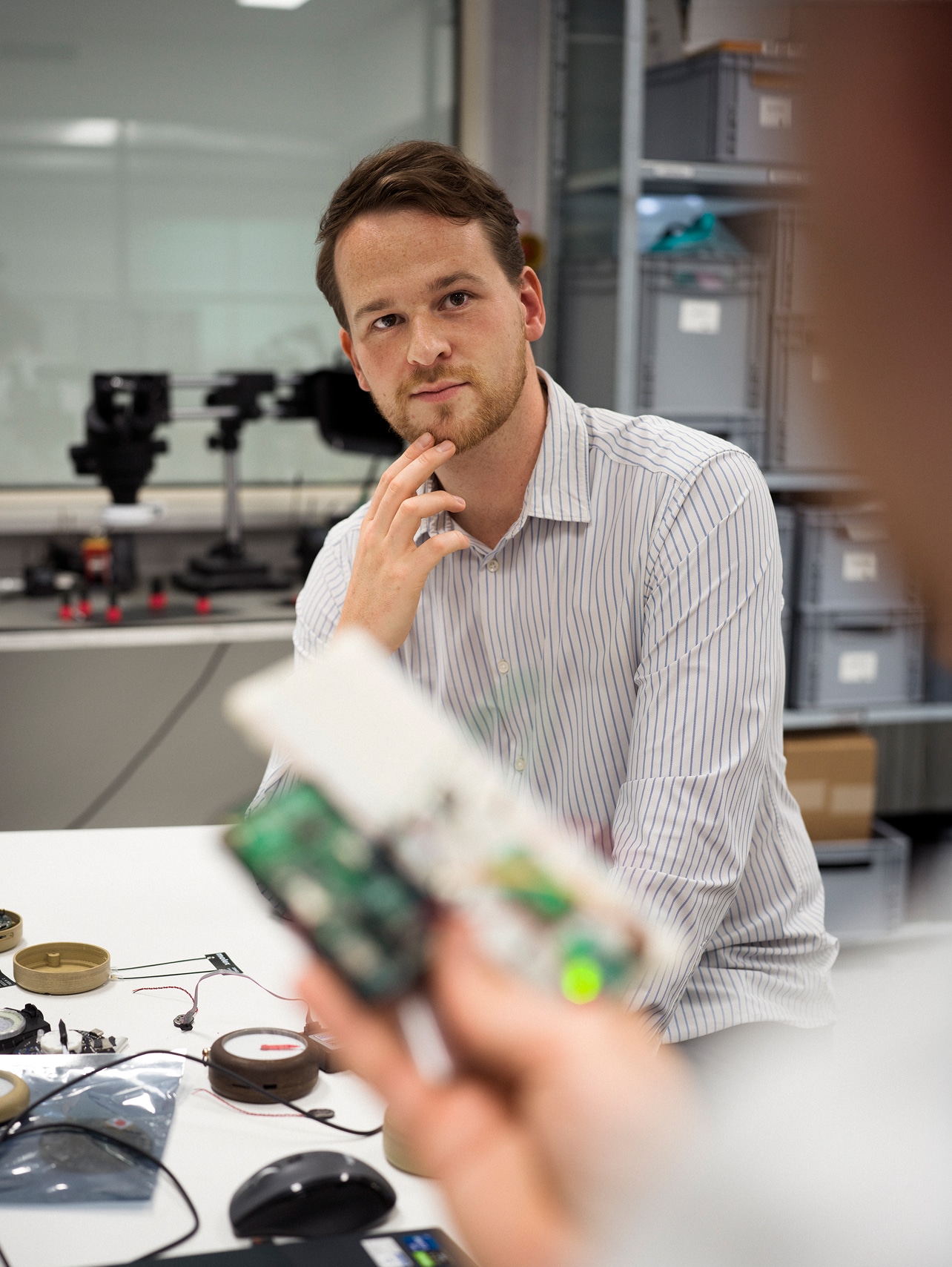
Rick: “Rens Brankaert, a professor we got on well with during our bachelor’s studies, told us about a compass designed to help people with dementia find their way around public spaces more easily. He had developed it in collaboration with the Expertise Centre for Dementia & Technology (ECDT), which focuses on scientific research. He asked us: ‘Can you turn this into a marketable product?’”
Vincent: “It’s a relatively simple solution to a very specific problem. That appealed to us immediately. What’s more, a member of our own family had dementia. That made it feel like a project we really wanted to start working on right then.”
Where did your interest in entrepreneurship come from?
Rick: “During our studies, we were involved in various student teams and start-ups, including in the field of battery recycling. We also worked as freelance data consultants. The real spark came during a joint internship at a start-up incubator in South Africa. We wrote pitches for start-ups there. We studied dozens of real-world cases in a short space of time.”
Vincent: “We discovered that we could apply our design skills directly to business development. The process begins with an exploratory phase, during which you identify the problem. This is followed by the synthesis phase, in which you work towards a solution. Next is the concept phase, where the solutions are validated. After the final creation comes the evaluation. Another exploration or concept phase may then follow. After all, a company is constantly evolving.”
Rick: “This design thinking also comes into play when navigating between the various stakeholders. As a designer, you have to consider the interests of the manufacturer, the marketing department, the raw material suppliers and, ultimately, the user. In the case of the Compass, these include users and informal carers, as well as care institutions, scientists, health insurers, and so on. We see our company as a design.”
How did you get started with the Compass?
Rick: “During our innovation management course, we learned how to fully grasp the context of a problem. Rather than starting by asking how we could improve the design, we tried to understand which problems faced by people with dementia were significant enough to genuinely need a solution. You can develop something that is technically interesting, but if no one wants to use it, it has little value.”
Vincent: “Together with Alzheimer Nederland, we interviewed over 550 informal carers. Rather than asking, ‘What do you think of our compass?’, we asked, ‘What would you like to change in the life of someone with dementia?’ Almost everyone mentioned the same problem: the lack of freedom of movement. Around 40 per cent of people with dementia don’t go outside even once a week, even though walking is very important. Physical activity boosts physical and mental health, provides a distraction, and has a calming effect.”
Rick: “Such walks are indispensable for informal carers, too. It’s often the only time they can take a break from their daily caregiving routine. However, in about 90 per cent of cases, the carer has to accompany them, which actually increases the caregiving burden.”

How does the Compass work?
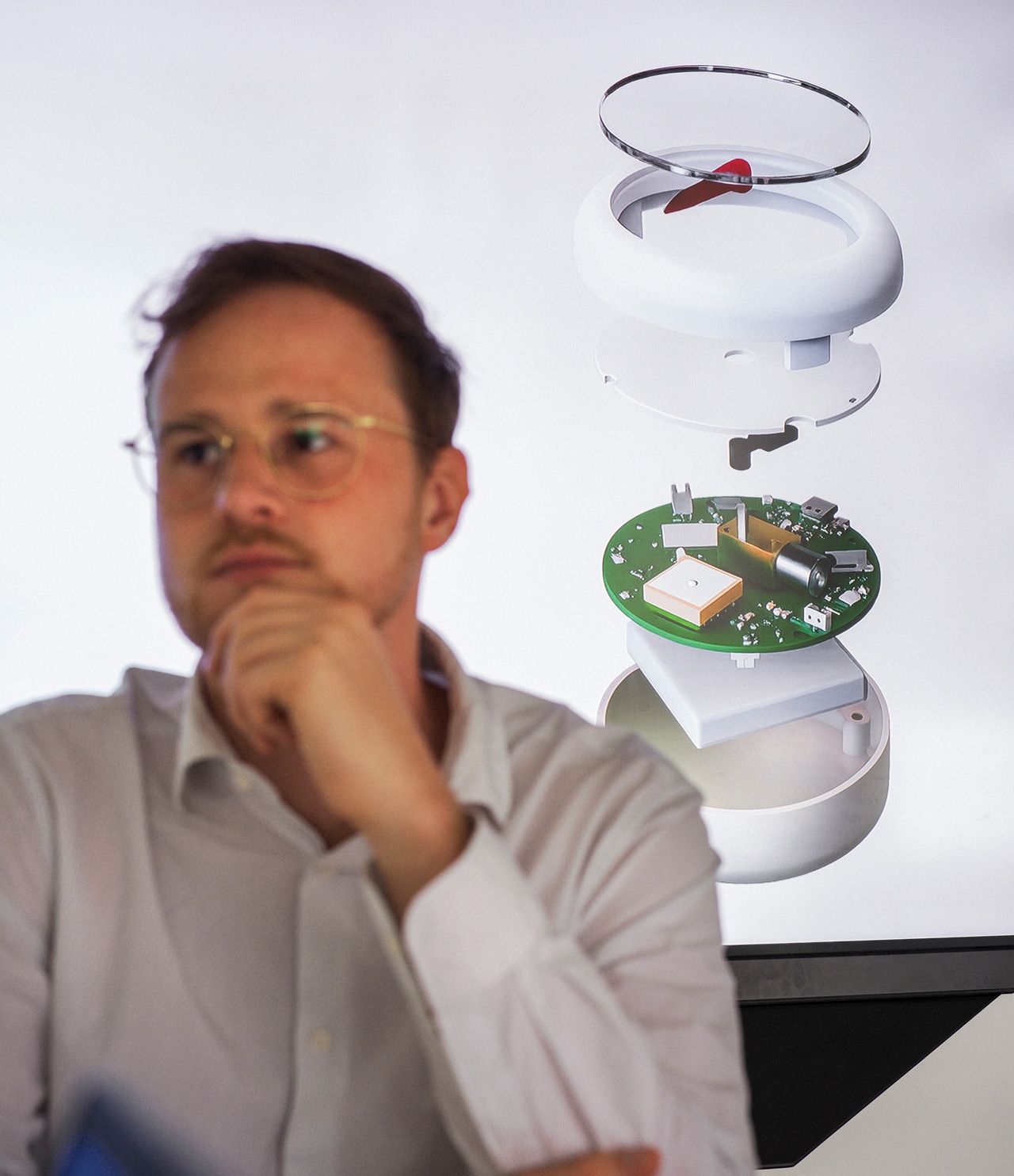
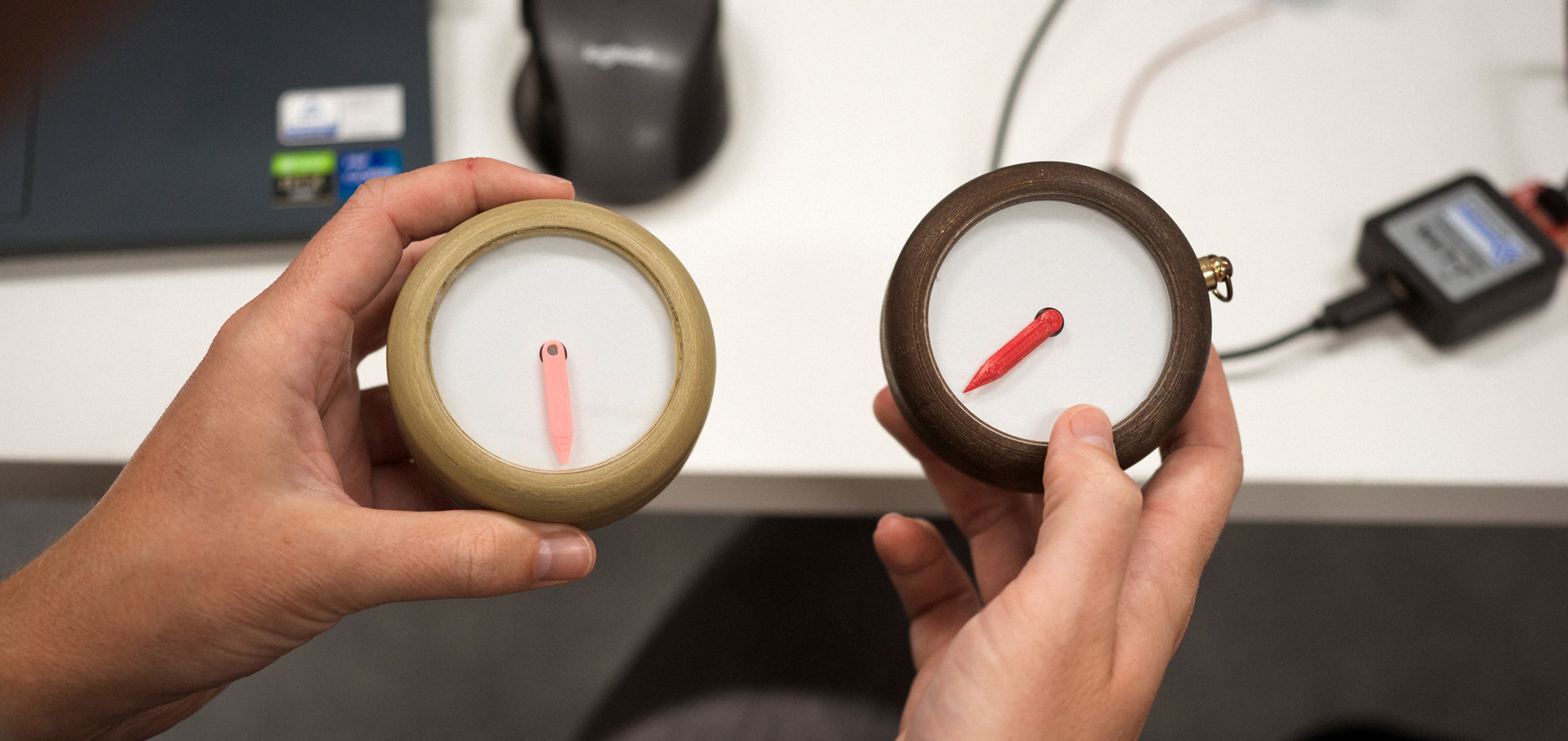
Vincent: “The device looks like a classic round compass with a diameter of eight centimetres. Users can intuitively understand how it works, since we deliberately chose not to use a map or a city plan. You simply have to follow the direction of the needle. You only need to set the Compass to your desired home location once using a hidden button. Thanks to the latest GPS chips, the device knows its location with an accuracy of about 50 centimetres, and the needle constantly points the way back. In exceptional situations, such as at a T-junction, you may need to take a slight detour, but getting lost is virtually impossible. Our previous studies showed that this gave people confidence in the device and restored their sense of independence.”
Rick: “It’s a simple solution to a manageable problem, yet it has a huge impact. One in five people develops dementia, and three-quarters of them still live at home. After their diagnosis, a quarter of them are afraid to go outside alone. With the Compass, we’re improving the quality of life for hundreds of thousands of people.”
What adjustments did you make to the original design?
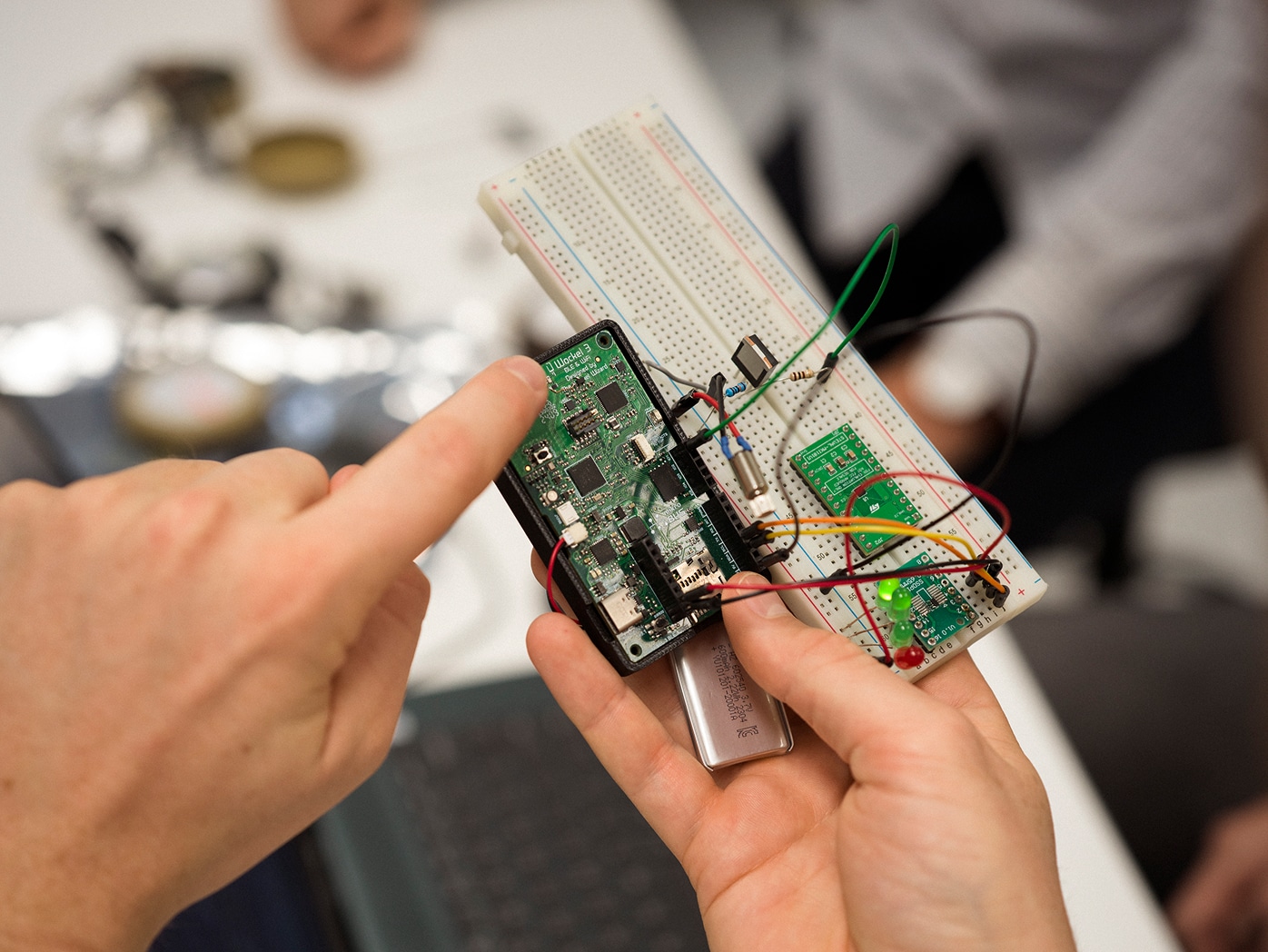
Rick: “First, we conducted interviews with over 500 carers of people with dementia. From this, we learned just how significant a problem it is that people with dementia can no longer go outside. We also learned about the dynamics between carers and their loved ones with dementia regarding freedom and safety. Carers want their loved ones to be able to move around freely, as long as it can be done safely. Therefore, we have not only ensured that the Compass is even easier to use, but also that it is connected so that caregivers can see where their loved ones are and prevent them from getting lost. In addition, we have radically simplified it. For example, we have removed the on/off button. The Compass switches itself on automatically as soon as you pick it up.”
Vincent: “We now have a solid foundation for a broad market launch. At the same time, we are continuing to develop the product, constantly seeking a balance between safety and freedom. For instance, we are testing an algorithm that can recognise wandering behaviour, such as repeatedly walking up and down the same street or moving in a zigzag pattern. When used in conjunction with AI, the system can support people in such situations by sending notifications or providing voice prompts. We are also investigating additional features, such as a timer and fall detection. Users will soon be able to switch these features on or off themselves using the app.”
What role does sustainability play in the development of the product?
Vincent: “Users pay a monthly fee for the service, but the Compass remains the property of Aumens. If someone no longer needs the device, they return it to us. This allows us to maximize its lifespan. The device is designed to be easy to repair and refurbish. We can also detect malfunctions remotely and retrieve the product for maintenance. We aren’t selling a device; we’re selling a solution.”
Rick: “We have intentionally kept the physical product simple and it will barely change. The longer a device lasts, the more sustainable it is. Of course, the underlying technology does evolve. We can update the software remotely, and replace or upgrade the hardware. For the user, however, that technology remains largely invisible. It’s a high-tech product that looks low-tech.”
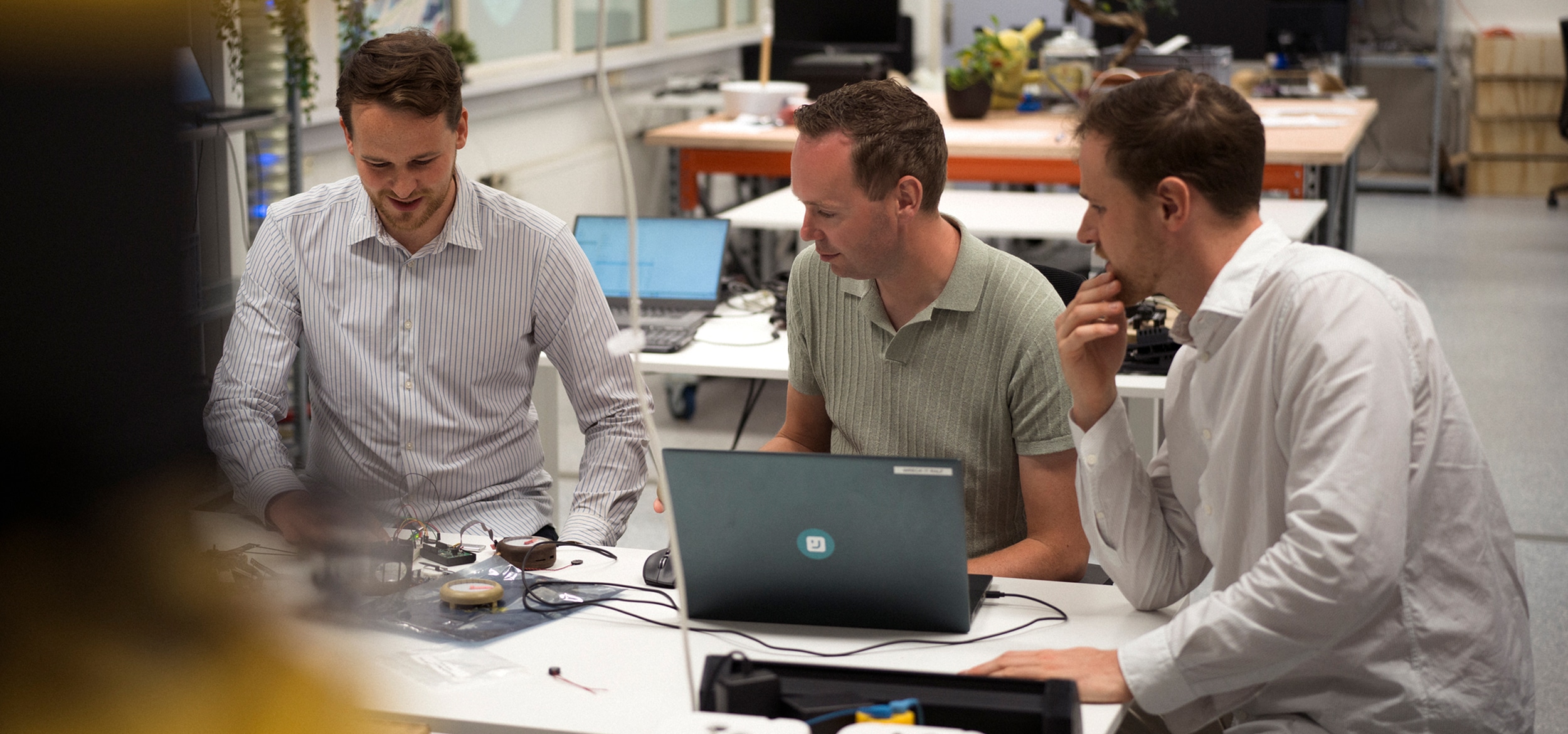
It’s a simple solution to a manageable problem, yet it has a huge impact.
How does the design take into account a very specific user group, namely people with disabilities?
Vincent: “Our design philosophy is that if something goes wrong, things should still work out right. If a user forgets to turn off the Compass, for example, it switches itself off automatically. This makes it easier to use and saves battery power. At the same time, the motion sensor prevents the device from being accidentally switched off during a walk. This may sound obvious, but it requires advanced technology. That technology is constantly changing, while the usage must remain as simple as possible.”
Rick: “That’s why the visible design is so accessible. The device looks neat and attractive, both in terms of shape and colour. It needs to make users happy and eager to use it. You should be able to present the Compass as a fun gadget, rather than a care device that takes control away from users.”
What is the biggest challenge involved in moving from a working prototype to a product launch?
Rick: “The people who would benefit most from the Compass often can’t purchase it themselves, so it falls to family members or informal carers. They expect health insurers to cover the cost. However, for that to happen, the device has to go through a long process and provide a lot of evidence. Another sales strategy involves partnering with care institutions and case managers, but that is a fragmented market with a multitude of different regulations. In short, the healthcare sector is a complex market.”
Vincent: “That’s why we are initially focusing on the user and the informal carer. The product needs to be affordable, for example within the available care budget. Product quality, and with it trust, has the highest priority, but cost control is essential for the market.”

How do you convince all these different parties of the added value of the Compass?
Vincent: “In our communication, we focus primarily on the user and their immediate family. We tell the story through two fictional characters: carer Rob and his wife Annie, who has dementia. Rob is 80 and is reaching his limits. We use relatable situations to show how the Compass can simplify their daily lives. For instance, Rob no longer has to lock the front door, and Annie can once again run errands or post a letter independently. She can go on an adventure, while Rob takes a moment to rest.”
Rick: “At the same time, we demonstrate the social and economic value to policymakers and health insurers. That essentially means crunching the numbers. In the Netherlands, the police spend the equivalent of about 650 FTE each year on locating and assisting people with dementia who have wandered off. The Compass pays for itself if just 20 minutes less home care is needed per month. And every month that admission to a nursing home is delayed saves around 10,000 euros. That’s without taking into account the reduction in care needs due to the improved quality of life.”
What is your ultimate goal?
Vincent: “Our aim is to increase the autonomy of people with dementia, so that they can be self-reliant for as long as possible and maintain their dignity. This aligns with our own values. Freedom and independence are important to us. That’s why our company is called Aumens. ‘Auto’ is Greek for ‘self’, while ‘mens’ is Latin for spirit, thought or mind and indicates the preservation of one’s own spirit. Our logo features a brain with the prefrontal cortex highlighted – the area responsible for planning and decision-making.”
Rick: “Care often makes people more dependent. We want to show that there’s another way: care that actually empowers people and makes them more independent. Our co-founder, Professor Rens Brankaert, heads the Expertise Centre for Dementia & Technology (ECDT), which researches technological solutions relating to areas such as sleep, time perception and cooking for people with dementia. We are already working closely with the ECDT, but ultimately our aim is to establish a consortium of companies and organizations that collaborate on human-centred care. Our role is to translate concrete questions from practice, through a careful design process, into products that actually reach the market.”
What’s an important lesson you’ve learned?
Vincent: "We were quite naive starting out. We thought we would set up a company, bring in investors, and then collect a salary and shares. In practice, however, it turned out to be much more complicated. We are developing a technical product for a complex target audience, and investors don’t automatically jump on board. That naivety combined with perseverance also results in a lot of benefit. Currently, research grants are our primary source of income. We haven’t drawn a salary for two and a half years. That’s tough, but it’s only temporary. We fully believe in our mission.”
Would you give the same advice to other entrepreneurial designers?
Vincent: “Yes – don’t hesitate, persevere with total conviction.”
Rick: “And know your target audience and try to truly understand them. Test every solution you develop with that audience. After all, you aren’t designing the product for yourself, but for them.”