.unusual
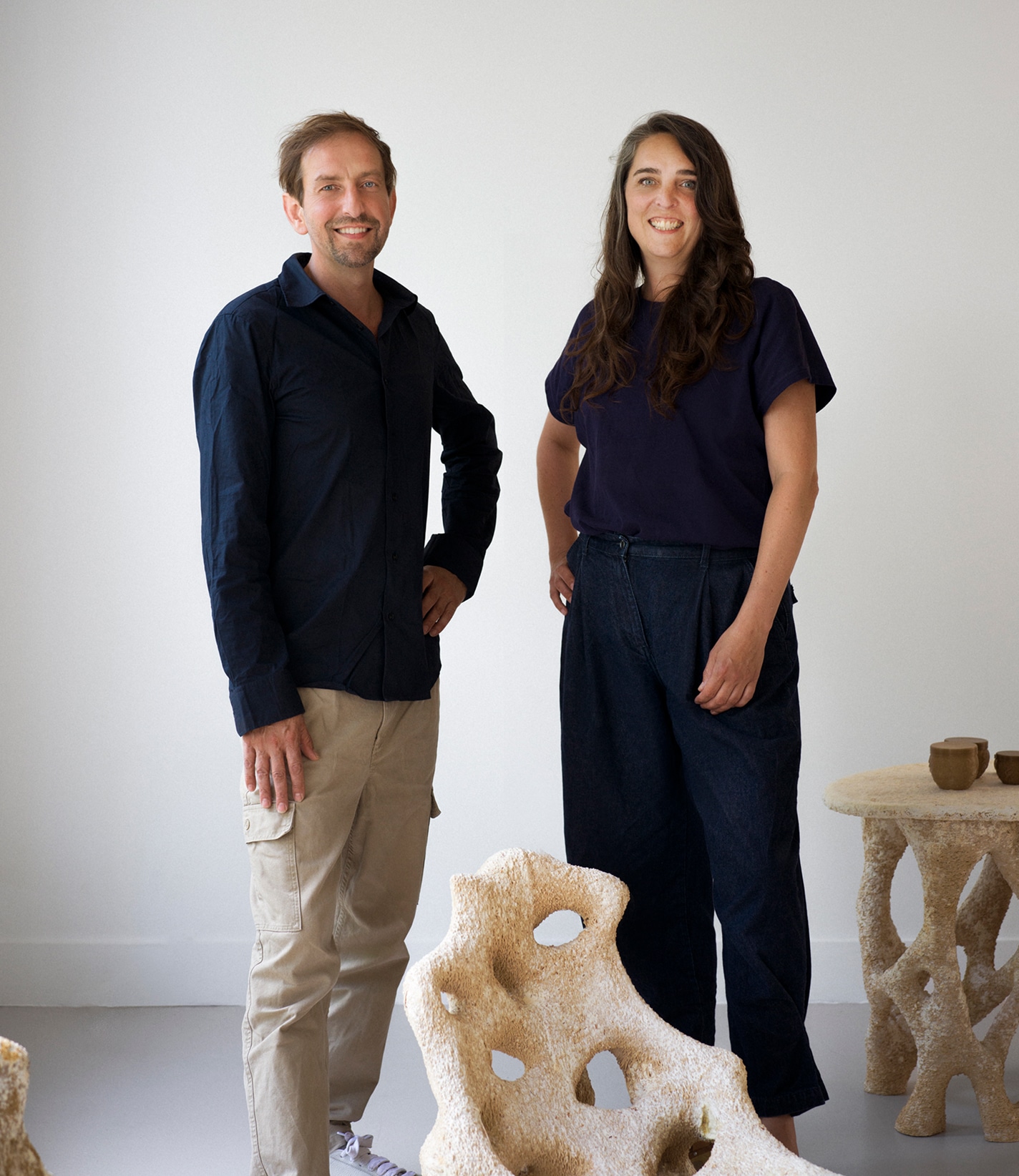
Maartje Dros & Eric Klarenbeek
Designers Maartje Dros and Eric Klarenbeek research sustainable raw materials and innovative manufacturing techniques. At their studio, .unusual: Designers of the Unusual, they work with bio-based and living materials, as well as 3D printing. Their goal is to create an alternative production chain that strengthens the Earth and the climate rather than depleting them.
The current manufacturing industry largely relies on monocultures, using one material, one traditional production process and one waste processing method. This results in high CO₂ emissions, unusable residual streams, and a loss of biodiversity. The construction sector, in particular, remains heavily dependent on extractive materials such as concrete and plastic.
Eric Klarenbeek and Maartje Dros of design studio .unusual take a different view of nature. They see it not as an inexhaustible source of materials, but as something to collaborate with. They create products by working with fast-growing microorganisms such as algae and mycelium, experimenting with industrial applications of these living raw materials in their workshop and laboratory.
Translation: Jane Szita
Photography: Blickfänger
Your design practice starts from experimenting with new raw materials and you describe yourselves as ‘Designers of the Unusual’. Was this pioneering spirit instilled in you from an early age?
Eric: “My parents, my older brother and I were among the first 100 residents of Almere. The city didn’t really exist back then – construction was happening everywhere. Everyone was new to this place without history. That created a special dynamic. The forest was precisely demarcated, with all the trees lined up in perfect order and the drainage ditches perfectly straight. I’ve always thought of nature as something you can tweak.”
Maartje: “I actually belong to one of the oldest families on the island of Texel. Because of that, I feel a strong connection to nature and the elements. Cycling against the wind, taking a quick evening swim in the sea and walking in the dunes with friends are all things I love to do. People from Texel are very headstrong and self-reliant. You have to be, because on an island like that amenities are scarce. From an early age, I learned that if you want something, you have to make it happen yourself.”
What else influenced you when you were young, besides the tough living conditions?
Maartje: “My father was a graphic designer. Eventually, however, he had to take over the family business and give up his dream of becoming an artist. But he did bring my mother to Texel. She was an independent Frenchwoman who also worked, which was still unusual on Texel at the time. We went on holiday to France to visit her family. Texel soon felt too small. I felt the urge to spread my wings.”
Eric: “My mother was a dressmaker, but my father wanted to be a musician. Instead, he became a carpenter to support the family. There was always music and crafting going on at home. I played the drums in bands and formed a DJ duo with my brother. In a sense, just like Maartje, I was able to fulfil my parents’ dream of pursuing a creative profession. That also creates an obligation to make something of it. That’s why, after school, I wanted to leave Almere as soon as possible.”
When did you realise you were going to become a designer?
Maartje: “I was torn between studying physics or artificial intelligence, but I ultimately chose the Design Academy Eindhoven. The programme seemed creative and artistic to me, and also social. I have been socially conscious since a young age – a real world improver. I thought that being a designer places you at the heart of society. Design enables you to improve people’s quality of life. At the same time, I was drawn to the practical nature of a design programme. You really learned how to create things there. There were digital workshops and textile studios, and you were taught colour theory. I felt right at home immediately.”
Eric: “I first studied for a year at the conservatoire in Arnhem. I just sat drumming all the time in a soundproof basement. My housemates were studying fashion and graphic design at the art academy. That seemed much more varied to me. What attracted me to the Design Academy Eindhoven was the freedom to sketch and to discover all kinds of new things, including technology.”
How did you meet?
Maartje: “We were in the same class and we immediately hit it off. We share the same likes and dislikes. Already during our studies, we constantly interfered with each other’s work. After the Design Academy, I studied for a Master’s degree in Design for Public Space.”
Eric: “And I started my own design studio specialising in conceptual products, such as a glass bubble containing small LEDs around its perimeter. The glass reflects the light, so that you can no longer see the direct light source. I was using technology to manipulate the natural phenomenon of light.”
When did the worlds of artistic installations, technology and social design converge for you?
Maartje: “We were commissioned to create a series of benches for the historic forts of the New Dutch Water Line. Our aim was to produce these benches sustainably using local raw materials. To this end, we set up a network of suppliers and craftspeople. The Dutch Forestry Commission supplied the wood, and the benches were produced in sheltered workshops. Information about the Water Line was then milled into the benches in high-tech woodworking shops. This experience taught us that, if as a designer you want to make a production chain more sustainable, you have to be the linchpin in the network of suppliers, makers, scientists and researchers.”
Eric: “At the same time, we noticed that we were very dependent on a scarce resource: high-quality wooden planks. This made us realise that we needed to start making products using abundantly available, sustainable raw materials.”
That sounds simple. But how do you find those easily available, sustainable raw materials?
Maartje: “At first, we investigated whether it was possible to 3D-print using recycled plastic waste. However, we quickly concluded that recycling actually perpetuates the polluting system of plastic production. That’s why we switched to organic, biodegradable materials. Our goal became to produce in a way that doesn’t deplete the Earth’s resources or harm the climate, but actually strengthens them. Our products are designed to make the world a cleaner place.”
Eric: “We experimented with 3D printing using waste materials such as wood fibres. Together with scientists from Wageningen University, we developed a method for mixing wood fibres with straw, nutrients and mycelium. Mycelium consists of living mushroom spores that spread out as long fungal threads and harden into a natural adhesive. To demonstrate that this technique works, I modified a 3D printer to create the world’s first chair made from living material. This Mycelium Chair is lightweight, strong, inexpensive, and completely biodegradable. At the end of its life cycle, you can put the chair through a wood chipper and bury it in your garden – it's even good for the soil! The chair is currently on display at the Centre Pompidou in Paris.”
Our products are designed to make the world a cleaner place.
How did you make the transition from artistic museum pieces to functional consumer products?
Maartje: “To produce the mycelium, we got in touch with a mushroom grower who supplies the food industry. Together with a partner from the packaging industry, we set up a laboratory in a corner of his farm, complete with its own cultivation chamber and an experimental production line. We had developed a method of growing these cultured fungal spores in moulds. It turned out that this cork-like raw material was only suitable for use as packaging.”
Maartje: “In order to scale up our materials research and develop mass-produced products, we still need to partner with companies.
Fortunately, they’re increasingly reaching out to us. Together with the construction firm Heijmans, we are working on a project called Growing Facade, which involves creating a collection of 3D-printed façade panels made from mycelium. This material has great potential and can be used in many ways, such as for façades, ceilings or interior walls. It is lightweight, strong, fire-retardant, odourless, sound-absorbing and fully compostable. The panels also have excellent acoustic properties and, thanks to their breathable surface, they contribute to a healthy indoor climate by regulating moisture and absorbing heat.”
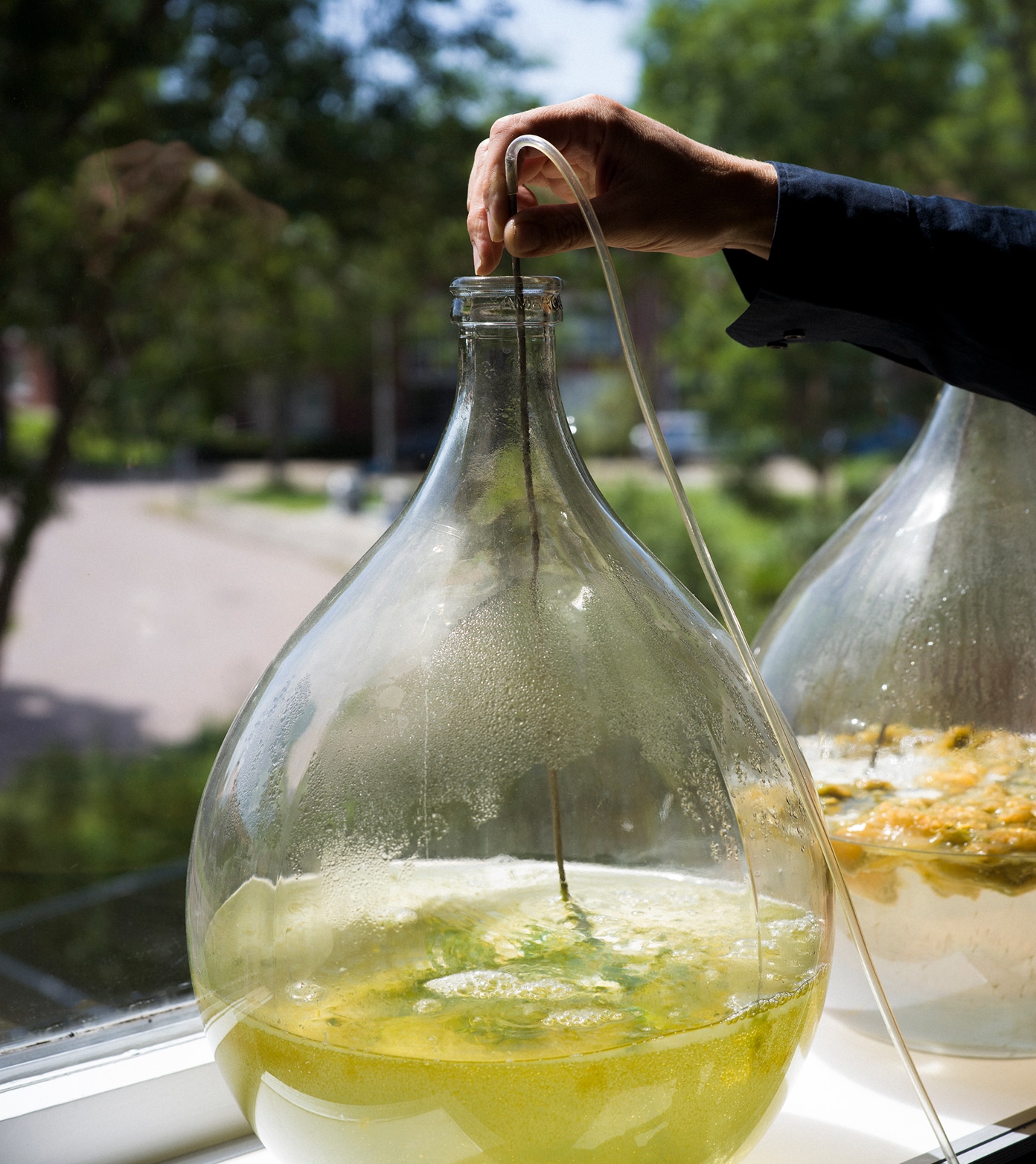
Eric: “The panels are manufactured by growing mycelium inside 3D-printed reliefs made from mycelium combined with wood, seaweed fibres and sawdust. The result is a hard shell encasing the organic fungal material, which primarily serves as insulation. We had already developed this technique for packaging materials. The knowledge we gain through our research sometimes comes in handy for other materials or applications.”
You now work with other natural raw materials, too. How did you discover algae?
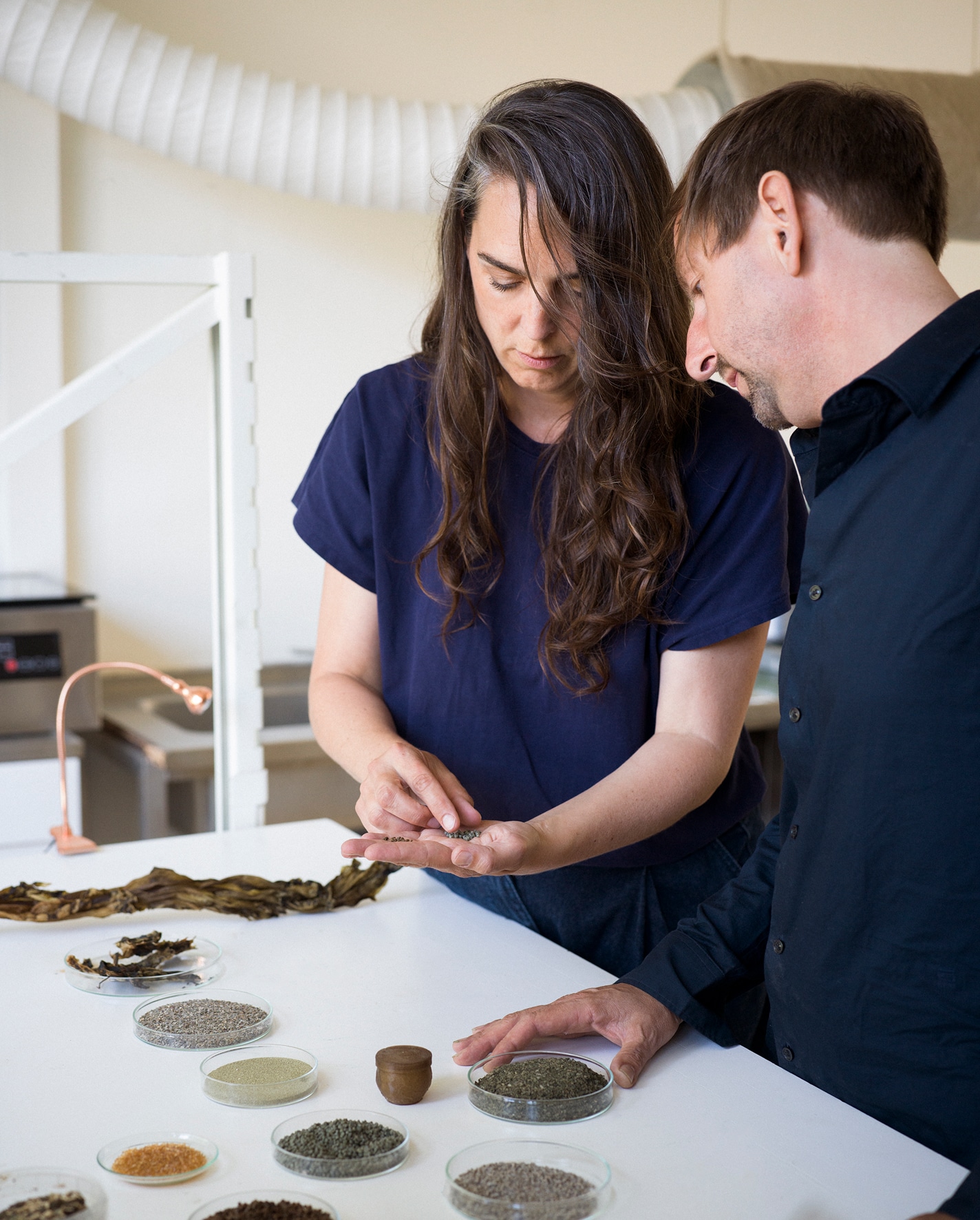
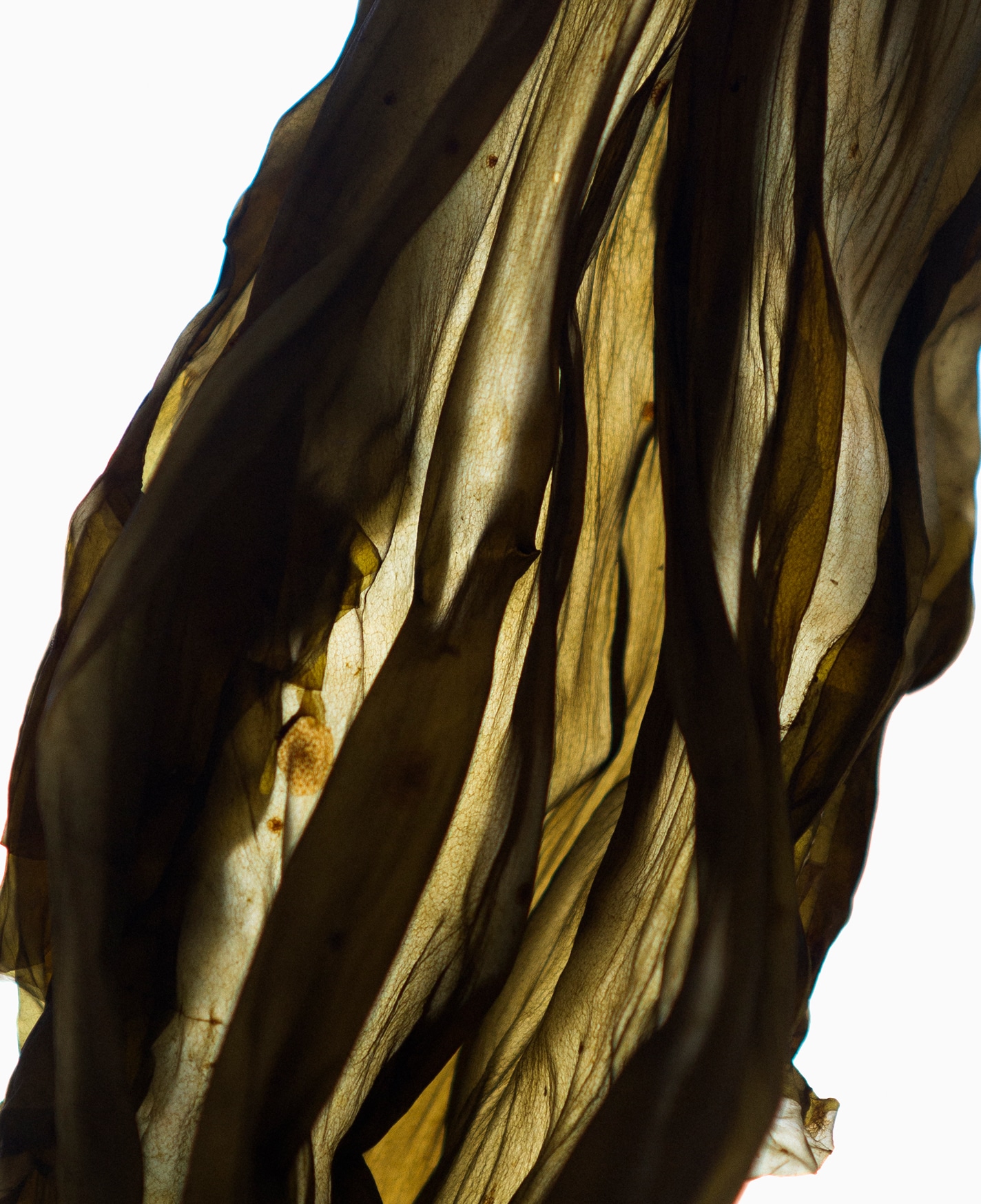
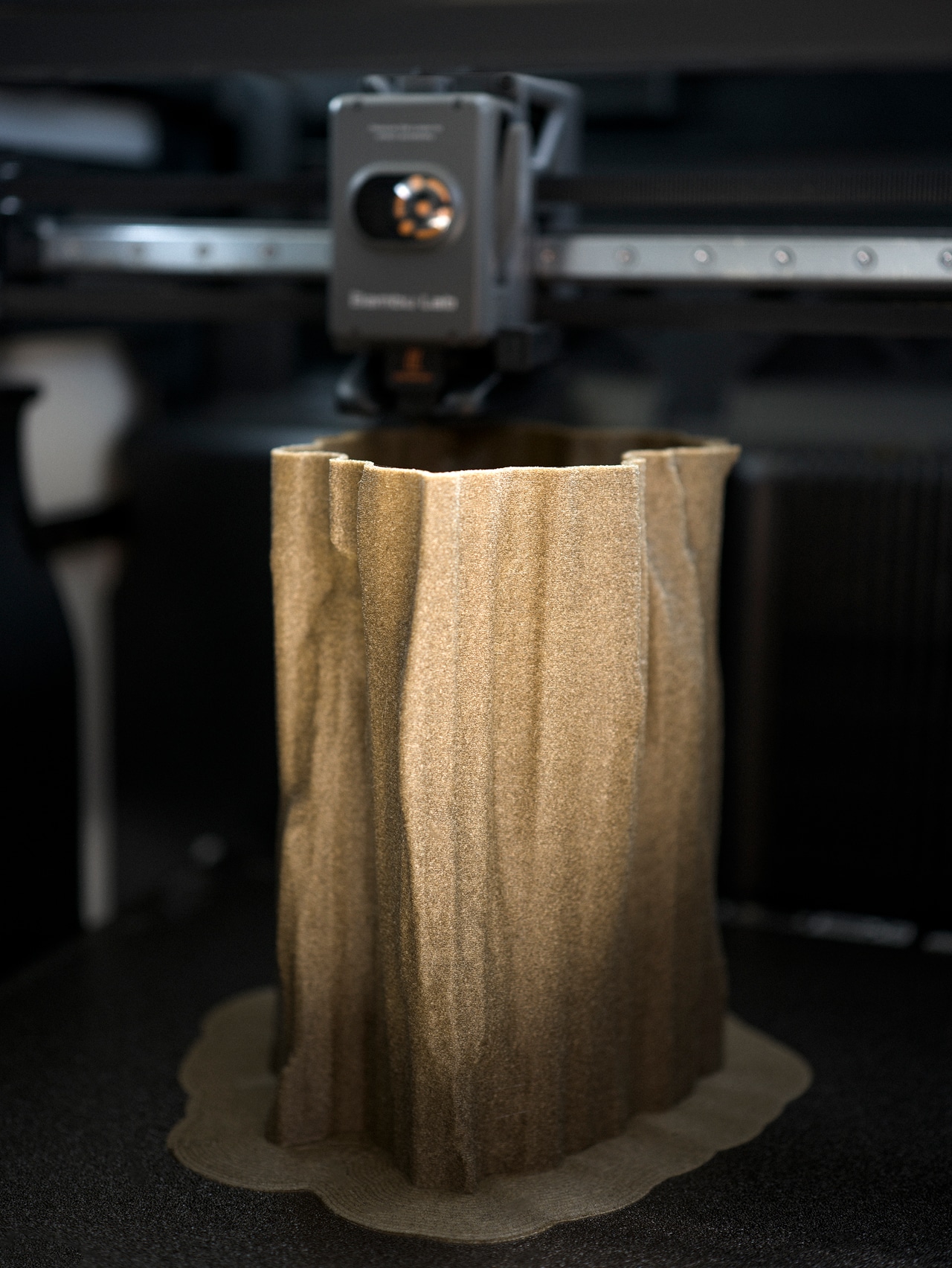
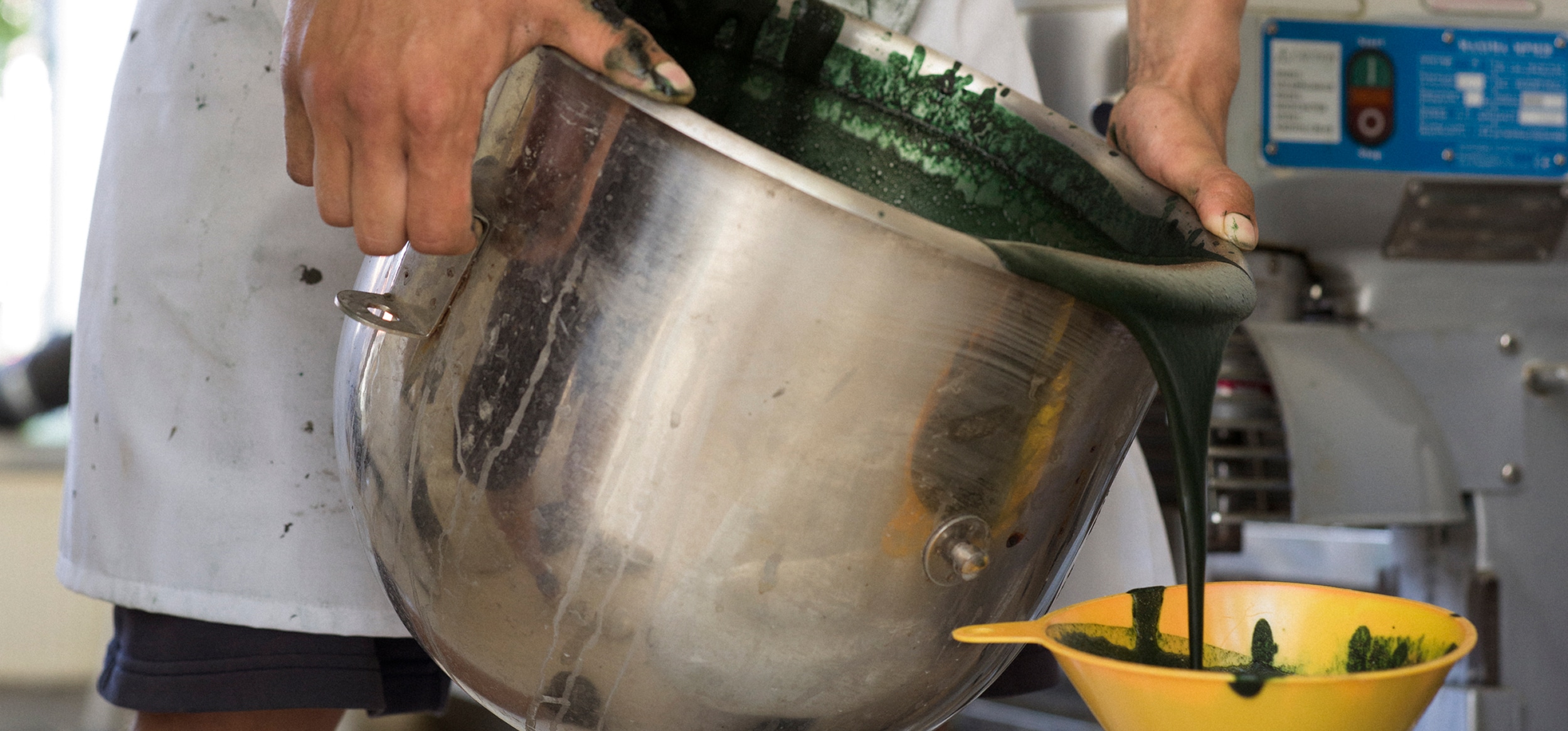
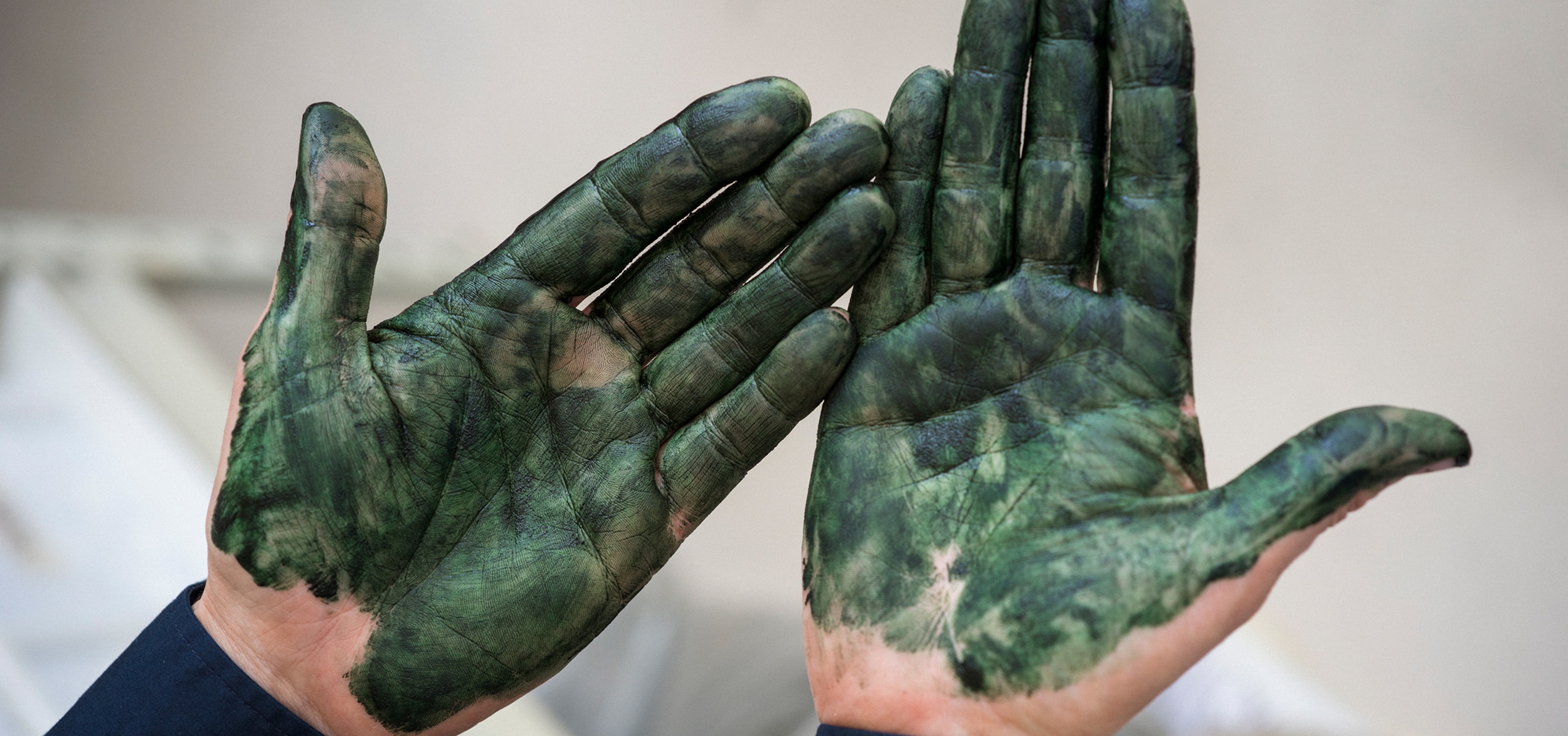
Eric: “Together with scientists from Wageningen University, we’ve been researching how to turn algae into bioplastic. When we grind dried algae into a powder and mix it with flaxseed oil, sugars and binders such as potato starch, the result is a sticky paste made entirely from plant-based raw materials. We extrude long strands of bioplastic from this, which we then use to 3D-print vases and other products. The base material from seaweed is coarser. We’re experimenting with using it in colour pigments and as a natural binder.”
Where do you source the algae, and how do you process it into a usable raw material?
Maartje: “We only use seaweed from floating farms or algae from land-based cultivation facilities. When large amounts of algae grow in nature, it’s a sign that the natural balance has been disrupted, for example by ocean warming or industrial discharges. By using this algae, we would become part of that disruptive system.”
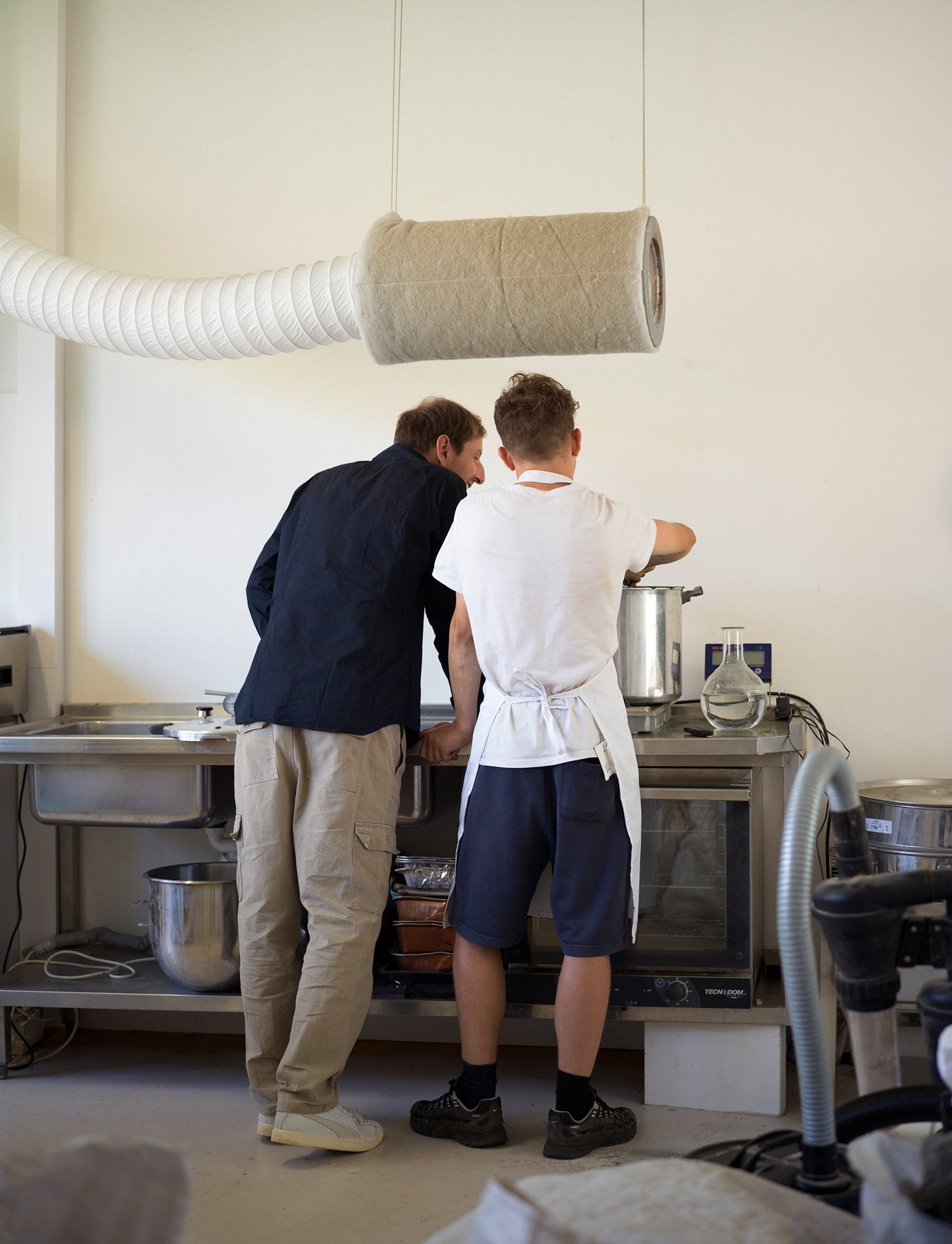
Eric: “Our studio has become a small algae factory. We use old-fashioned coffee grinders to grind the algae and a baker’s oven to experiment with drying temperatures and times. However, there is also a clean room, separated from the studio, where we analyse the algae harvest using a microscope and culture trays. We have developed a small-scale, fully circular production chain.”
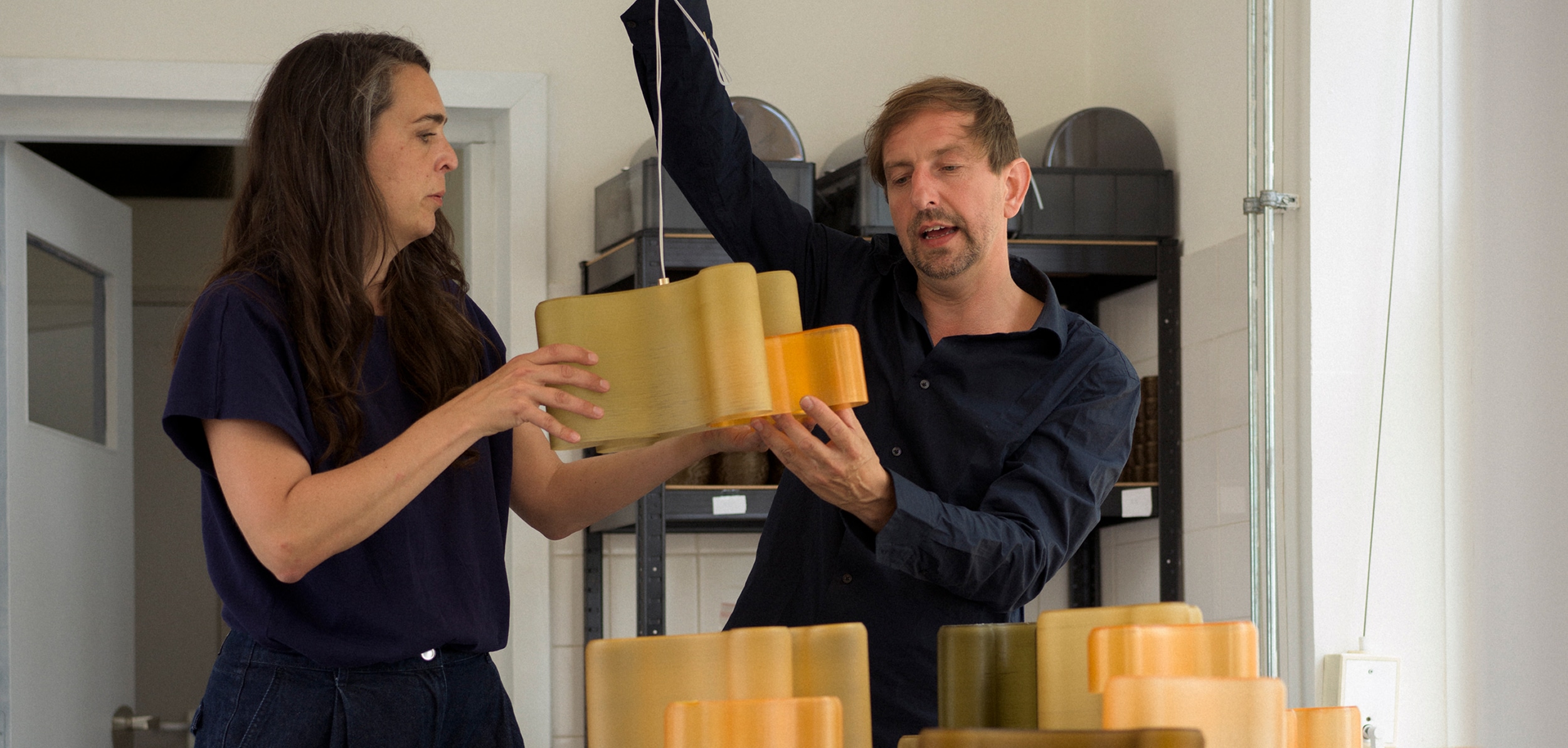
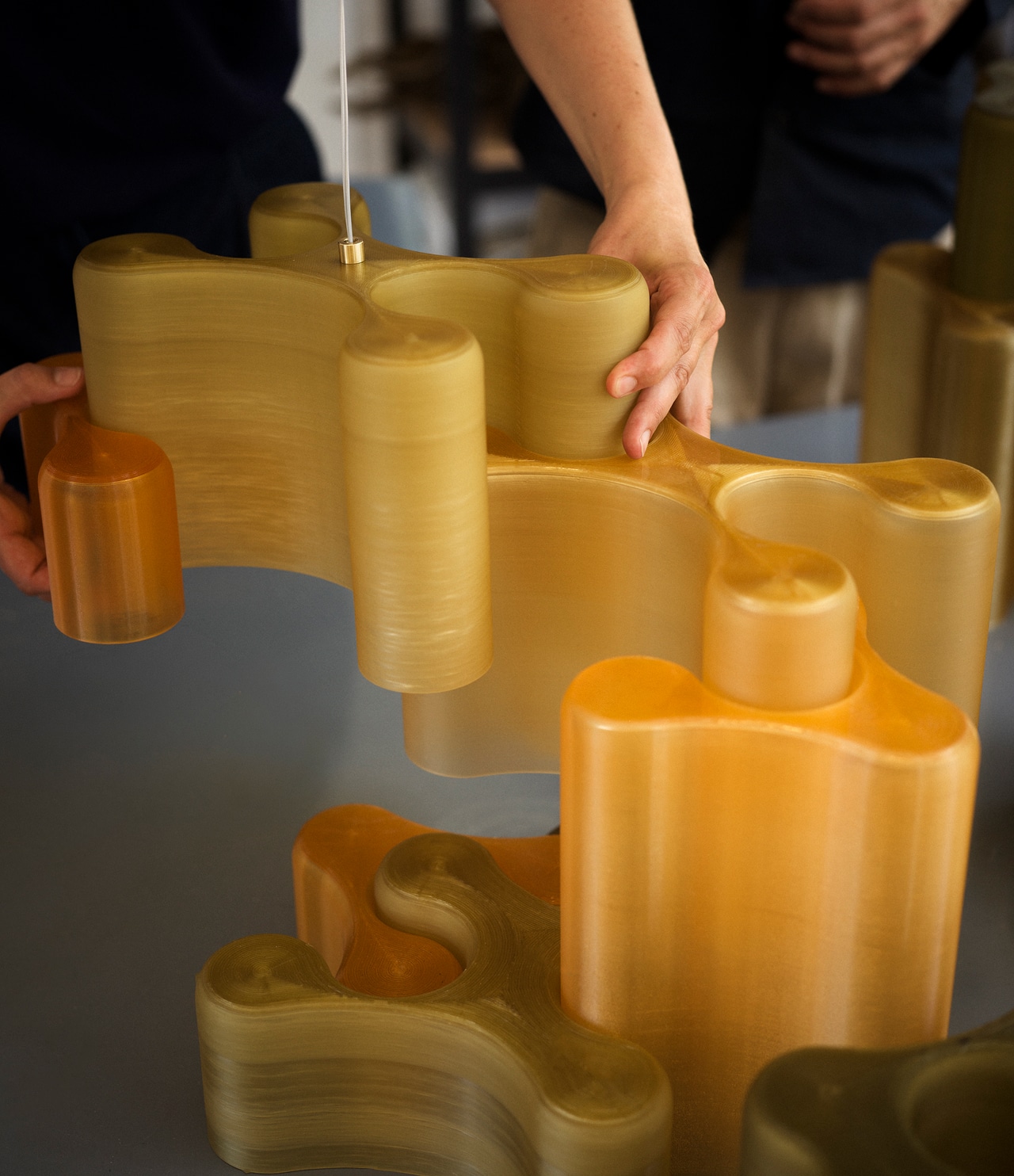
Maartje: “In the meantime, we have developed a bioplastic made from algae which we are using to create high-quality interior products with a surprising twist. We’re using 3D printers to create a collection of connectable algae vases. If we can’t find a company to collaborate with, we just do it ourselves.”
Do you divide the roles between yourselves?
Maartje: “Eric gets deeper into the technical side of things. For an interior design project, we wanted to use dark paint containing seaweed pigments. So he devised a system for mixing and applying these colour pigments in the best possible way – whereas I think, ‘Let’s just make one pot of dark paint for this project.’ Through his research, he makes discoveries that we can apply to other projects too.”
Eric: “Maartje has a good eye for the impact of a design. She always focuses on the functionality of an application. Design is a way to connect people. This can be achieved through the stories we share, as well as through how the design is used –take the benches in public spaces, for example. She has a keen understanding of how every link in a production chain can be sustainable and responsible.”
You work with scientists, museums, governments and companies. How do you find these partners?
Maartje: “It’s about being bold and convincing people of the added value of design. As designers, we continuously take on different roles, from material developer and producer to entrepreneur and storyteller. After all, scientists often make amazing discoveries, but they don’t always focus on implementing and applying them. Companies seek sustainable solutions, but sometimes lack the knowledge. Through our work with .unusual, we connect those worlds.”
We reveal the potential of these living materials
It sounds like you’re constantly having to convince others of your vision?
Maartje: “Presentations in museums or at design weeks are an effective way to showcase our work. We also enjoy working in public spaces where our work is visible to all. For the international horticultural event Floriade in Almere, for example, we showcased a series of seaweed and algae prototypes and applications. Subsequently, the City of Amsterdam asked us to collaborate with the University of Amsterdam on an innovation pavilion, which would give start-ups the chance to test bio-based materials on site. Can you grow a building, so to speak, instead of extracting materials from the Earth, as with cement or fossil plastics?”
Eric: “The products themselves also tell a story. They demonstrate what’s possible with renewable materials like algae and mycelium. Many people associate algae with sludge in the water and fungi with decay. We reveal the potential of these living materials.”
You are both researchers and designers. How do you strike a balance between the two roles?
Maartje: “We don’t really see the difference between research and design. By researching and testing new materials ourselves, we develop a deep understanding of their qualities. We know what can and can’t be done with them. In a sense, the research also informs the design process. The mycelium façade tiles, for instance, are the result of several years of research into growing mycelium in moulds. By embracing the unexpected, you arrive at ground-breaking results.”
Eric: “What’s more, combining research and design gives us a lot of freedom. If we discover an interesting material or technique, we can immediately start experimenting with how to apply it to products. We don’t have to wait for others to figure something out for us.”
What’s your long-term vision as a design studio?
Maartje: “We are increasingly succeeding in linking various research results together. We are currently exploring the potential of combining mycelium and algae. We have conducted several successful tests involving mycelium growing on an algae-based material. These raw materials are sustainable and complement each other: mycelium grows on land and consumes oxygen, while algae live in the sea and absorb nitrogen. They can be cultivated locally and have many applications, ranging from food to bioplastics. In this way, we’re also seeking a natural foundation in our design practice.”
Eric: “Ultimately though, all those studies are a means to an end. Our goal is to ensure that innovative materials and techniques are widely adopted in order to create attractive, usable and reliable products. We want to create everyday objects that are manufactured sustainably and enjoyed by as many people as possible. That’s where our added value as designers lies.”
If you could pass on a message to the next generation of designers, what would it be?
Maartje and Eric: “Stay curious, keep learning and make use of the knowledge that already exists. You can do this by approaching and collaborating with interesting partners, but also by scouring public datasets, where a lot of knowledge is available for free.”