Chloe Innovations
Karlheinz Samenjo
Chloe Innovations is a start-up on a mission to develop affordable medical devices that will give women worldwide access to safe and dignified pain relief during gynaecological procedures.
Every year, an estimated 25 million women in low-income countries undergo gynaecological procedures without anaesthesia. Existing medical equipment is often too expensive, too fragile or simply unavailable. The situation is most urgent in many parts of Africa, where women often have to buy the necessary supplies, such as syringes, needles or medication, themselves. The long needle required for internal anaesthesia costs between five and ten euros and is often unavailable. Consequently, millions of women each year are forced to undergo procedures such as miscarriage treatment, abortion and biopsy without anaesthesia.
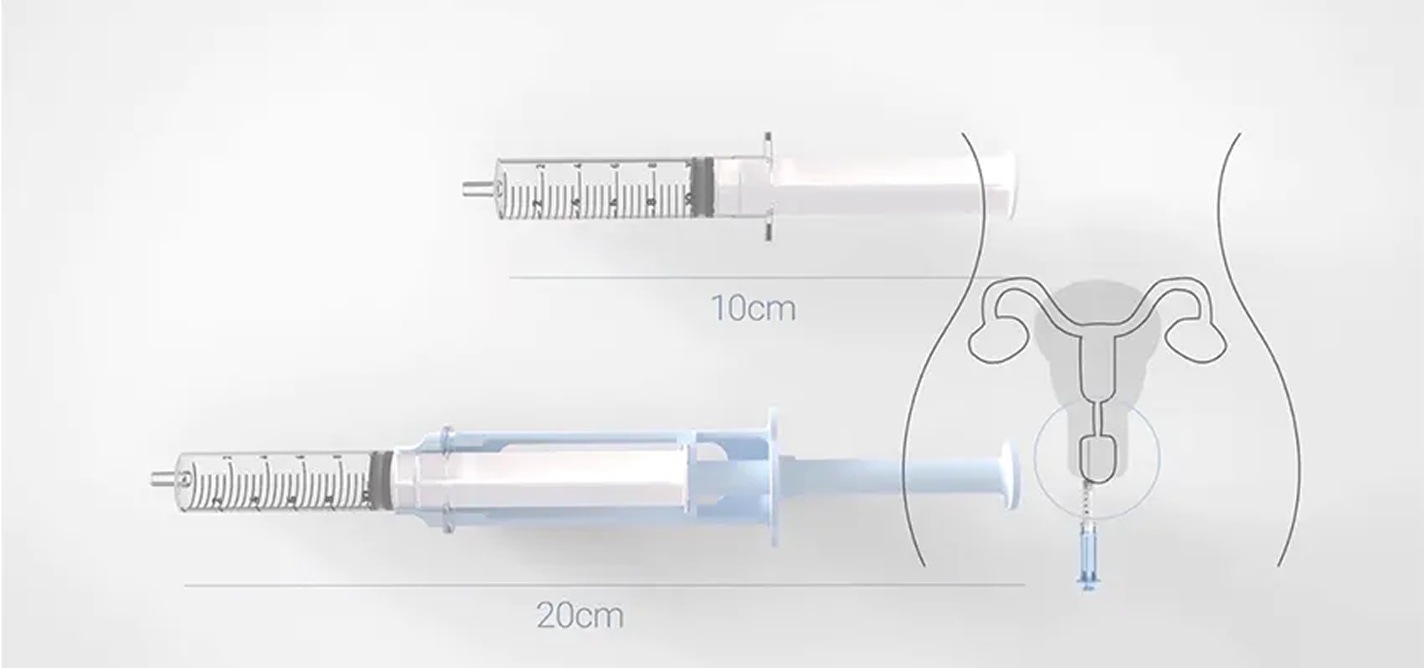
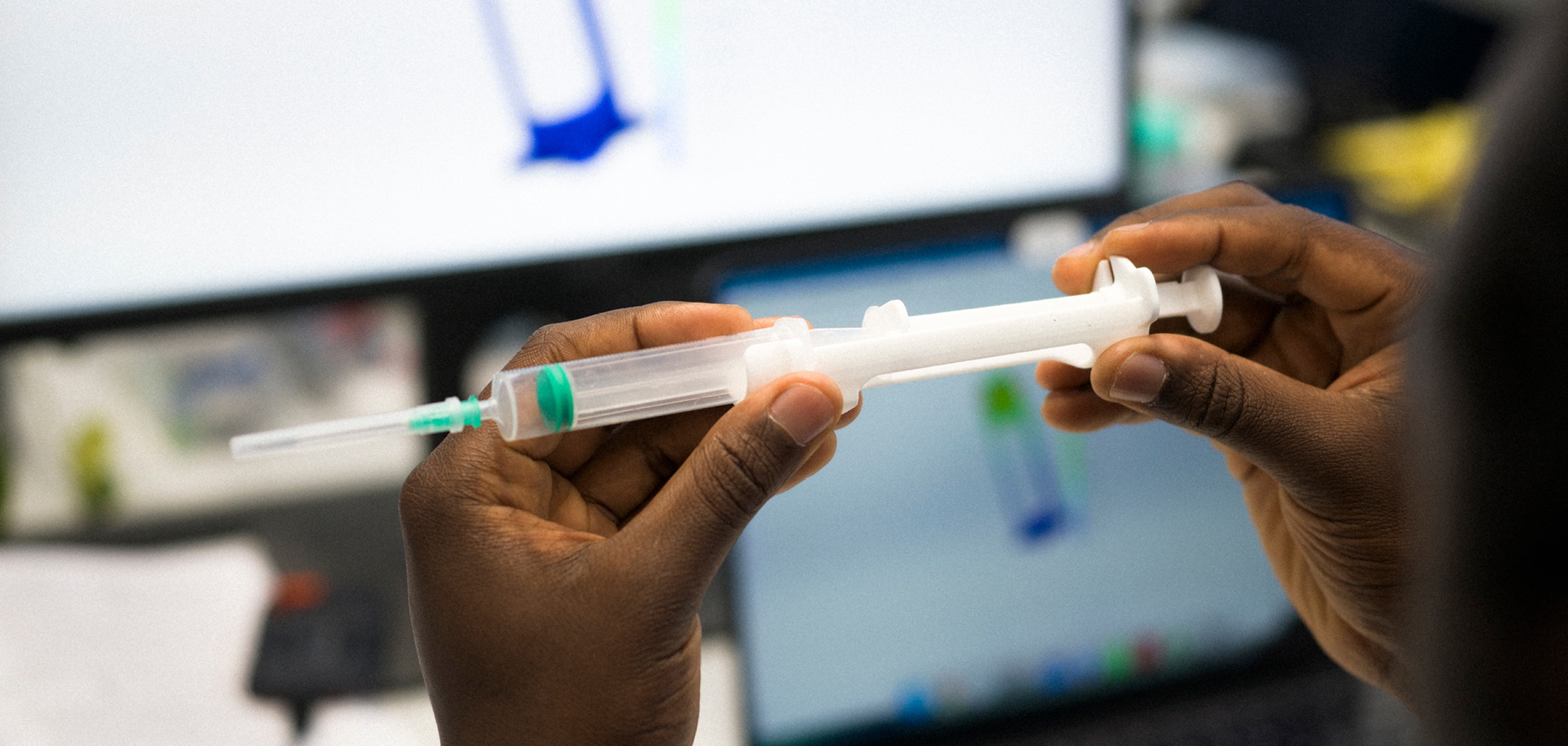
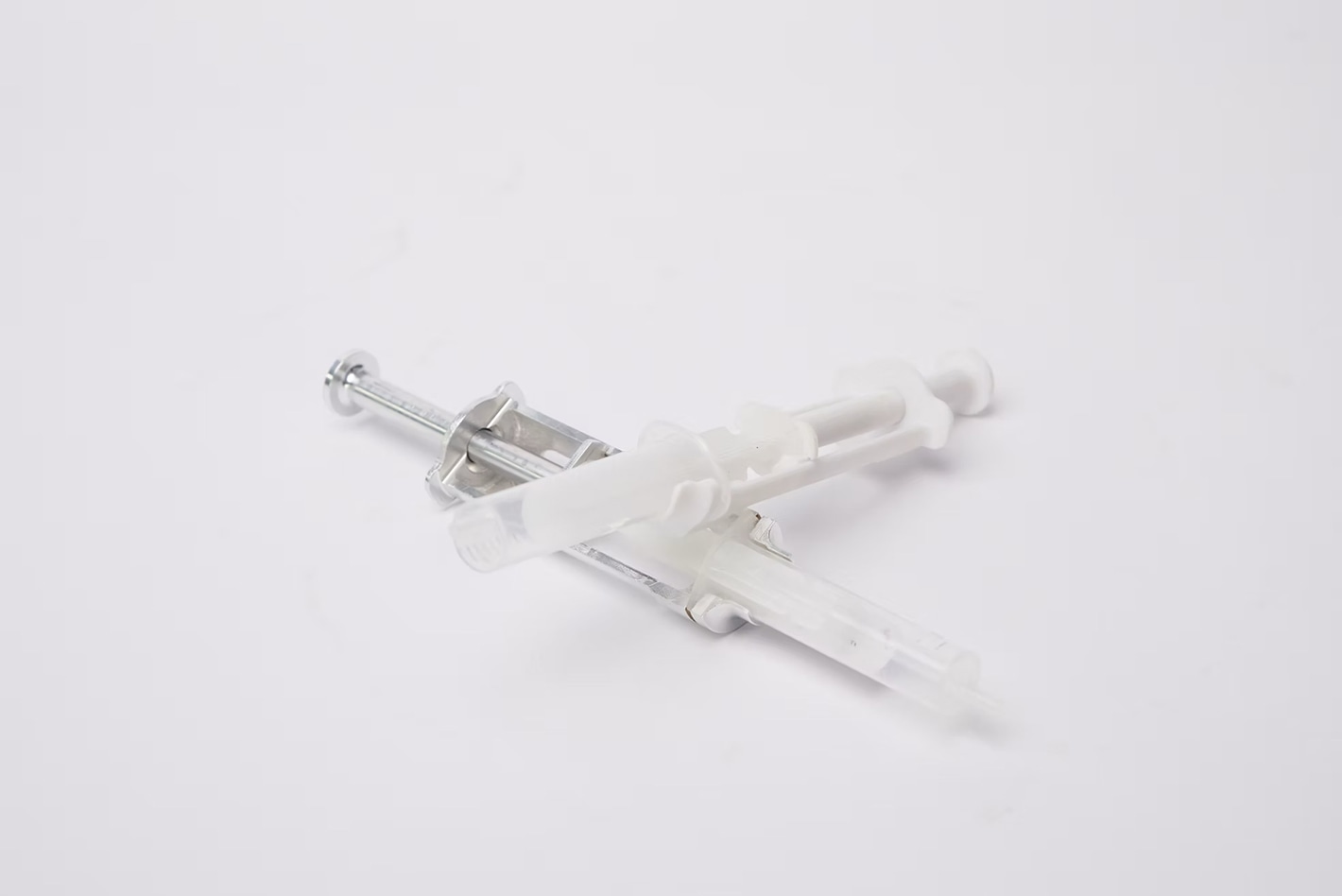
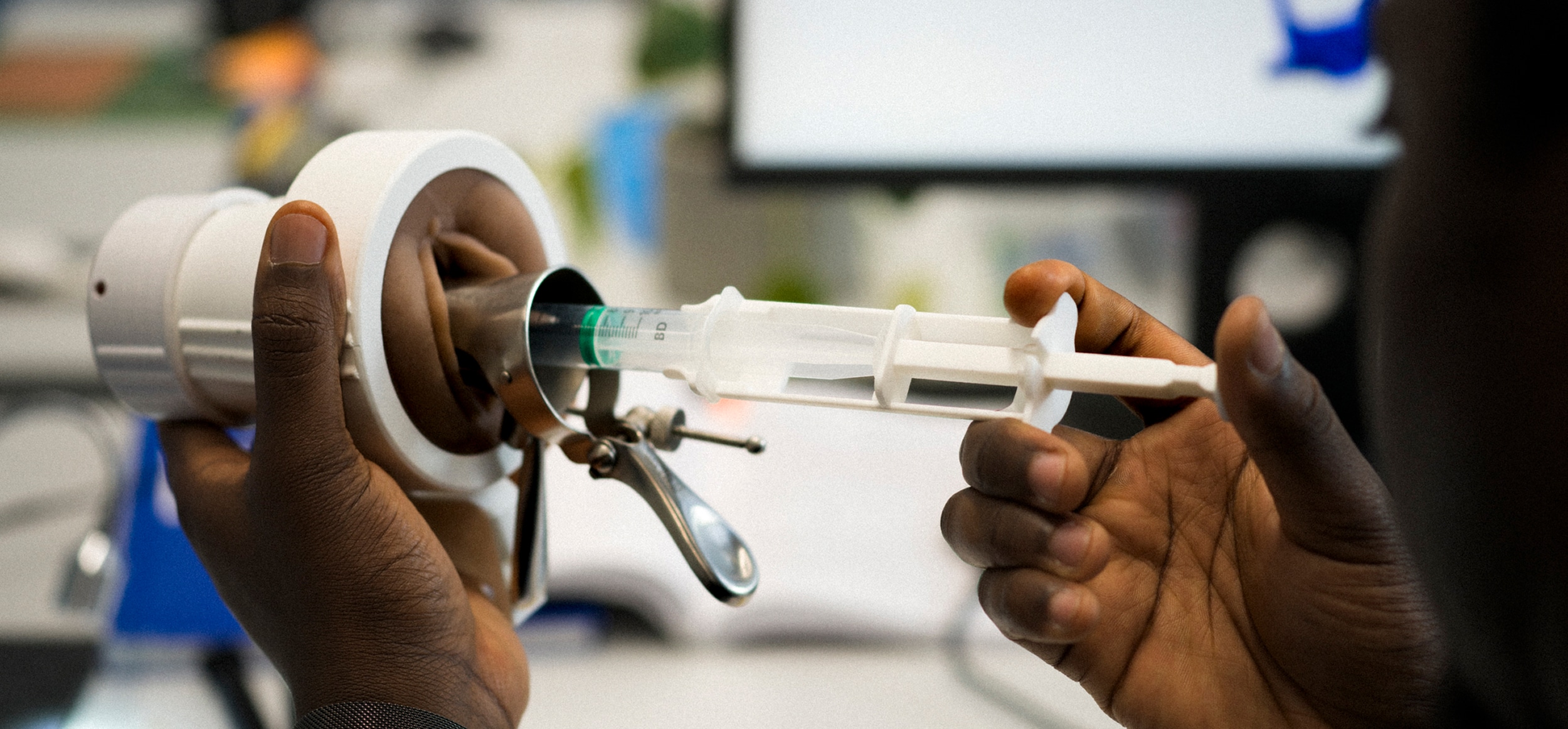
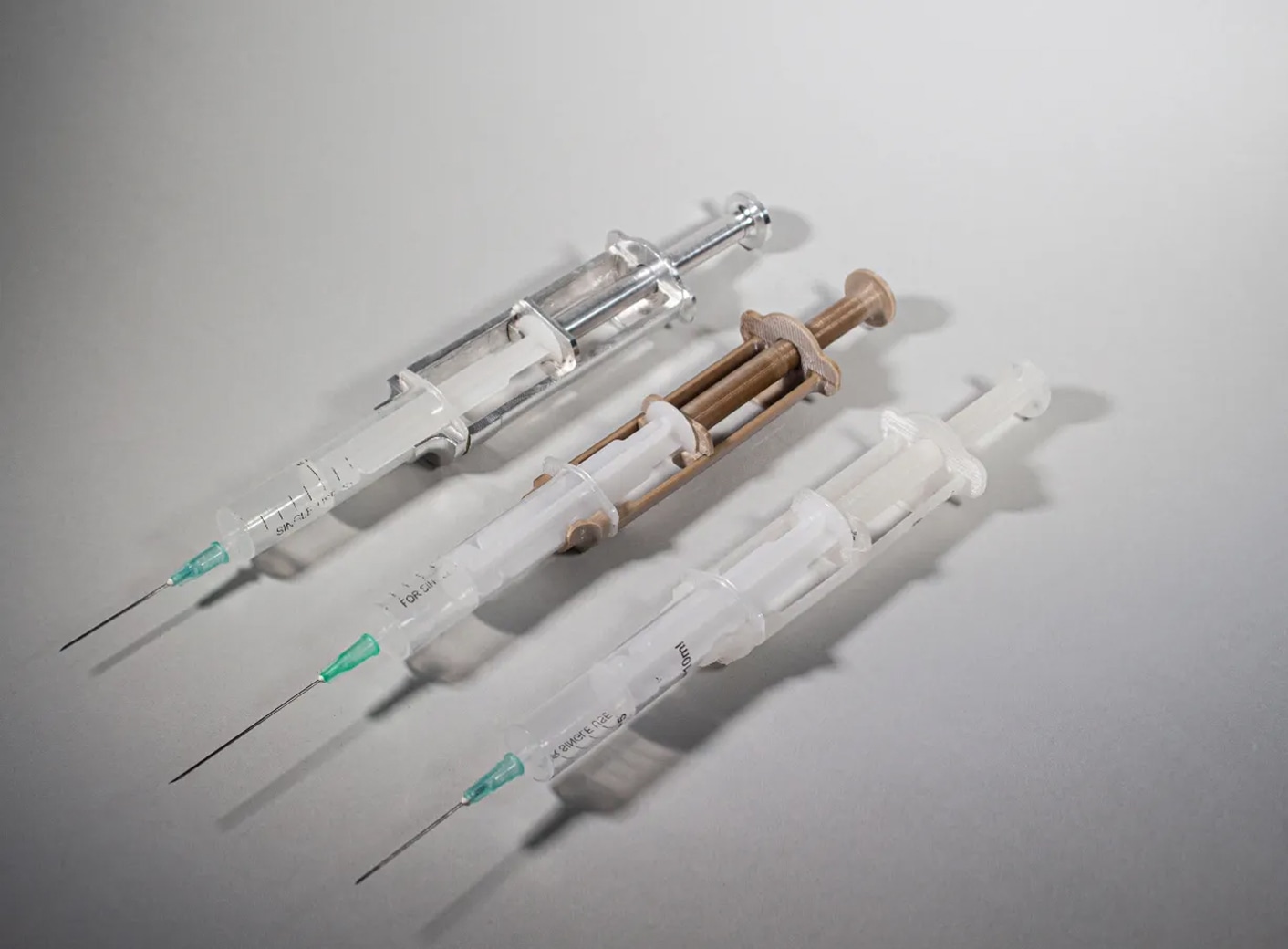
Karlheinz Samenjo has developed a simple extension that can be attached to a standard syringe. This allows a short, sturdy needle to reach the cervix, enabling local anaesthesia to be administered without the need for complex or expensive equipment. As the device uses a standard, readily available syringe, it can be used immediately in a variety of healthcare settings. Furthermore, injections can be administered more safely, accurately and hygienically. The instrument is made of recyclable plastic, making it accessible to even the poorest regions. It is resistant to steam, heat and chemical cleaning, and can be reused up to 25 times.
Translation: Jane Szita
Photography: Blickfänger
You grew up in Cameroon. How has that experience shaped you as a person, designer and entrepreneur?
I come from Bamenda, a small town in a remote part of Cameroon. My parents were farmers who had to make ends meet on just four euros a day. Yet I had a carefree childhood – I went to school, played outside, and was always happy. I was always busy, too: I made toy cars and aeroplanes out of bamboo and ran a street stall selling bread and eggs. More importantly, I’m the oldest son in a family of four children. Because of that, I had major responsibilities from an early age. For example, I paid my siblings’ school fees. Subsequently, I became the first and only person in my family to go to university. That’s why I left for Kenya at the age of 17. This created obligations, too. I still send money home. That’s just how things work in my family. But I do it primarily out of love.
Did you already know back then that you wanted to become a designer?
Back then, I didn’t even know what a designer was! After all, that degree programme doesn’t exist in Cameroon. Still, looking back, I chose the closest field of study: mechanical engineering. This was mainly because my father encouraged me to work in the oil and gas industry, which in Cameroon means choosing security. However, from an early age, I had dreamed of working in the medical field. Our family home was right next to a small hospital. Through the clay-and-straw wall of my bedroom, I could hear sounds from the treatment room. As a child, I didn’t pay much attention to that; it was just part of life. Still, that experience played a significant background role. Years later, for instance, I realised that I had only ever heard women screaming in pain during childbirth or treatment.
How did your path to university open up, given that you came from a poor family in a remote region of Cameroon?
An aunt in Kenya took me under her wing. She told my parents, ‘This boy is smart – he deserves an education.’ She brought me to Kenya when I was 17, where I completed a mechanical engineering degree in Nairobi. During my studies, I could mostly be found in a fab lab – an open workshop equipped with all kinds of tools, from saws and welding equipment to 3D printers and computer-controlled laser cutters. It was there that I designed and made my first product: a simple folding chair for use in medical treatment rooms. These rooms are often small with hardly any space for furniture. Patients are therefore treated standing up. After the consultation, the chair can be folded up and hung on the wall. Each chair was cut from a single sheet of wood. The design wasn’t the most beautiful, but it was cheap and efficient.
Every woman has the right to safe, affordable pain relief.
Was that the moment when you decided to focus entirely on healthcare?
Not yet. After my studies, I started a 3D-printing company called African Born with a friend. We built our own 3D printers using cables, hardware and mechanical parts from discarded computers and printers. These machines could then be used to make new products from recycled plastic. Although I enjoyed entrepreneurship, I missed the creative aspect of design. Time and again, I found myself drawn to the medical world. While working at the 3D printing company, I attended medical conferences and thought about how I could manufacture affordable parts for medical equipment and instruments.
However, it was ultimately a personal experience that led me to decide to focus solely on medical care. My sister had complications during her pregnancy. Due to a lack of proper medical care, she was at risk of losing her baby. Ultimately, she had to undergo a very complex delivery without anaesthesia or the necessary equipment. It was then that I realised that all the women I had heard screaming from my bedroom during my childhood were undergoing gynaecological procedures without proper anaesthesia. I realised that I had the opportunity to do something about it. It was a responsibility I had to take on. So I sold my small share in the 3D printing company to focus on researching medical equipment.
How did you subsequently come up with the idea for a medical instrument to relieve women’s pain?
During my research in hospitals in Nairobi, I witnessed terrible things – from mastectomies due to cancer to cases of internal bleeding. All of this was happening in harsh conditions. Time and again, it was women who were receiving inadequate care. One event in particular struck me personally. From the hallway I heard a woman’s horrific screams. I immediately recognised that sound from my childhood. She was undergoing curettage, a procedure in which pregnancy tissue is removed from the uterus after a miscarriage. The procedure was being performed without anaesthesia, because a standard anaesthetic syringe is too short to reach the uterus. I then discovered that there is no affordable syringe long enough to reach the uterus. I was perplexed. How could one of the most widely used medical instruments – the 10 ml plastic syringe – be unsuitable for a procedure that could affect more than half of the world’s population? ‘This is a problem I can solve,’ I thought.
So, what was the solution?
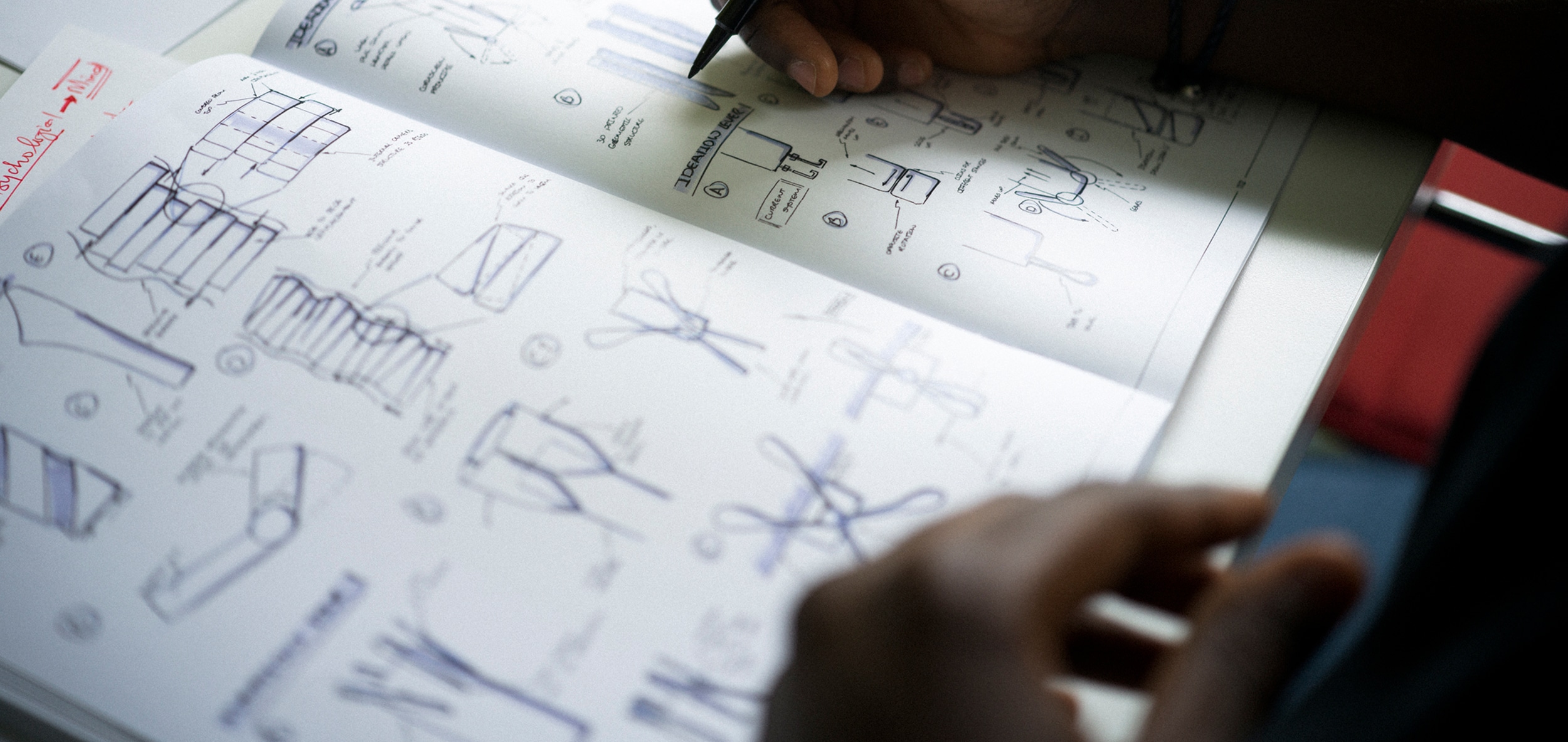
Through conversations with friends, I soon realised that the solution wasn’t a longer anaesthetic syringe, but rather a design for an extension to existing syringes. After all, those are already readily available everywhere. A longer needle attachment wasn’t an option either, because they are inaccurate and can break. In any case, needles are relatively expensive. In just a few days, I had designed an attachment that fits almost any syringe, making it long enough to administer a controlled anaesthetic to the uterine wall. An additional benefit is that medical staff do not have to familiarise themselves with a new instrument.
So why did it then take years to further develop this design into a fully-fledged product?
Not that much has actually changed from the original design – its strength lies in its simplicity. In Kenya, I had no access to high-quality laboratories in which to test the design extensively. I also didn’t have a network to test the design abroad. And even if I had had all that, I still wouldn’t have had the knowledge necessary to develop a fully-fledged medical instrument. I realised that, if I wanted this project to succeed, I would have to study at a foreign university. So I chose Delft University of Technology.
Why Delft? And how did you get accepted there?
The funny thing is, I dreamed of going to the Netherlands as a child. An uncle of mine worked for Shell and I fell in love with the country – don’t ask me why! After secondary school, I applied to the technical universities of Eindhoven and Twente. But I couldn’t afford the tuition fees. Years later, while conducting medical research following the sale of my company, I came across an Instagram post by a Dutch researcher who was working on a surgical device in Nairobi. I messaged him and we arranged to meet up. He told me about the Global South Initiative at TU Delft, which provides scholarships to students from sub-Saharan Africa. I applied and got the scholarship.
I want to translate knowledge into practical products.
Was it a big step going from a start-up in Nairobi to a university in a country you knew nothing about?
No, in Delft everything actually fell into place: design, medical issues, mechanical engineering, innovation, start-ups and scientific research. After obtaining my Master’s in Industrial Design Engineering, I conducted PhD research into developing medical equipment for sub-Saharan Africa. I was subsequently offered a job at TU Delft as a researcher, but I decided to dedicate myself full time to further developing the syringe extension into a fully-fledged product. I’m not purely a scientist. I want to translate my knowledge into practical products so that I can have an impact on the lives of as many people as possible. The only way to do that is through entrepreneurship.
What was the biggest challenge in the design process?
Keeping the extension as cheap as possible, since in many African countries women have to pay for the treatment equipment themselves. It also needs to withstand steam, heat, and chemical cleaning, so that a single extension can provide anaesthesia for up to 25 women. This reduces treatment costs from 50 euros to less than 15 cents. This is only possible through the industrial production of recycled plastic in casting moulds. At the same time, the design must be robust and simple, allowing replacement parts to be produced with a 3D printer in the event of a defect.
It sounds like the syringe extension is ready for production. So why is it not yet on the market?
The application process for a clinical trial of a medical instrument is a complex and time-consuming, involving numerous procedures. The scientific substantiation must be solid. There are also all kinds of legal conditions that must be met, such as those relating to liability and oversight. This is a good thing, though, because medical instruments must be safe and reliable. After a four-month study at a hospital in Kenya, the clinical evidence was finalised. The next step is to obtain certification. For this, the instrument must be approved by the relevant medical authorities. After every application, new questions arise, and then you have to submit another new application. And every application costs money. Only then can the design be registered as an official medical device. In the meantime, I am researching the optimal production moulds and setting up a distribution network in Africa, including pharmacies as well as hospitals, so that women can purchase the device themselves. To fund this, I have set up a crowdfunding campaign with the help of TU Delft. The moulds are expensive, but once they are ready, the extension can be manufactured endlessly at a low cost.
How do you balance scientific research with running a design studio and being an entrepreneur?
A PhD programme revolves around developing knowledge with a strong focus and a critical attitude. The business world, on the other hand, is driven by profit and growth, and requires flexibility and the ability to act quickly. Sometimes these logics clash. That brings extra pressure. But I enjoy both. As long as there is a common goal, things will naturally fall into place, just as there are sometimes differences in a good marriage. To achieve this, you have to convince people of your vision and get them on board so that you can move forward together. That is why I started the company Chloe Innovations. I work closely with medical professionals there, although I have since acquired a solid knowledge of female anatomy myself. TU Delft has also provided me with a great deal of support in the form of shared research and knowledge. I also have an advisor for legal and financial matters. While I am the only person who knows everything about the project, I don’t know enough to do it all by myself.
You’ve been working on this project for six years now, from the initial design to creating a fully-fledged medical instrument. Have you ever felt like giving up?
Not for a minute! Although it hasn’t always been easy. When I started Chloe Innovations, I had no income and had to live off my savings. I was alone and in a foreign country. It was completely outside my comfort zone. I was no longer a scientist, but I wasn’t really an entrepreneur yet either. Had I really turned down a good job as a researcher at TU Delft for this? But I kept telling myself that this was just a temporary phase. Besides, someone had to do this. There is such a great need for my design, I have to succeed. Outside the door of the treatment room where the woman was screaming in pain, there was a long line of women waiting. They were all vulnerable women who had just lost a child. Some had children with them, or a mother or a sister. I realised right then and there that I could improve not only the lives of the women undergoing this treatment, but also the entire medical care system.
Initially, Chloe Innovations is focusing solely on Africa. Why?
Due to global inequality and the resulting poverty, even the most basic care is unavailable in large parts of Africa. There is a direct demand for my design, which increases the feasibility of the research. But even more important than this practical reason is the fact that I can have a much greater impact there. That’s where the need is greatest. The situation is so dire that women sometimes die from the treatment. Not only are medicines and equipment lacking, but education and knowledge are lacking too. That’s why I have also developed a gynaecological training model, which will provide hands-on training in Africa. It isn’t just a question of money.
There’s also a great deal of ignorance regarding pain management for women in Europe. It was only when I was studying in Delft that I learned that women here also faint from pain because they don’t receive anaesthesia. The goal is to make my design available worldwide. Every woman has the right to safe, affordable pain relief.
So why is there so little attention paid to pain management for women in the medical industry?
It’s the result of historical inequality. The medical world has long been dominated by men, which has made the male body the medical norm. This difference has not always been created consciously. Men simply assume that what applies to them also applies to others. However, the female body is different and has different needs and reacts differently. The problem with pain is that there is not always a demonstrable medical reason for it. Consequently, it is often neglected. Now that more and more women are becoming doctors, this perspective is changing. But there is still a long way to go, unfortunately.
What’s it like for a man to solve women’s problems? How do you stop them thinking, ‘What do you know about that?’
From day one of focusing on pain management for women, I have adopted a humble attitude. I am a man; I know nothing. Tell me. This open attitude is indispensable. I don’t know what it feels like to give birth. I don’t know what it feels like to have a miscarriage. So, if a woman says she is in pain, I believe her unconditionally. But even then, I notice that women are often hesitant or even angry. I understand why after centuries of oppression.
What’s your ultimate goal?
The impact of Chloe Innovations must go beyond just this one instrument. It addresses a genuine issue that affects more than half of the world’s population. It affects the mothers, partners and daughters of every man. It concerns us all. Throughout my research into problems in medical care, it has become clear time and again that women in particular lack access to adequate medical care. I hope that Chloe Innovations can raise awareness of this gender inequality.
What advice would you give to other designers working on medical innovations?
If your design addresses a medical necessity, you will succeed. It might not be easy, as the medical world is thorough but slow. So never give up. And don’t be afraid to make mistakes, otherwise you won’t learn anything.