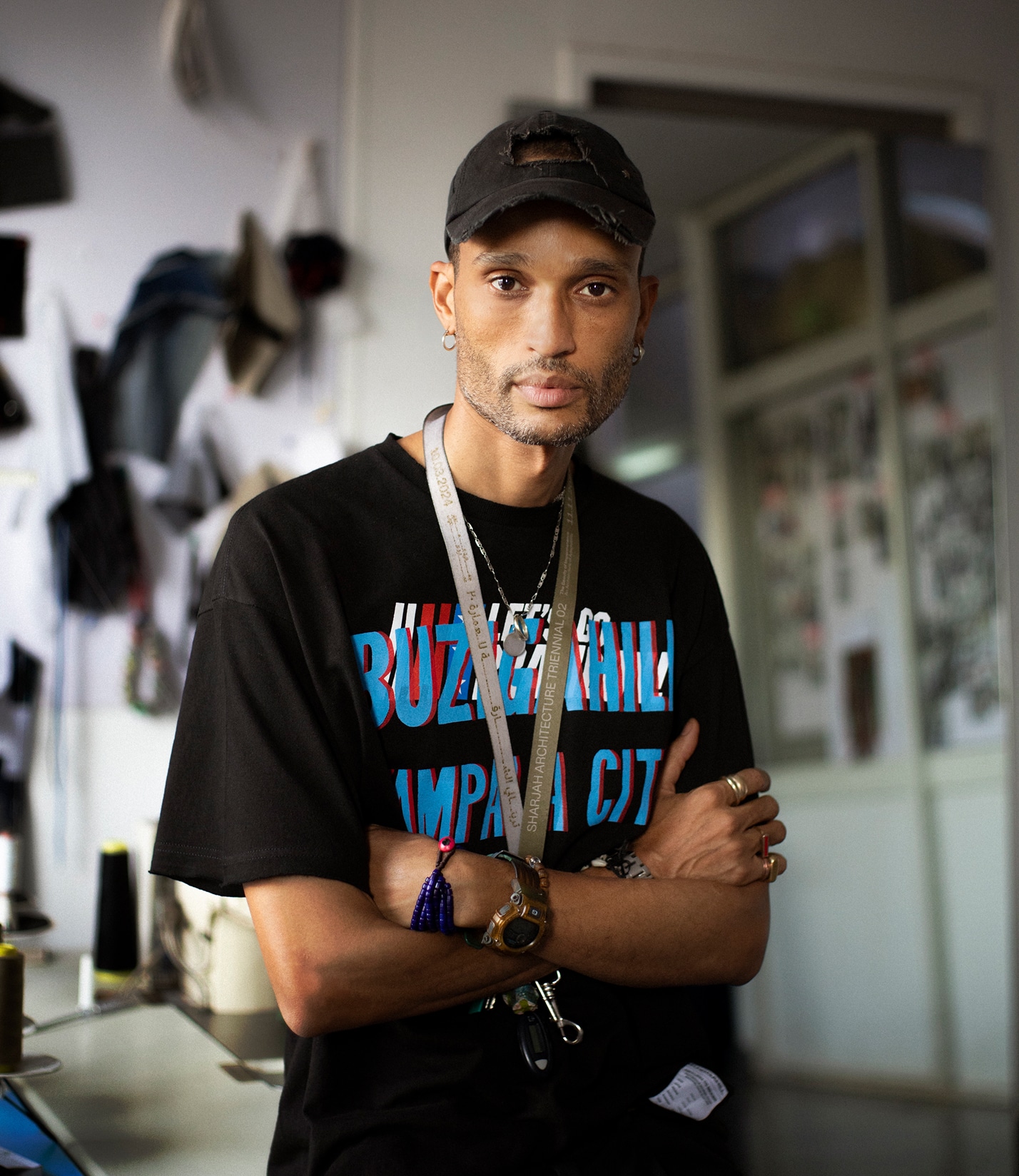
Buzigahill
Bobby Kolade
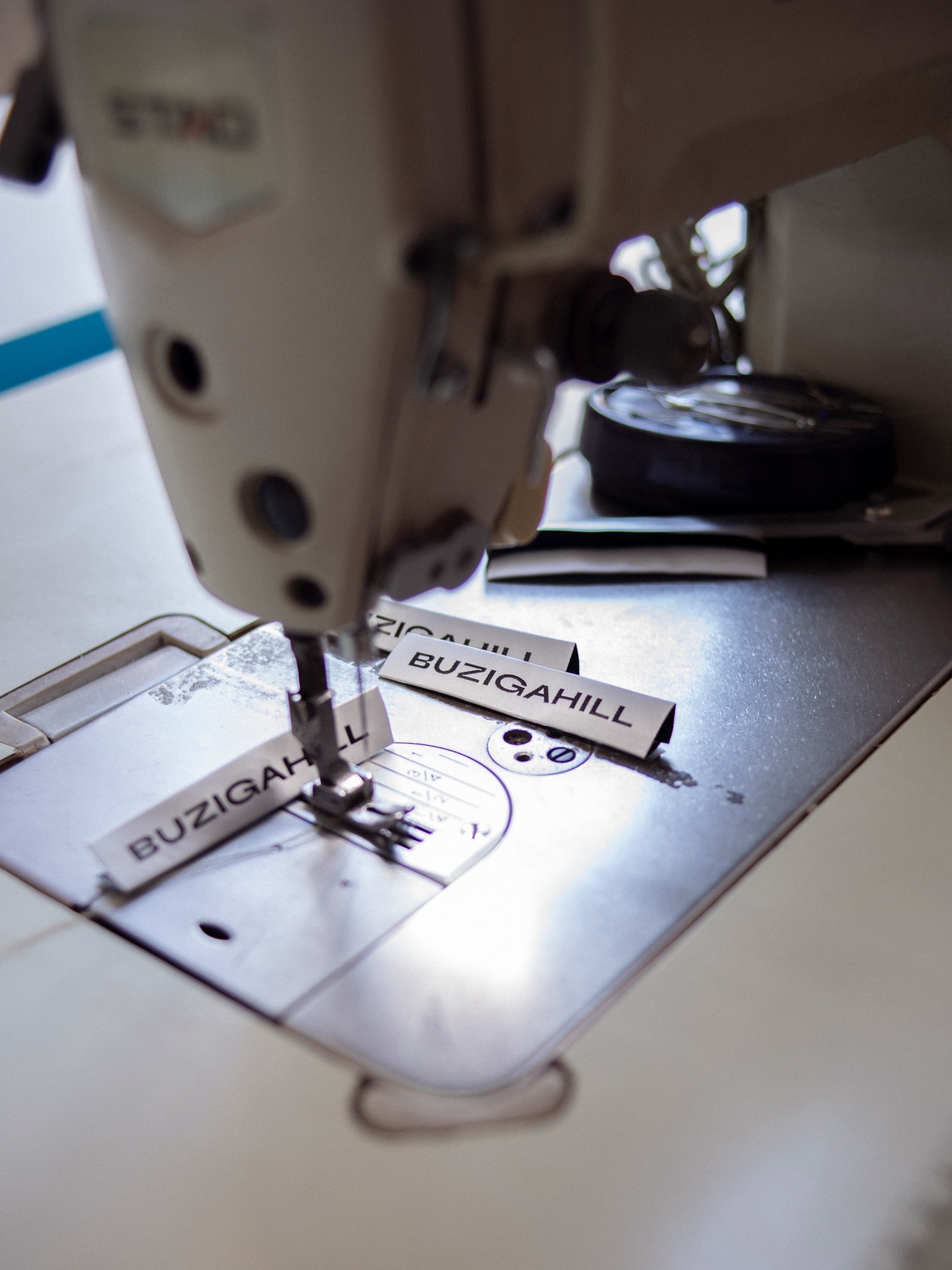
Buzigahill is a circular fashion label founded by the activist and designer Bobby Kolade. Based in Kampala, the capital of Uganda, the label aims to reverse the global fashion supply chain. Discarded clothing from the Northern Hemisphere is taken apart and reimagined into new fashion items, which are then returned to their place of origin.
Every day, thrift stores and collection bins in the Global North collect millions of unwanted garments. According to an Oxfam report, more than 70 per cent of these end up in Africa. Some items are sold at local markets, while the rest end up in overflowing landfills. The abundance of cheap second-hand clothing has caused domestic demand for Ugandan cotton to fall by 95 per cent. Furthermore, the country barely has a clothing industry anymore, with 80 per cent of clothing purchases consisting of second-hand items. Consequently, countries like Uganda are at the bottom of the global clothing chain.
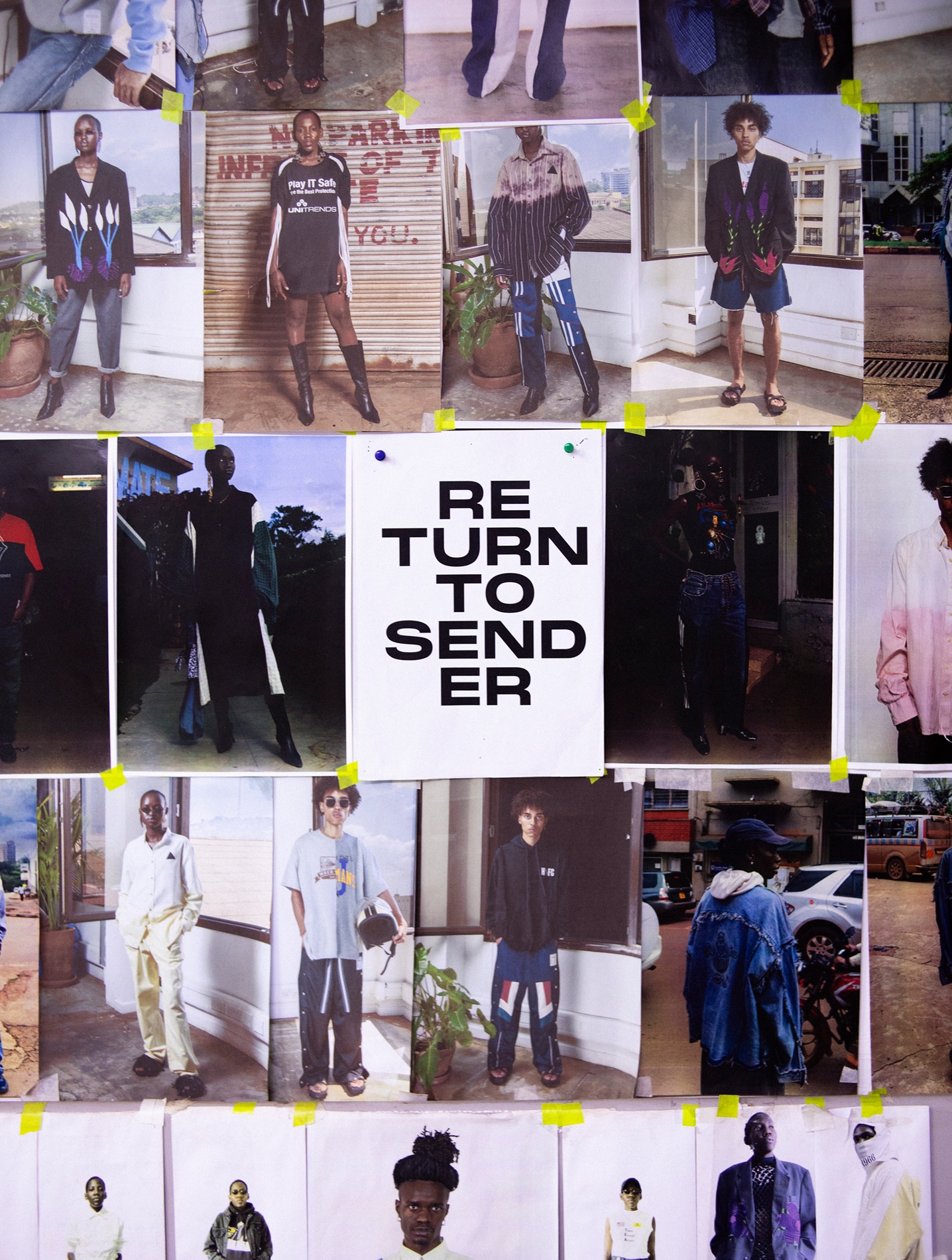
Buzigahill’s Return to Sender business model presents an exclusive fashion collection made from second-hand clothing dumped in Africa by wealthy Northern countries. This enables Buzigahill to strengthen new skills, employment and local entrepreneurship, and to help Uganda develop its own clothing industry. Fashion is used as a means of achieving cultural and economic autonomy.
Translation: Jane Szita
Photography: Blickfänger
You have a Nigerian mother and a German father, and you grew up in Kampala, the capital of Uganda. How has this mix of cultural influences shaped you?
My mother died when I was still young. I subsequently grew up in a foster family that was partly German and partly Ugandan. I also attended various boarding schools. It was not a stable childhood. Consequently, I became independent at a young age and can still adapt quickly to new situations. The place where I felt most at home was secondary school. It was an international school with a strong focus on creative subjects and personal development. The school provided me with a solid foundation. I studied drama and was popular with both teachers and students. I was able to attend this school because I am also a German national. It was the first time I realised the privileges that a passport can offer.
Were you already interested in fashion back then?
At school, we had to wear a uniform. But every Saturday, I presented a teen show on local TV. I wanted to wear something new for every broadcast. In search of cheap clothes, I scoured Owino Market, the largest clothing market in Kampala. Most of the clothes were second-hand items that had been shipped to Africa from the wealthy countries in the Northern Hemisphere.
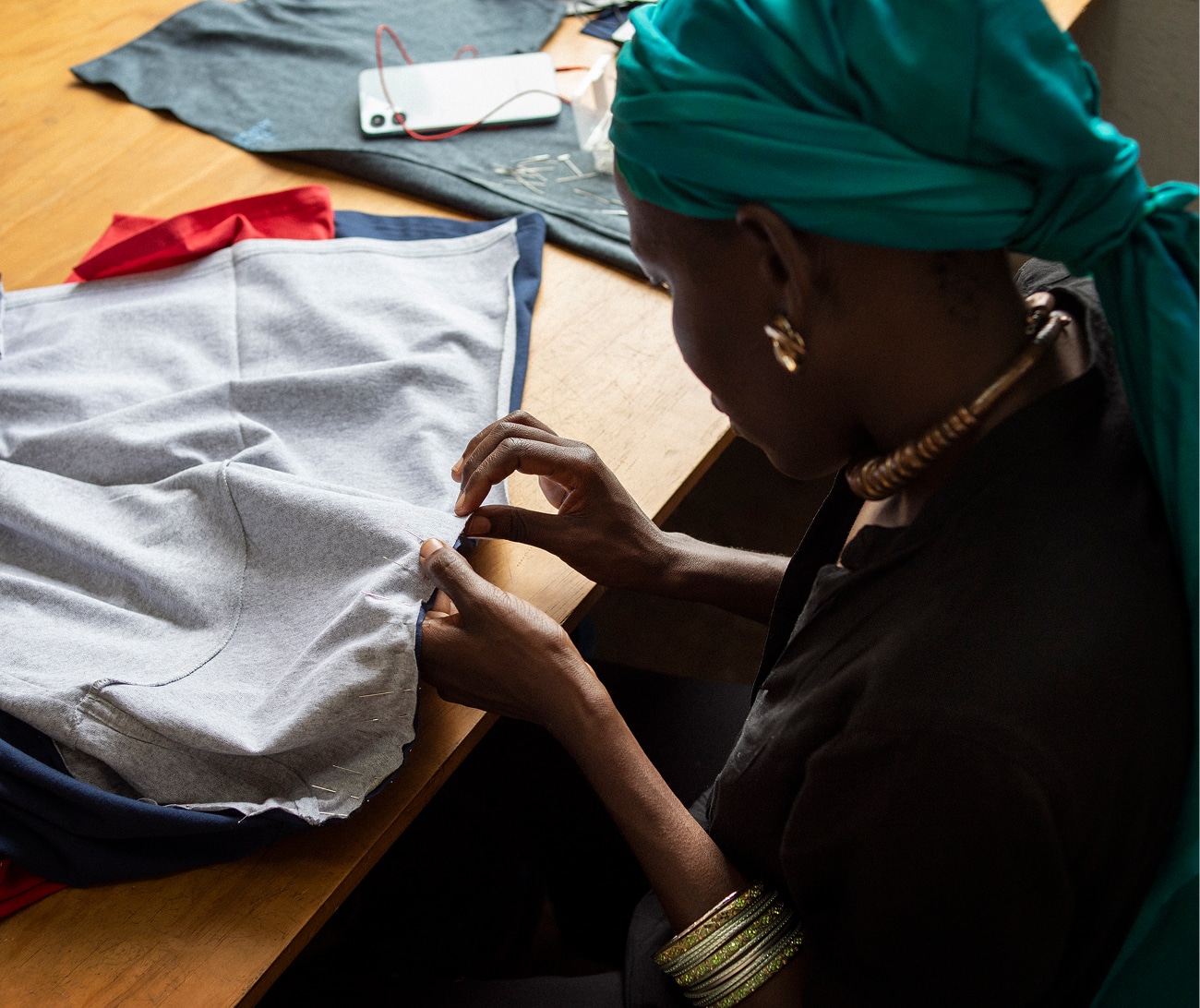
I cut up the garments at home and then took them to a local tailor to put them back together. I gave them very precise instructions on what to do and what to avoid. That’s how I created my own style – and how I realised that fashion is a great way to express your identity. But I didn’t realise that you could also train to be a fashion designer.
How did you find your way in the fashion world?
I enrolled on a graphic design course at an art academy in Berlin. Already in my first year, I switched to fashion. It felt like coming home. I immediately found my feet in Berlin, too. I went to salsa parties and techno clubs, visited museums, and wore whatever I wanted. However, after a few years, I found the atmosphere of Berlin stifling, so I left for Paris, determined to make it in the fashion world. Paris was where I had to be!
I was able to intern at Martin Margiela, an experimental fashion house with a critical view of the fashion industry. Their philosophy was to deconstruct garments and then put them back together in a creative way. After that, I worked for Balenciaga, a classic fashion brand that focused intensely on perfection. I was part of the fashion world elite, but I saw so many unhappy people. The fashion world is extremely competitive and hierarchical. To be happy in it, I realised that I would have to start my own label and never again be dependent on the whims of others. So I went back to Berlin to finish my studies.
Uganda is being flooded with Western fashion styles. What’s left that is truly Ugandan?
How did you start your own fashion label, and what kind of label was it?
Under the brand name Bobby Kolade, I designed and produced exclusive, sustainable clothing made from Ugandan tree bark, Ethiopian cotton and organic Indian silk. Unfortunately, the pieces were too expensive, so I had to stop. I then decided to design a fashion collection using Ugandan cotton.
In the 1970s, Uganda was one of the largest cotton-producing countries in sub-Saharan Africa, with production reaching 78,000 tonnes, 85 per cent of which was used locally. I wanted a cohesive collection made from a single sustainable material. By that time, I had become critical of the fashion industry and its polluting fast fashion, not to mention the exploitation of low-wage countries. I was inspired by the Anti-Fashion Manifesto by trend forecaster Lidewij Edelkoort.
What was your next step?
I realised that if I produced clothing from Ugandan cotton in Berlin and sold it at a high profit, I would be perpetuating that unjust system. The creative and business decisions are made in Europe, while Ugandans are only allowed to be producers. So I moved back to Uganda to manufacture a clothing collection from Ugandan cotton here.
However, it turned out that there were very few cotton factories left. Currently, only five per cent of Ugandan cotton production is used domestically. The rest is exported in its raw form, yielding far less income. Cotton production has shrunk to just 2000 tonnes. Meanwhile the quality has plummeted due to the use of pesticides and soil depletion. Uganda has healthy soil and a climate that’s perfect for cotton cultivation. This made me wonder what was going on here.
What was going on?
Due to a lack of knowledge and education, Ugandan entrepreneurs were unable to keep the cotton factories running. Consequently, the local market was flooded with second-hand clothing from Western waste containers. Now, four out of every five items of clothing purchased in Uganda are second-hand items from countries in the Northern Hemisphere, mainly Europe. The local textile industry cannot compete with the low price of the imported clothing. This is just one of the economic downsides of the clothing dump.
What other negative impacts does the import of Western fashion waste have?
Uganda is being flooded with Western fashion styles. What’s left that is truly Ugandan? Importing discarded clothing also reinforces the image in the Global North of Africans being poor and half-naked and in need of clothes. This colonial mindset must be broken.
The clothing is not donated, but sold to African countries. It’s a multi-billion dollar industry. But when I open a bale of clothes, I find white shirts with sweat stains under the arms and T-shirts with paint stains or rips. This clothing dictatorship imposed by northern countries damages the self-esteem of Africans.
When did you realise that fashion could be a way to break this negative cycle of global inequality?
I worked as a marketing manager for a cotton exporter in Kampala. I saw with my own eyes that the cotton industry in Uganda was slowly disappearing. Along with it went my dream of creating a Ugandan clothing brand using local cotton. I became increasingly aware of how unjust it is that raw materials like cotton are extracted from African countries. The cotton is then used to produce clothing in Southeast Asia at a very low cost. This clothing is then sold in Europe and eventually ends up as waste in Africa. In a sense, it is a continuation of the colonial system.
How did you come up with the idea of using second-hand clothing as the basis for new designs?
It was the only material that was actually in abundant supply. I had also learned at the Martin Margiela fashion house how to take garments apart and create completely new items from them. If I could export these upcycled garments back to Europe as high-fashion items, I could break the cycle. I named the first collection ‘Return to Sender’. That’s still the credo of our label.
We are building an African fashion industry with clothing waste.
Where do you find the second-hand clothing?
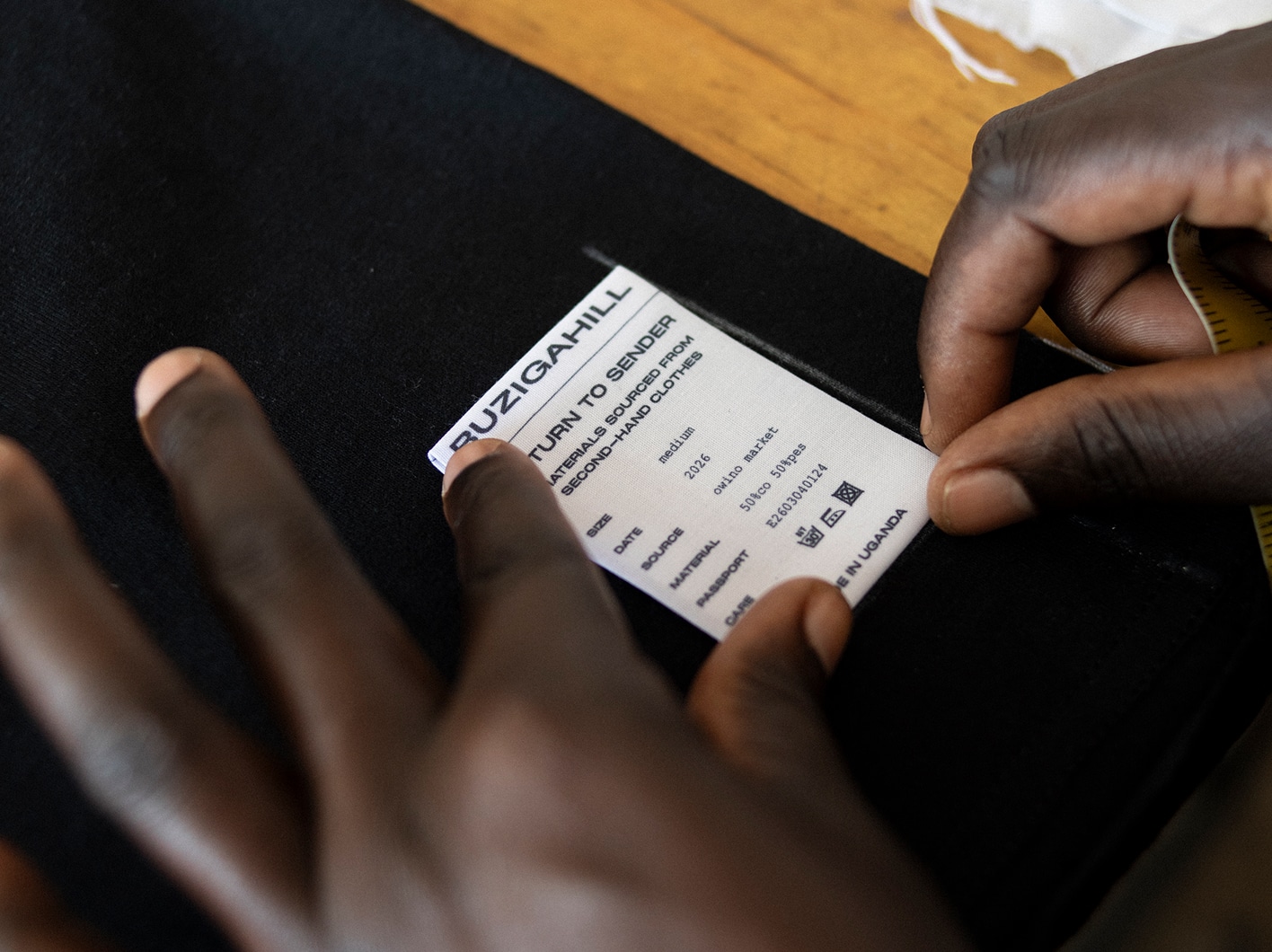
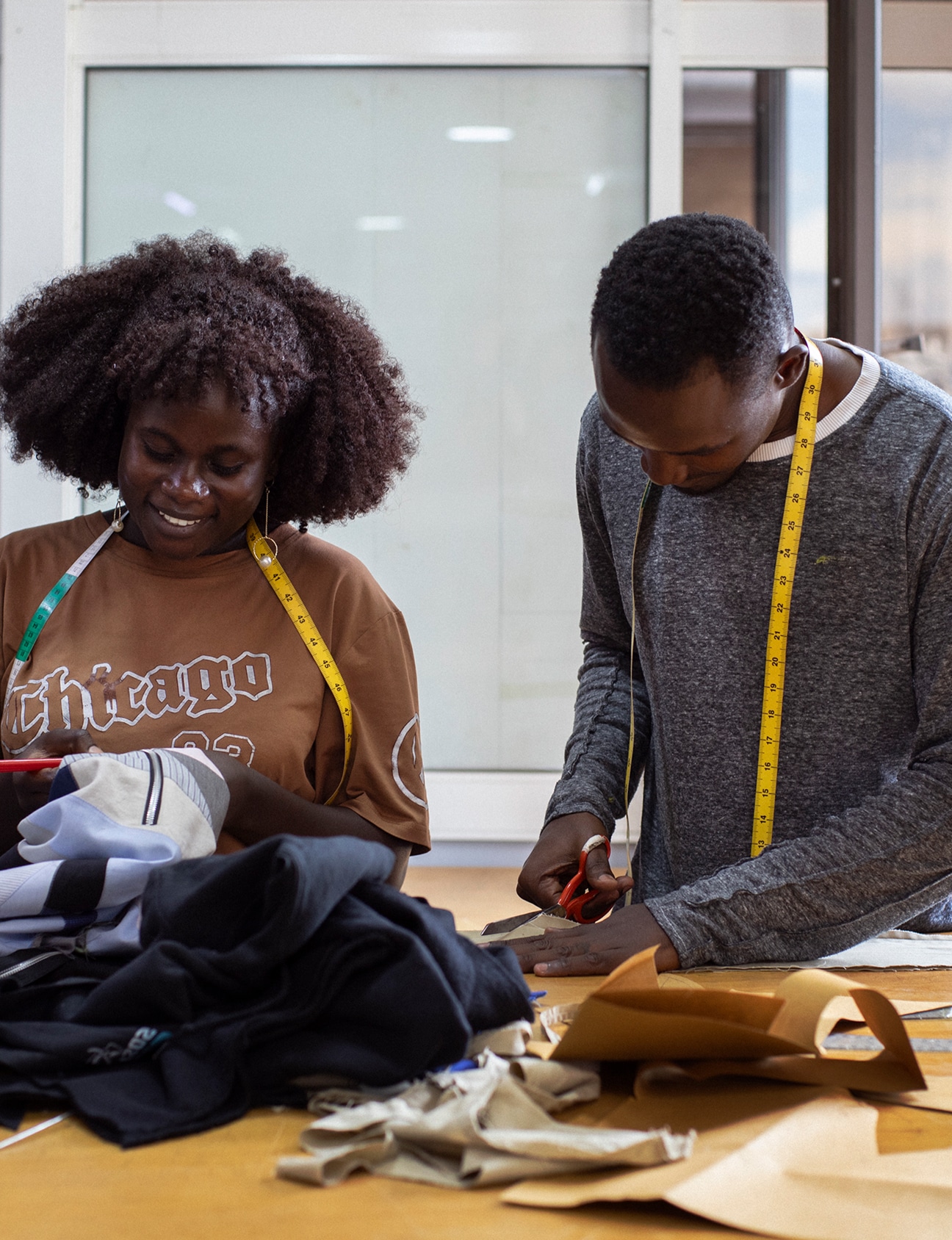
We buy it directly from Owino Market, where I bought all my cheap clothes as a teenager. We inspect every garment on the spot there. We rarely buy complete bales, because most of the clothes in them are unusable. Exchanges are not possible either. The contents description is often completely inaccurate too. For example, a bale labelled ‘oversized hoodies’ might actually contain children’s clothing or stained jumpers. First, the clothing is thoroughly washed to better assess the degree of damage. It is then sorted by material, size, origin, and degree of damage using special spreadsheets. This is a slow and intensive process.
What new design skills have you had to develop?
In Berlin, as a designer, I had free rein over which materials and raw materials I used. Now, I have to combine garments made from different materials and qualities: nylon and cotton, stretchy and stiff, thick and thin. Also, some items are relatively new, while others are worn out. How do you make a cohesive item out of them? To achieve this, I first had to unlearn all the techniques I knew. So, no more mood boards and thematic collections – I have to work with what’s in stock.
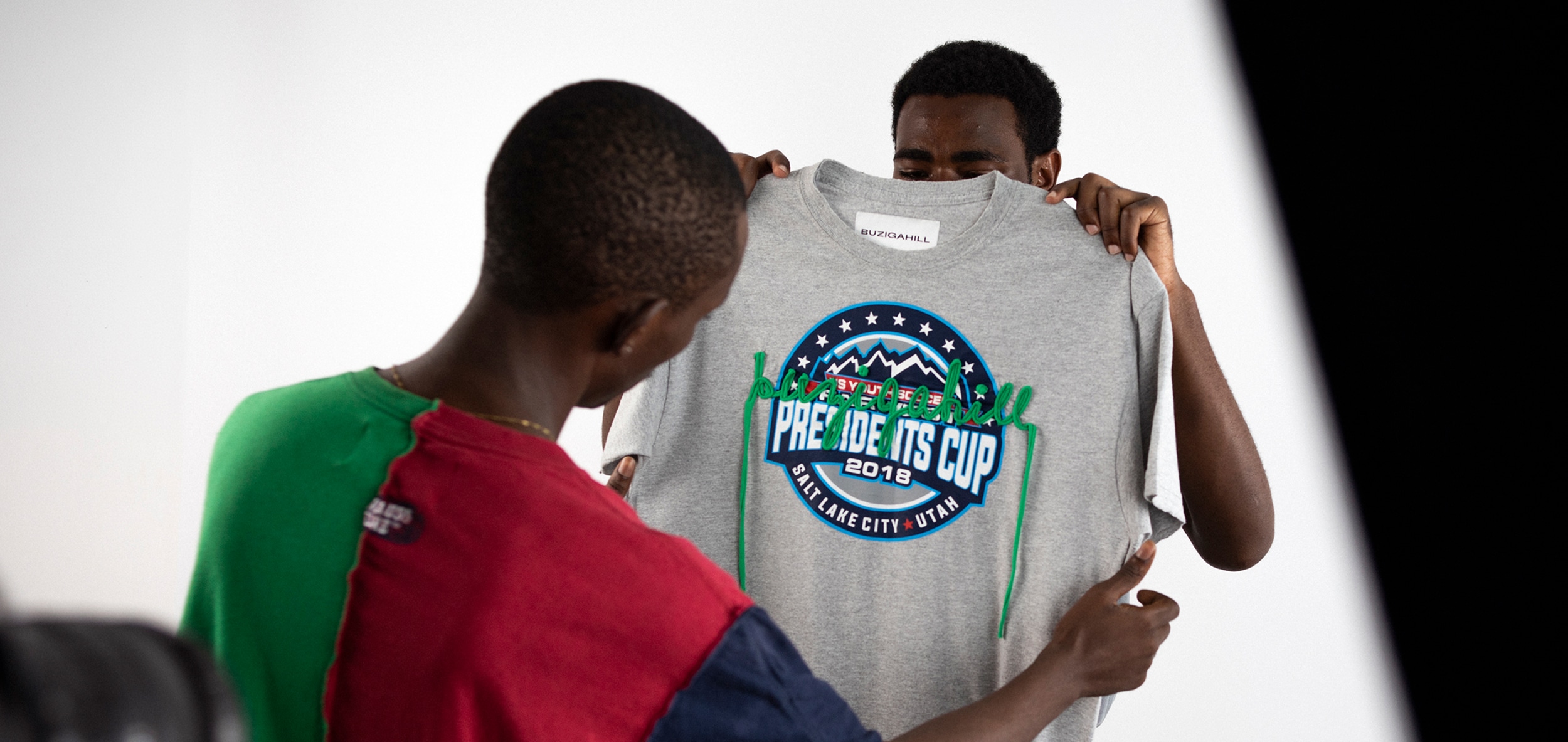
You can see how the clothing is made just by looking at it. You can see the new seams, the difference in material, and the original connections. This gives the clothing an artisanal quality. It’s very honest. That’s why I do it. I had to force myself to look at fashion with a fresh perspective, which was liberating. Buzigahill’s clothing is unique. It’s an explosion of creativity.
By the way, what does Buzigahill mean?
I wanted a Ugandan name that reflects the fact that this fashion brand encompasses a whole ecosystem of local designers, creatives, entrepreneurs and logistics professionals. The sense of community here is much stronger than in Europe. Almost all creatives, including artists, journalists and DJs, live in the Buzigahill district, which is located on a hill. I bought the domain name Buzigahill.com so that we could all have the same email address.
When I started making fashion from second-hand clothing, I knew immediately that Buzigahill would be the name. It sounds international – even in Japan, where we have 16 retail locations, people can pronounce it. But the name represents something very local.
You consistently use ‘we’ when talking about Buzigahill. Who do you work with?
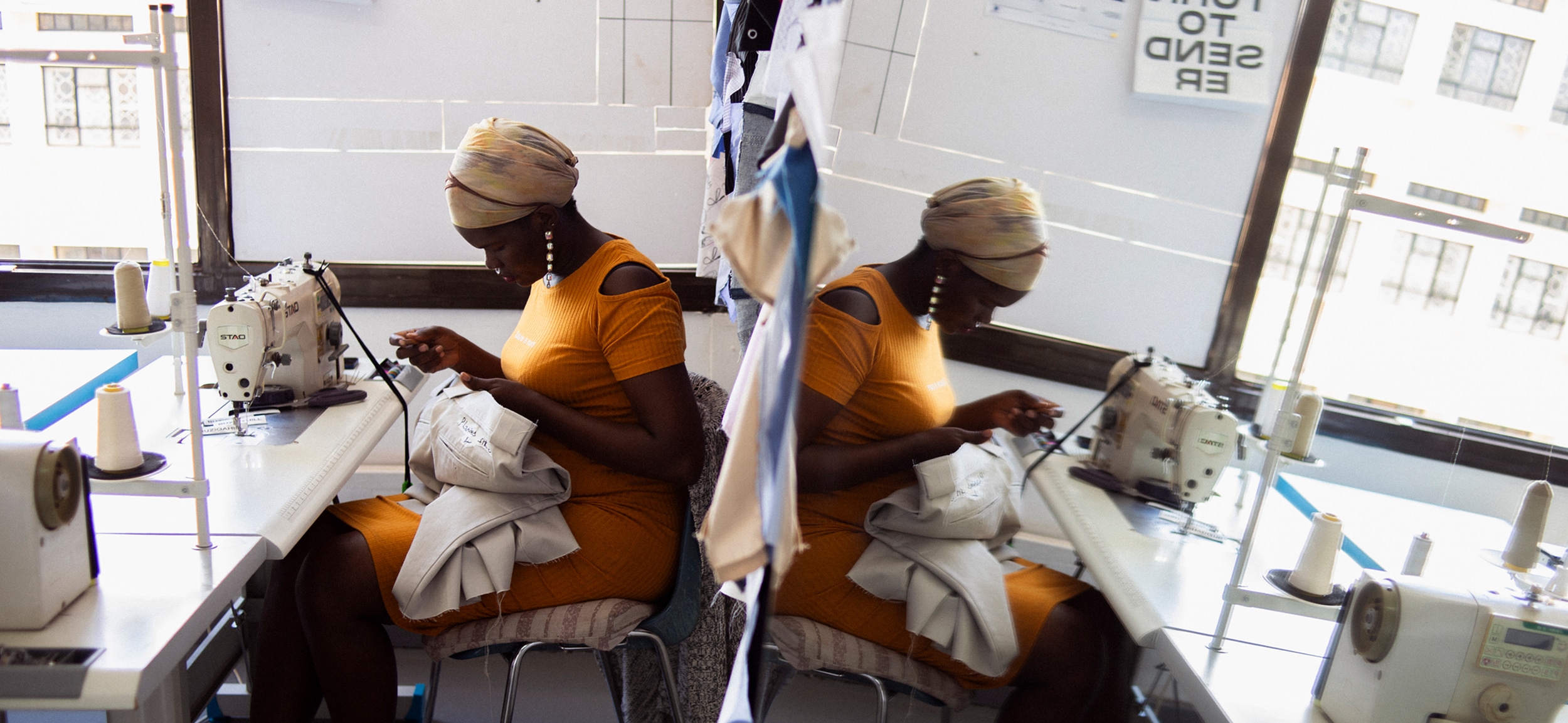
I have a team of 29 people – from marketing and accounting to designers and buyers. I am increasingly handing over responsibilities to the team. This particularly applies to the tailors, who I had to bring along step by step to share my vision. Initially, I was very strict about how I wanted things done. That caused resentment. I had to learn to trust in their craftsmanship. This was also a cathartic experience. The things they can make from discarded textiles are incredible. It’s not a sign of poverty, but of knowledge and wisdom. We no longer allow ourselves to feel inferior.
Did you find it difficult to feel at home in Uganda again after spending years in Europe?
In Europe, I was an ambitious fashion designer. Now, I work with clothing waste. It was a humbling experience that forced me to put my ego aside. Ultimately, though, that was liberating. I had to adapt to life in Uganda, where you have to be ready to improvise at all times. Although running a fashion company here isn’t easy, I’m now where I want to be.
In 2025, Buzigahill presented its own catwalk show at Berlin Fashion Week. Why did you decide to return to the traditional fashion system?
As a Ugandan fashion brand that works with upcycled clothing, we have to constantly prove ourselves. The most efficient way to do that is to participate in fashion weeks. That’s where the media, buyers, and the public are. It’s an unfair system that acts as a gatekeeper. Unfortunately, we cannot change that. Don’t forget that it took us 11 collections just to gain access to this fashion week in the first place.
It seems contradictory to want to be part of a system and yet also wanting to distance yourself from it. How do you balance these ideas?
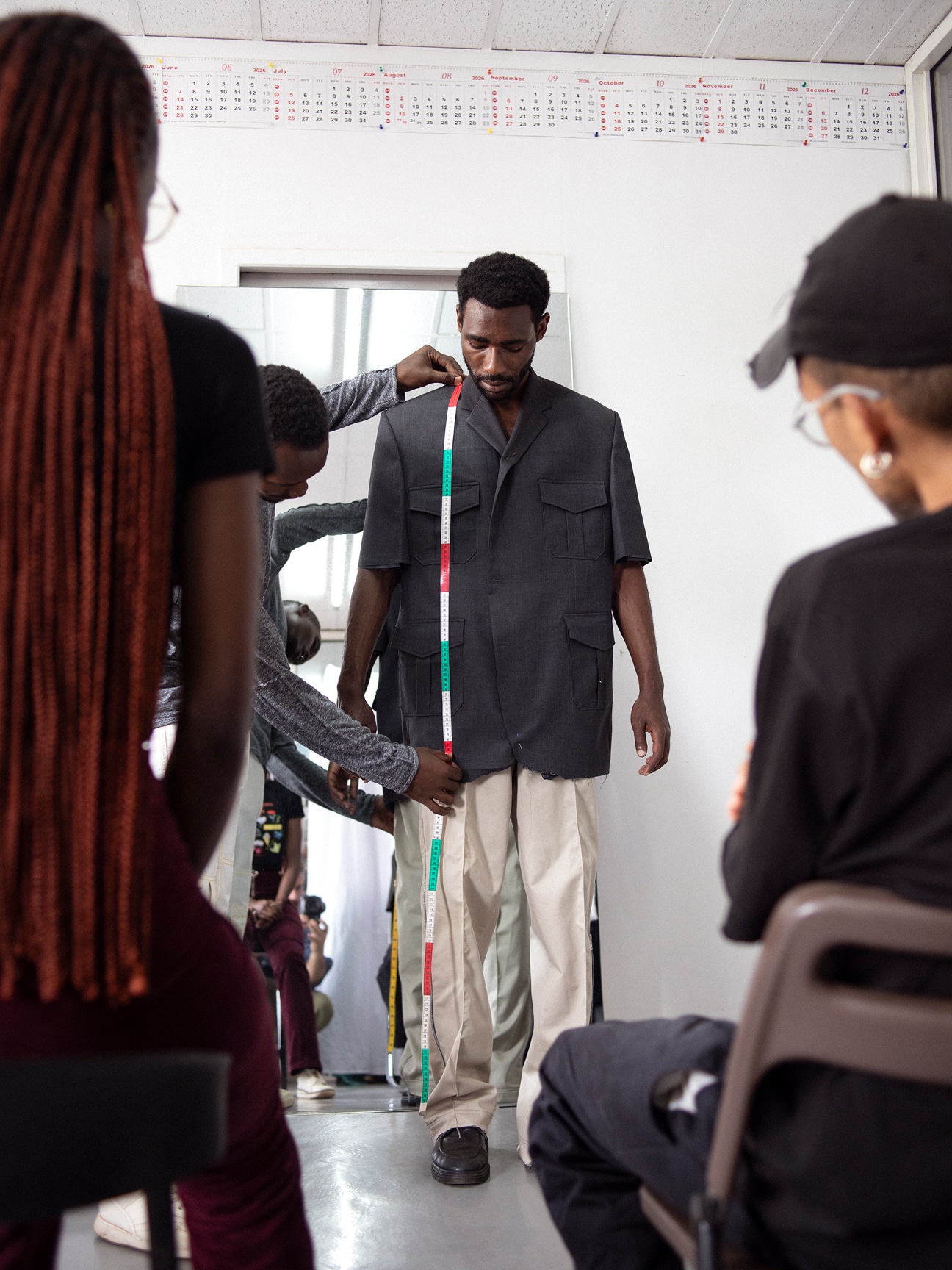
Our collections and fashion shows have a fundamentally different starting point. European fashion brands come up with a concept that sets their collections and shows apart from one another. For us, that distinction lies in increasingly refined techniques and increasingly bold material choices. Our concept is real, not fabricated: we celebrate the originality, creativity, and craftsmanship of the Ugandan fashion industry. On the catwalk, you can hear street sounds from Kampala. All the shows have the same name: Return to Sender. We’re now on number 13. We take part without compromising our identity or our values.
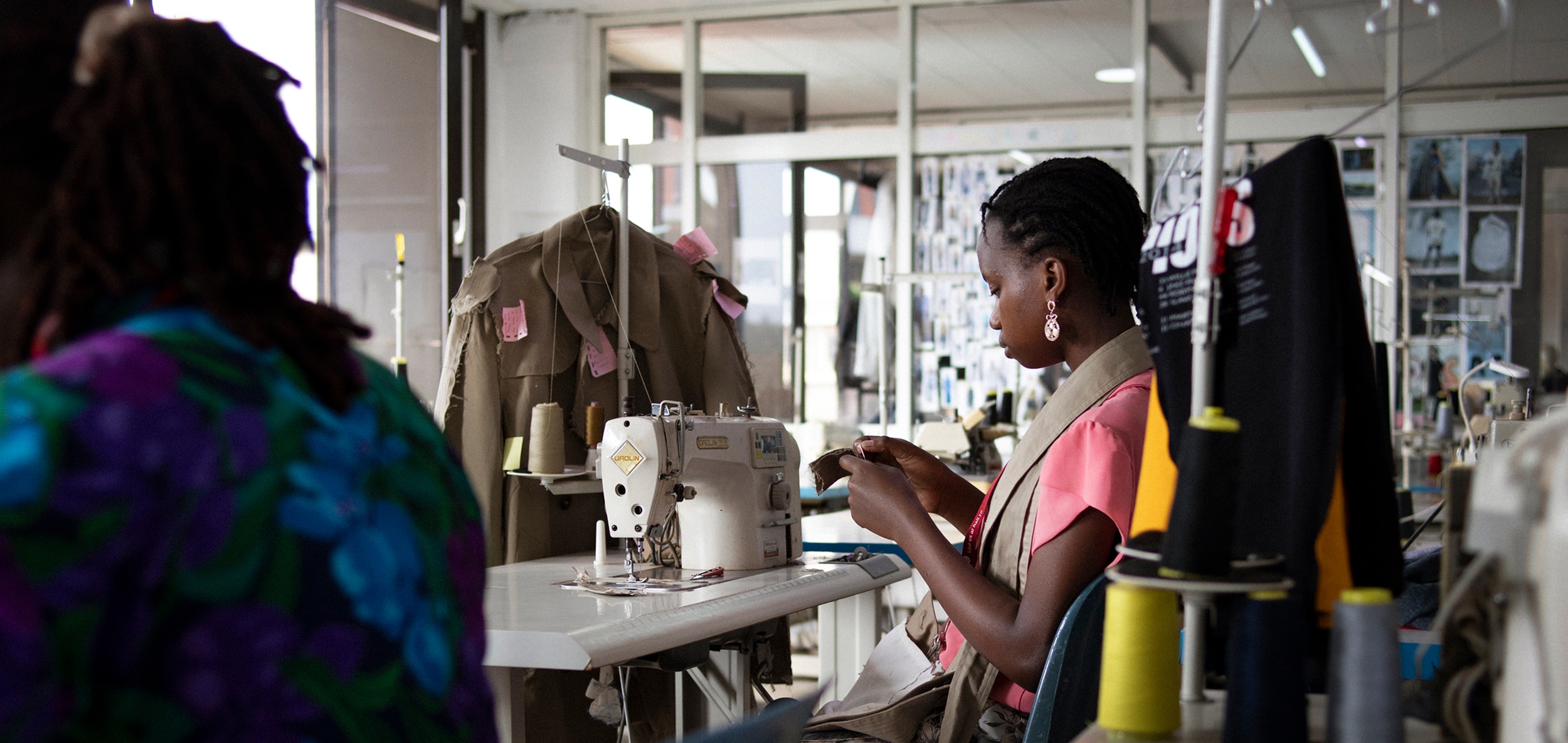
We use second-hand clothing to create jobs, develop skills and establish an industry
How can you grow Buzigahill?
It takes at least a day to make a garment, not including the time taken for selection, cleaning and repairs such as attaching buttons or zips. Furthermore, we have to pay a 30 per cent import duty on exports to Europe. This makes the garments expensive and demand relatively limited. Growth lies not in quantity, but in quality.
We want to expand the brand to include shoes, handbags, and accessories such as belts and jewellery. These items are also dumped in large quantities in Uganda. In addition, we are looking for ways to make use of our growing stock of unusable garments. How can we process them into recycled textiles?
Buzigahill is much more than just a fashion brand. Has your view of fashion changed?
For me, fashion was a creative outlet and a way to express my identity and emotions. Everything revolved around colour, shape and material. Subsequently, I used fashion to make activist statements and criticise global inequalities within the fashion system.
Now, I see fashion as a positive instrument for setting change in motion. We use second-hand clothing to create jobs, develop skills and establish an industry. Our ten-year plan is to establish small, specialised factories across Uganda for the recycling of clothing and the production of hand-woven textiles and artisanal clothing made from Ugandan cotton. We can export that model to other African countries. Buzigahill is not a fashion brand. It’s a necessity.
The Ugandan government is considering a ban on the import of clothing from the West. What would this mean for Buzigahill?
For now, it’s just plans. We’re talking about a multi-billion dollar industry here that hundreds of thousands of people depend on. If it were fair trade in second-hand clothing, I would have no objection. But at the moment, we are forced to buy the waste from the Global North. This neo-colonial exploitation must stop. Hopefully, this will enable cotton production in Uganda to pick up again, and allow me to realise my dream of creating a clothing label made from locally grown cotton.
There is a growing awareness among young designers that the fashion industry needs to become more sustainable and fairer. What advice would you give to this new generation to help them achieve these changes?
"Don’t stop!"