House of Thol
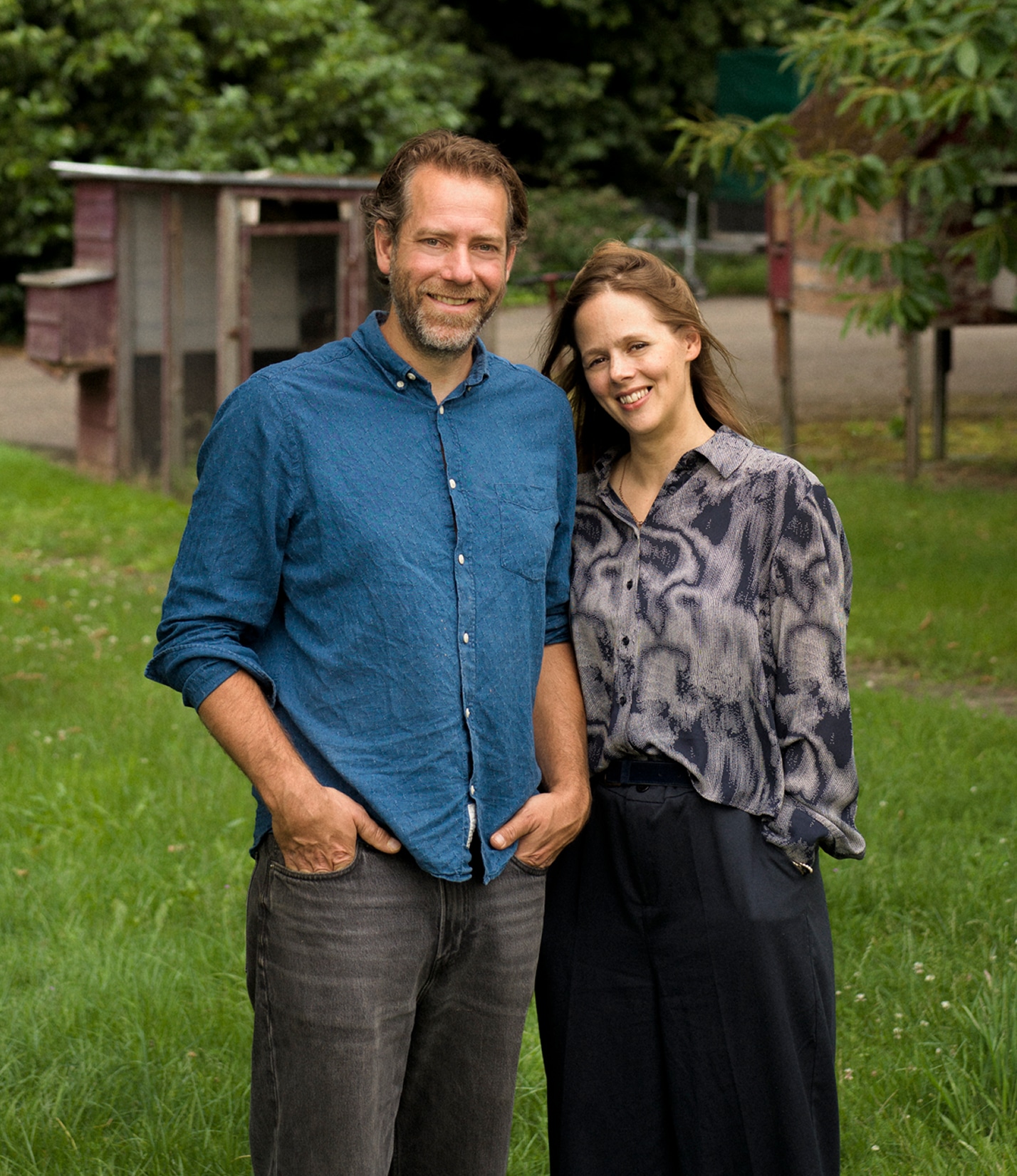
Jana Flohr & Thomas Linssen
The design duo behind the House of Thol tackle urgent everyday problems with a big environmental impact. Their practical, sustainable products help make life greener and healthier.
Almost a fifth of the world’s food – 132 kilograms of food per person per year – ends up as waste. More than half of this waste happens at home, mainly due to spoilage caused by overstocking and inadequate storage. This costs 150 euros per person per year in the Netherlands (and as much as 200 euros in the US), and also has consequences for the Earth. Around 80 litres of water per global citizen per day is used to grow food that will ultimately be wasted. What’s more, food waste accounts for around 8 to 10 per cent of all global greenhouse gas emissions – that’s five times more than the emissions from global aviation. Reducing food waste is therefore important for people and the environment.
House of Thol is the design studio of Jana Flohr and Thomas Linssen. It’s also a brand offering user-friendly products that make sustainable living easier and more enjoyable. By helping people to grow their own food and achieve a healthier diet, House of Thol aims to reduce food waste.
Translation: Jane Szita
Photography: Blickfänger
How did you meet?
Jana: “We’re a real designer love story! We were both interning at a presentation by a Dutch design label at Milan Design Week in 2005, which is the most important international design event of the year. I was about to graduate in product design from the HKU and Thomas was about to graduate from the Design Academy Eindhoven. I was immediately drawn to his practical way of thinking. He can immediately see how something is put together and how it can be improved. He’s a true maker.”
Thomas: “What I admired about Jana straight away was her critical and curious eye. While I focus mainly on the how, she looks at the why. Together, we decide what we want to design.”
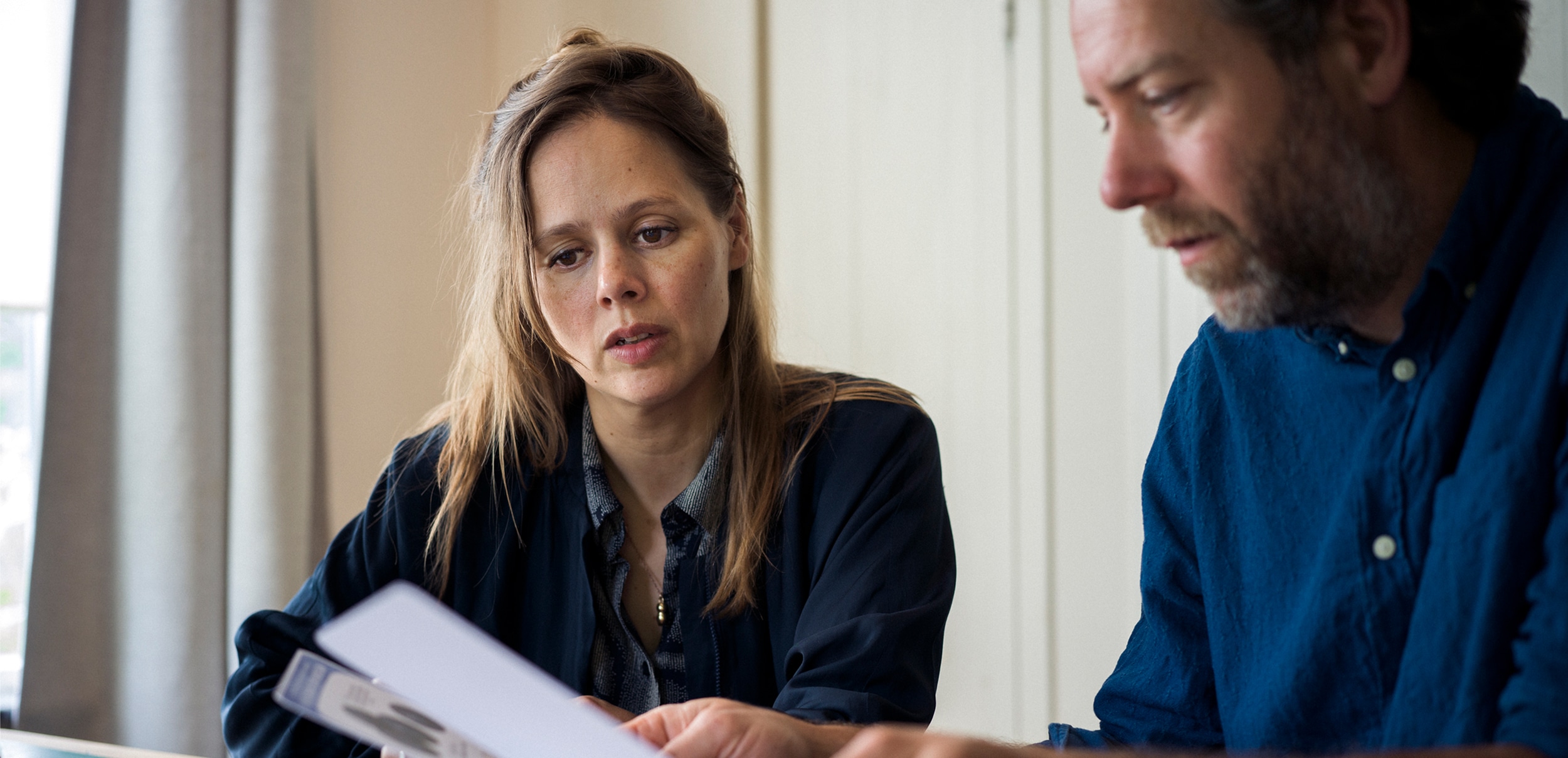
Jana: “Yet we only started working together after the birth of our first son, Xam. We realised that we needed to use our time more wisely. The idea gained a huge boost when we moved to a detached house in Overasselt, a small village on the River Meuse near Nijmegen. Before that, we had each worked on our own projects. On our 3.5-hectare property, our two children can play, and we can grow vegetables. But it isn’t possible to live completely self-sufficiently – which is why we design things that make life a little easier.
“We look out over the meadows and the edge of a forest. Our studio is a converted horse stable behind the house. For us, living, working and self-sufficiency are all intertwined. Sometimes we just work at the kitchen table. Sometimes the children experiment with 3D printers and other tools while we work. Having children has influenced our work enormously. We’re now even more focused on making our products and stories easy to understand for everyone.”
We develop all our products based on a clear philosophy of behavioural change.
Could you tell us how you grew up, so we can understand where you came from?
Jana: “I was raised in a progressive family where sustainability and equality were self-evident. My father was born in Indonesia and had to build a new life for himself and his family here. Because of that, being aware of what you have played a major role. A newspaper always lay open on the kitchen table, and we watched the news on TV every evening. Social engagement is something that comes naturally to me. At the start of my career, I designed jewellery but I found it very unsatisfying: I want to make a difference.”
Thomas: “I come from an entrepreneurial family. Values such as getting things done and standing on your own two feet were very important. This strengthened my resolve to start my own studio instead of working for a company. However, I still feel more like a team player than someone who wants to be independent.”
When and why did you choose to become a designer?
Jana: “Initially, I started a degree in anthropology at university, in preparation for becoming a war journalist. However, I was aware of the colonial origins of the subject, which involves studying other cultures from a Western perspective. In any case, I decided I would rather be a participant than an observer. So, I enrolled on a design course, in order to improve people’s lives through products. I still sometimes see the world through the eyes of an anthropologist who studies other cultures to learn from them, though.”
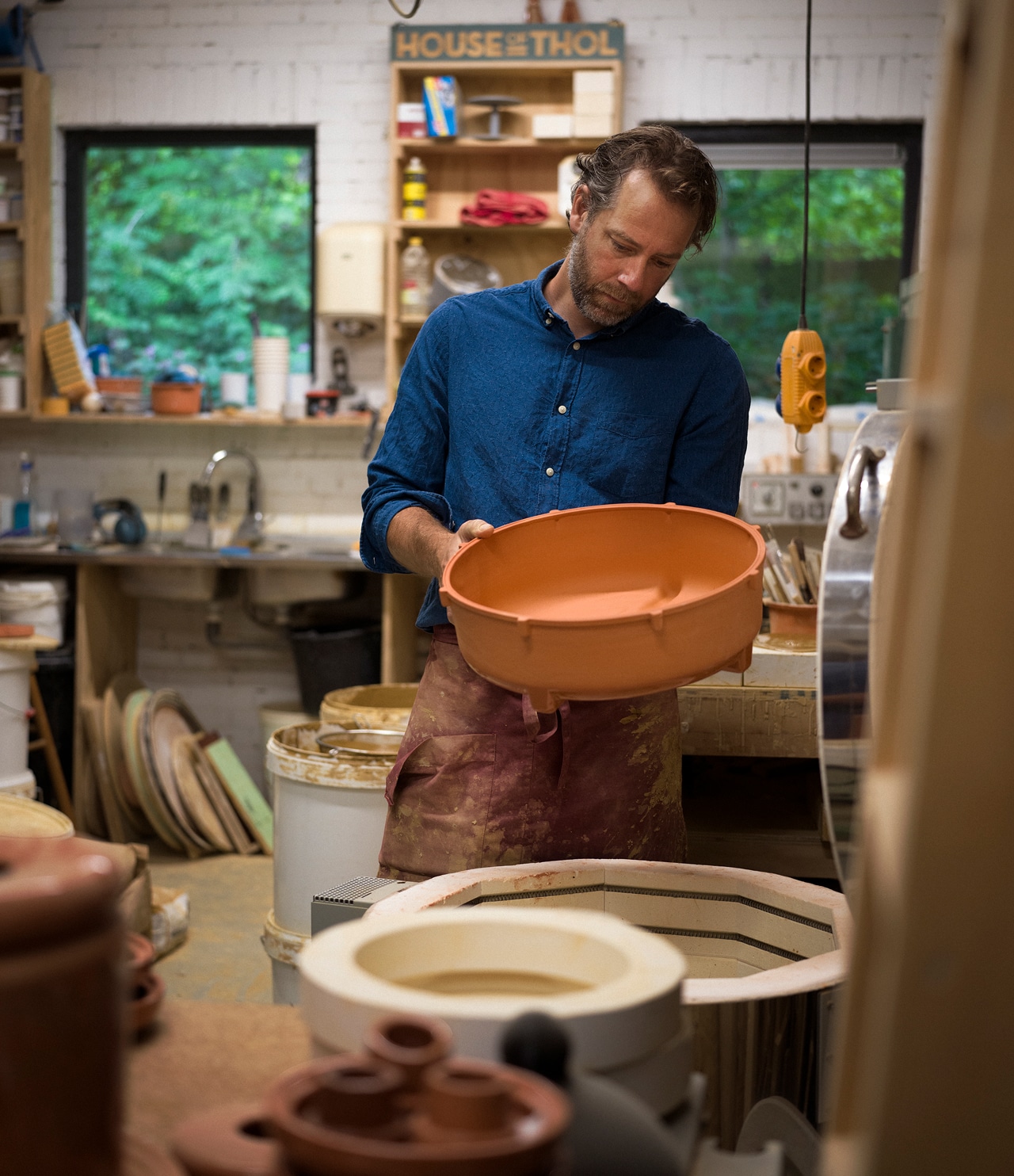
Thomas: “My father was an entrepreneur and my mother was an artist. Those two worlds come together in me. I enjoy creating things, especially with my hands. What makes a smart construction? Which materials should I choose? At the same time, I also want my designs to be actual useful products. For example, I want them to be affordable and appealing to consumers. Our products are only finished when they are being used.”
What is at the heart of your design vision?
Jana: “Products for everyday use that entice people to live in a greener way. That’s why our products must be beautiful and easy to use. They should make life easier, not create yet another chore. Our goal is to help people feel connected to food again and understand how nature works.”
Thomas: “Also, our products work in a logical or mechanical way. Users should be able to understand how they work and, better still, be able to customise them to their personal preferences. We don’t design anything with a plug attached. An invisible electrical process can act as a barrier to product ownership. In other words: if you can’t open it, you don’t own it. Understanding our products isn’t enough; you should also be able to repair them. Therefore, nothing is glued together, and all the parts can be ordered separately. We only use materials that improve with age, such as terracotta, brass and wood.”
Connecting people and nature through concrete products – that’s an ambitious mission. What gave you the confidence to get started with this?
Thomas: “A good example of this is Flower Constellations, a series of sturdy, round brass and stainless-steel discs with holes in them, which you place on the neck of a vase. You can put flowers in the holes to ensure they always stand beautifully upright at the right distance from each other. The flowers also stay fresh for longer. This way, you waste fewer flowers, save money, and reduce your environmental impact, all while making your home look more stylish. It’s very simple, yet effective.”
Next, you turned your attention to food waste in the home. Where did this particular fascination come from?
Thomas: “It started when we saw a bowl of rotting fruit in our own kitchen. It was so very close to home, a problem we were facing ourselves. I immediately thought: how can I design a solution for that? And then Jana immersed herself in researching food waste and food preservation. We carried each other along.”
Jana: “There’s a degree of frustration in our research. Why do we know so little about something so important? How can we strengthen the bond with food that we have lost over time? These personal questions are a powerful driving force.”
Why do we know so little about something that is so important?
You ultimately developed the Patera Magna in response to these questions, right?
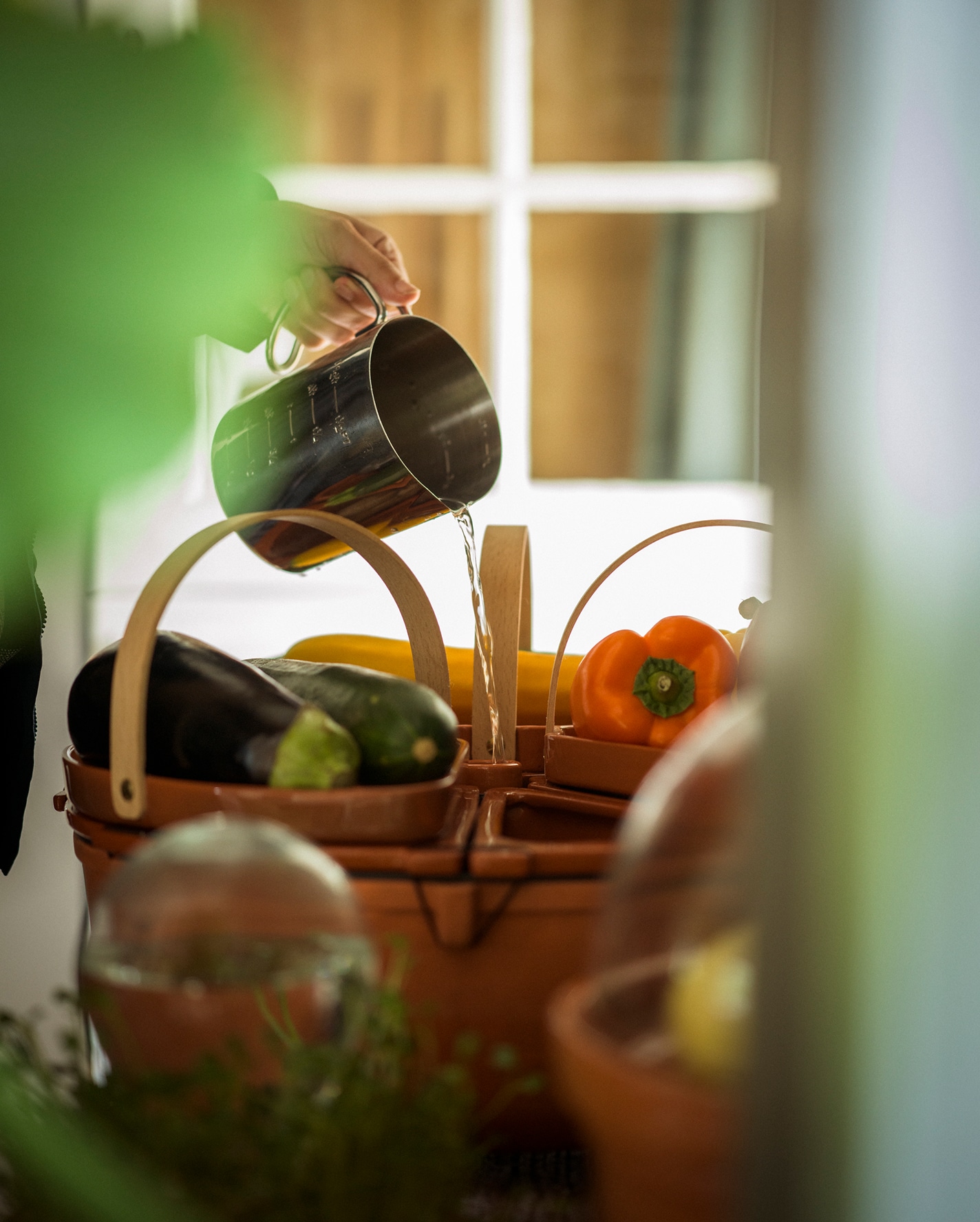
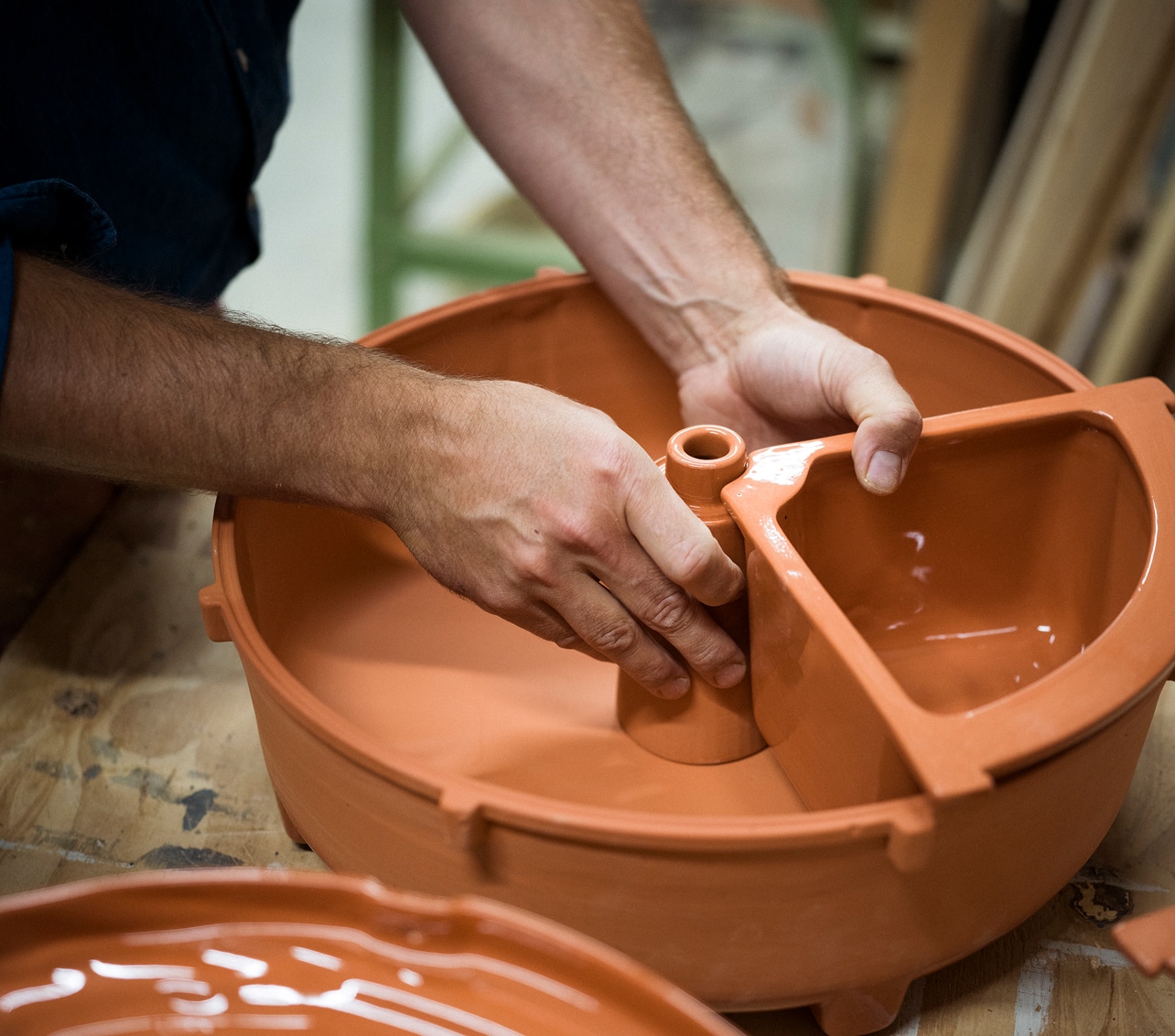
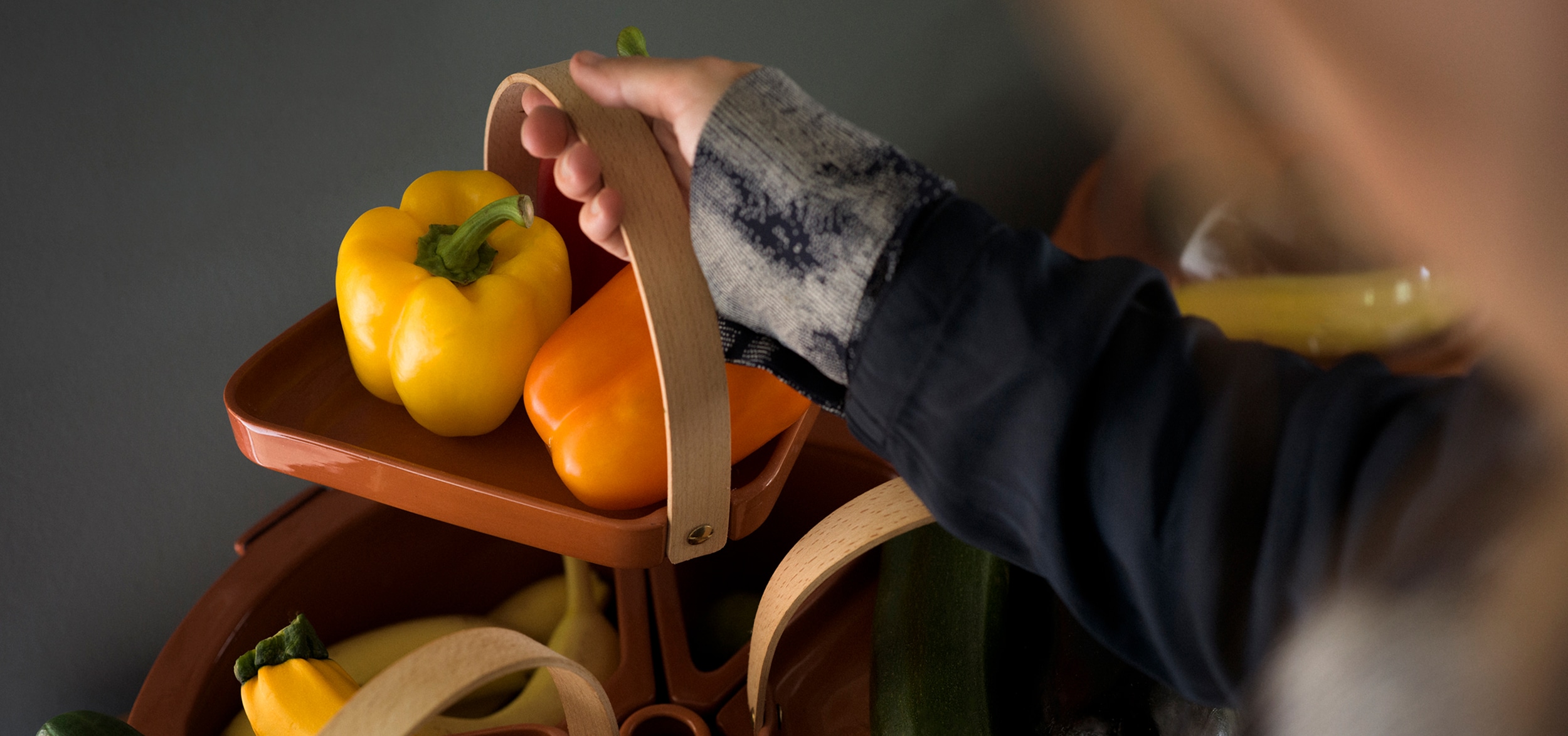
Thomas: “Yes! (Jana nods in agreement). This fruit and vegetable bowl has separate compartments for ripening and non-ripening fruits and vegetables. The former group emits the ripening gas ethylene, which ripens everything alongside it. Conversely, if something does not ripen, it can cause other produce to spoil more quickly. The produce stays fresh for longer thanks to a natural cooling system involving water evaporation through the porous outer walls. Water evaporates by extracting energy from the environment, providing the natural cooling.”
Jana: “But the bowl also tells a story about food preservation. We share what we have learnt about this on the website, in books, and even in the form of a card game. In this way, we hopefully enable people to share the knowledge with one another – so our designs connect people, too. The bowl can also be used as a fruit stand to display fresh produce. Hopefully, this will encourage people to reach for a piece of fruit more often – it’s delicious and healthy!”
Could you talk us through the process of creating the Patera Magna, from the initial research to the final product?
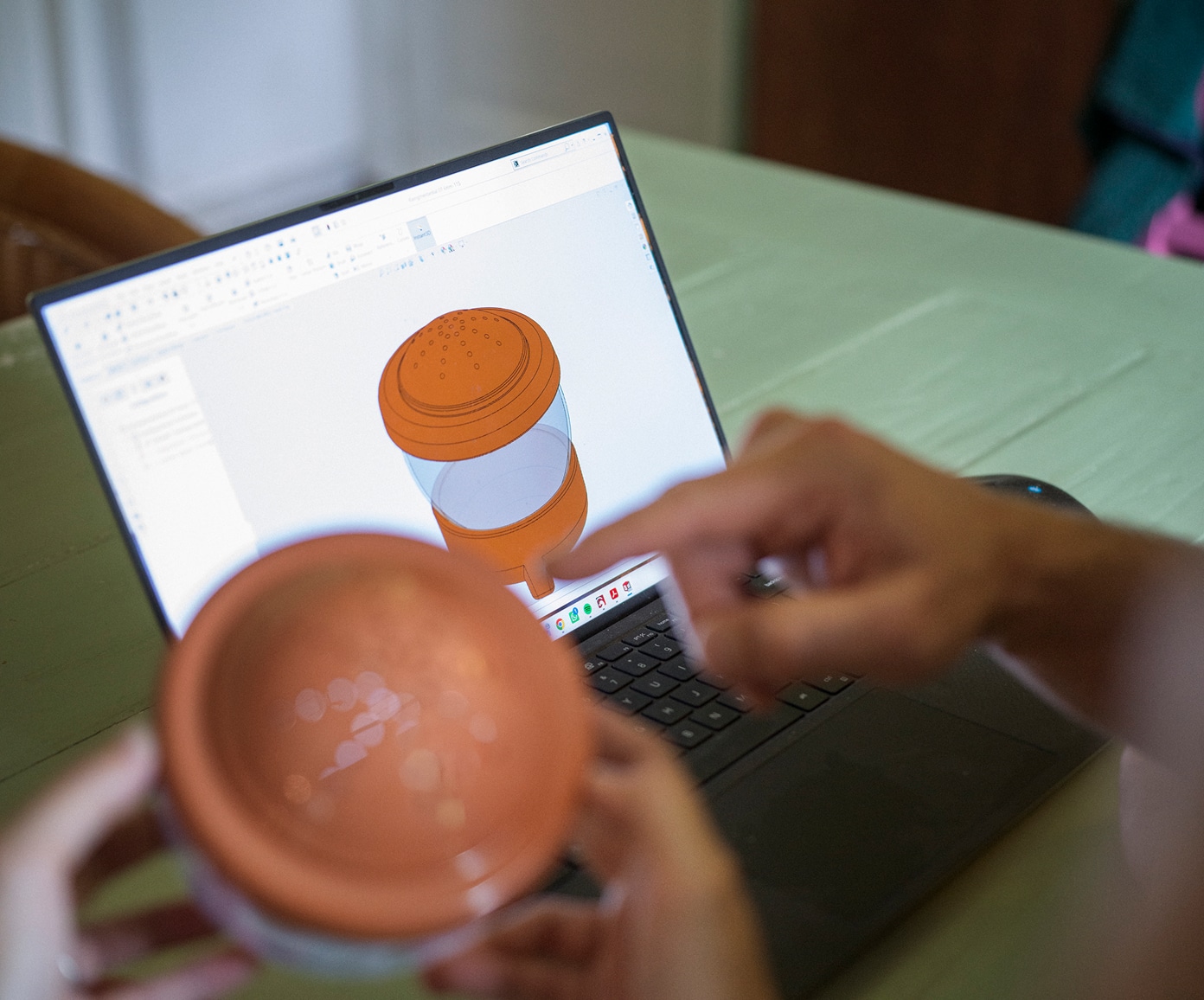
Thomas: “The starting point for every new design is our own sense of wonder and curiosity. In this case, we asked ourselves: why is so much food wasted? Not just on a global scale, but in our own household, and in our own fruit bowl too. Why does one piece of fruit rot, while another isn’t ripe? This led us to ask: what can we do about it? We want to design meaningful products. Some products are simply essential, such as a fruit bowl and a fridge. In that case, we might as well make them as sustainable as possible.”
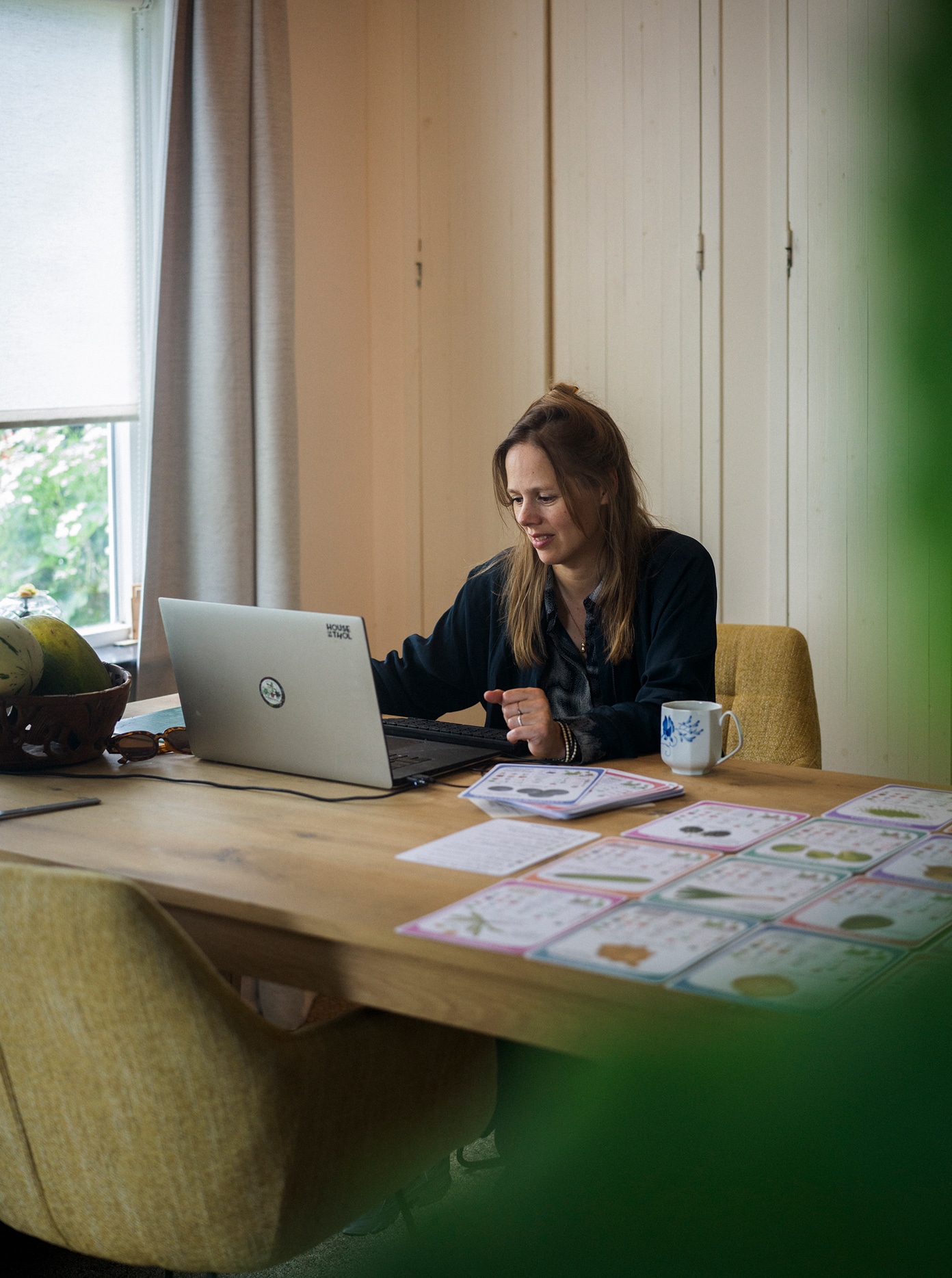
Jana: “Then I conduct in-depth research building on that personal interest and involvement. I simply ask questions. Which plant families exist, and what role do they play in the rotting process? What effect do temperature and humidity have? Or daylight? Where does the fruit originally come from? What nutrients does it contain? I create large datasheets from these results. I’m going to substantiate and support these with open-source scientific studies.”
Could you give us an example of the kind of data involved?
Jana: “For example, I discovered that bananas and tomatoes produce ethylene, which speeds up the ripening process. If other fruits are exposed to this, they ripen faster and eventually rot. This raises new questions. How can you influence the production of these gases? Or how can you protect fruit against them? Ultimately, I created an inventory of around 200 types of fruit and vegetables, categorised by properties such as shelf life, nutritional value, growing season and origin. Since all of these fruits and crops are identified by their Latin botanical names, we gave our fruit bowl a Latin name too: Patera Magna, which simply means ‘large bowl’. Since then, we have only used Latin names for our products.”
How do you recognise when you have collected enough data to start the actual design process?
Thomas: “The moment Jana involves me in her research is when the translation into a concrete product starts. In the case of vegetable and fruit waste, for example, we came up with a better way to preserve them together.”
Jana: “Even during the research phase, I start thinking about a specific product by exploring the existing knowledge and techniques. That’s why I find the Open Air Museum in Arnhem such an inspiring place. You can see all kinds of old techniques there, some of which have been forgotten, but which are still smart and applicable. For instance, you can see how an entire farmhouse was heated with a single hearth fire, with the heat distributed cleverly throughout the building. I also study other cultures, a remnant of my anthropology studies. In parts of North Africa, for example, food has been stored for centuries in a pot inside a larger porous earthenware pot. Damp sand is placed between the pots. The pots simply stand outside. Due to the heat, the water in the earth evaporates, extracting heat and energy from the surroundings in the process. Consequently, the inner pot cools down. We then consider which aspects of this technique we can apply.
Thomas: “The final step is creating prototypes. It’s about shaping a technique or functionality. Ultimately, that results in a scalable prototype, which we present to users. We achieve this through presentations at trade fairs and design weeks. The feedback and contacts we gain there are very valuable. After all, we make our products for users. This is similar to how big brands and manufacturers operate.”
What kind of feedback do you get from those potential users, and how do you translate that into product adjustments?
Jana: “We know the product works. However, because our products are about experience and awareness, our role as designers doesn’t end with product development. Seeing how people respond to things is very educational. This depends on the presentation. Packaging, instructions for use and marketing are just as important as the material or shape when it comes to telling the story of food preservation. But little attention is paid to that during design courses. We had to teach ourselves.”
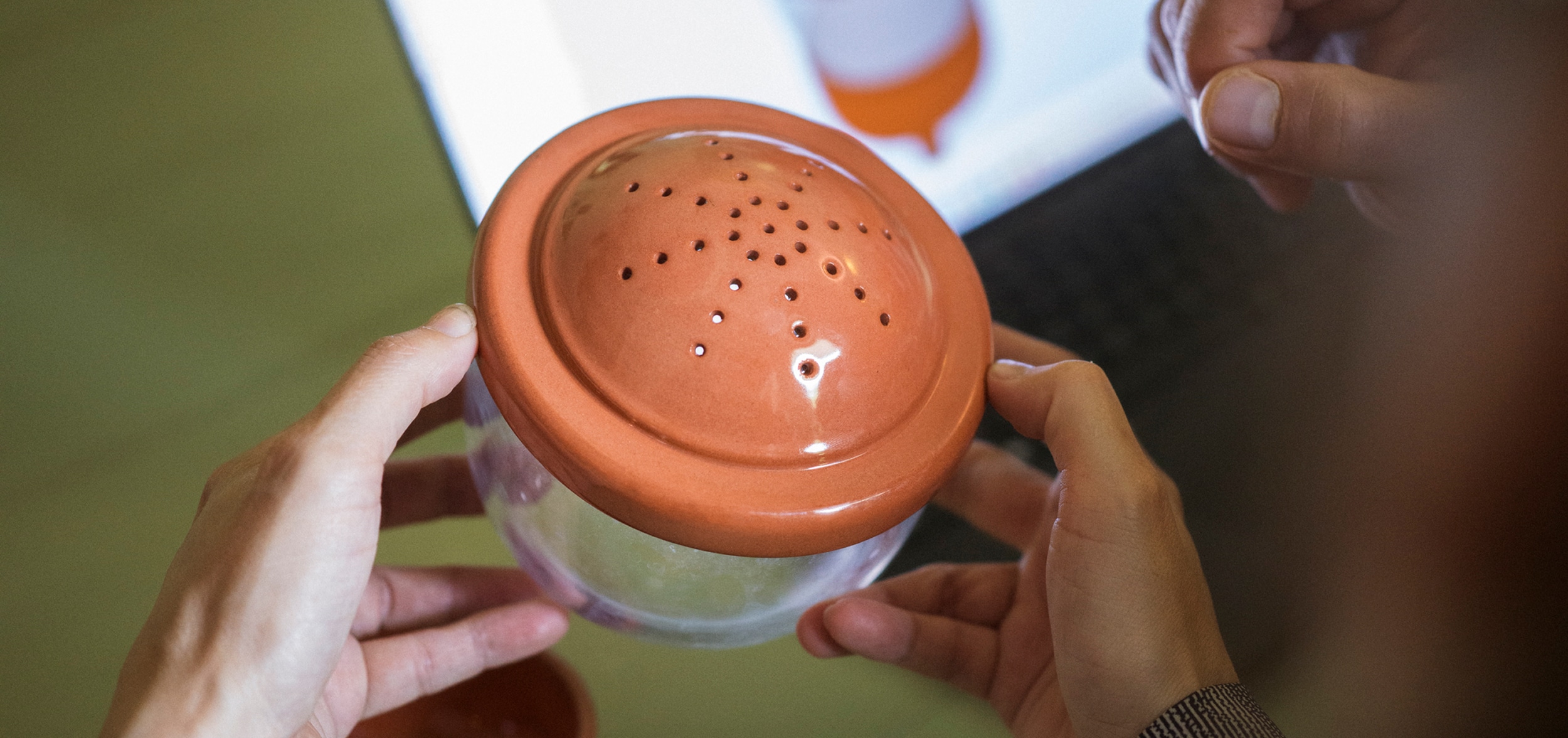
Products for everyday use that entice people to live in a greener way.
You mentioned that design school didn’t cover topics such as marketing. How did you compensate for that?
Thomas: “By trying, and not being afraid to make mistakes. Never assume that you know everything. For example, we once developed packaging for a product that ultimately turned out to be much too expensive to produce. That was a hard but useful lesson. So, learning by doing.”
Jana: “That's how we developed our holistic design philosophy, step by step. We did this by thinking about how to keep food fresh for as long as possible. One way is to grow your own food. But not everyone has a garden or terrace.
So, we developed the Patella Crescenda, which literally means ‘growing bowl’. Microgreens such as garden cress and rocket can be grown in this earthenware container. These contain 30 to 40 times more vitamins. They are eaten fresh and are not cooked, so none of these nutrients are lost. Moreover, you can effortlessly grow your own supply of them in just 10 days, all year round. They are delicious too, which is also important.”
Thomas: “This growing bowl is smaller and turned out to be a very good test case for a pottery factory in Portugal, where we wanted to have the fruit bowl made. If we were to handle the production ourselves, it would distract us from our core business of product development at the House of Thol.”
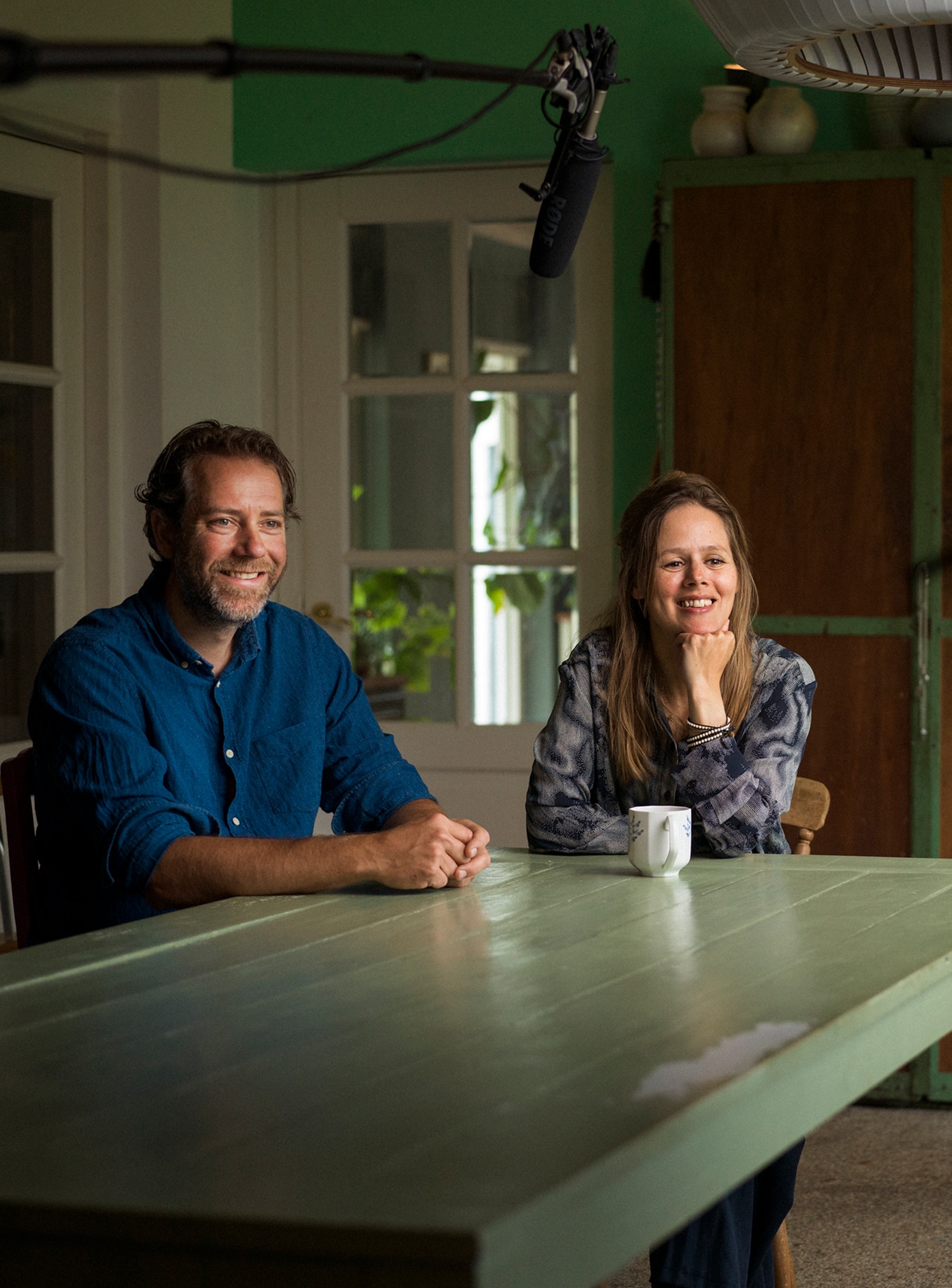
Why do you choose to keep the production process in your own hands?
Thomas: “We develop all our products based on a clear philosophy of behavioural change. This isn’t always possible at other companies, which can have all sorts of different starting points. It would mean having to constantly adapt. So we oversee the entire process, from initial research to the webshop. Our goal isn’t to design as many products as possible, but to provide smart solutions to common and practical issues. We can achieve this by conducting research for companies, governments or educational institutions, for example. This means switching from being a ‘product-first’ design studio to offering research, advice and services, so that we can communicate our knowledge in various ways.”
What will be the next step in your development?
Thomas: “We need to focus less on the product and more on the research. We are increasingly being asked to share the knowledge we have gained. So we created the Cibus Domus card game, which features 36 types of fruit and vegetables found in supermarkets. When is a crop harvested? What are the nutritional values of that fruit? How long does it stay fresh? And, of course, what is the best way to store it? The illustrations are based on 19th-century botanical drawings. We’re now developing this concept further into a book.”
Jana: “These studies could cover more than just food. What can people do to reduce the amount of PFAS they ingest through food? What are more sustainable ways to do laundry and clean the house? These are small steps towards a big change.”
Do you have a message for the next generation of designers?
Jana: “Find your core as a designer and keep developing it. Don’t let yourself get distracted. If you work from a deep personal conviction, you will always be motivated.”
Thomas: “And keep developing your personality as well. Not just in terms of skills and knowledge, but as a person too. Who am I? What do I believe in? What are my values? If you can answers these questions, you can never go wrong.”